Chondrichthyan
Chondrichthyans, or cartilaginous fishes, are a diverse group that includes sharks, skates, rays, and chimaeras-fish), and chimaeras. They are defined by…
What are the main characteristics that define chondrichthyan fish?
Chondrichthyans, or cartilaginous fishes, are a diverse group that includes sharks, skates, rays, and chimaeras-fish), and chimaeras. They are defined by several key characteristics:2
- Cartilaginous Skeleton: Their skeleton is composed primarily of cartilage rather than true bone, though it may be calcified.1
- Dermal Denticles: Many possess scales known as dermal denticles, which are structurally similar to teeth and do not grow throughout the animal’s life.1
- Respiration: They lack a swim bladder and typically have five to seven gill clefts that open directly to the exterior. Many sharks and rays also feature a spiracle, a modified first gill cleft located behind the eye.12
- Reproduction: They utilize internal fertilization, with males possessing specialized structures called claspers to transfer sperm to females.12
- Sensory Systems: They feature a lateral line system to detect water pressure changes. Additionally, many have evolved ampullae of Lorenzini, which are specialized electroreceptors used for navigation and hunting.34
- Digestive Anatomy: All members of this group possess a spiral valve within their intestine.12
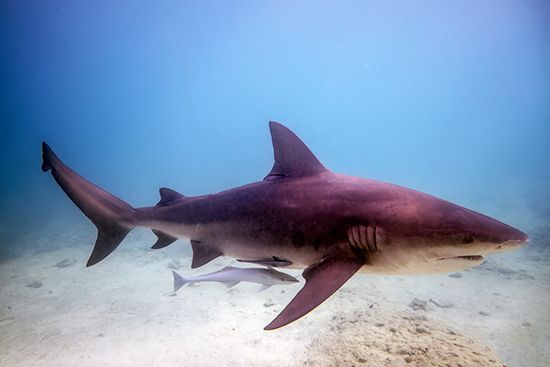
What are some examples of well-known chondrichthyan species?
The class Chondrichthyes is a diverse group of cartilaginous fishes that includes sharks, skates, rays, and chimaeras. Below are some well-known examples categorized by their groups:
Sharks
- White shark: A large, predatory species known for its size and power.910
- Whale shark: The largest shark species, which is a harmless giant that feeds on plankton.910
- Hammerhead shark: Easily recognized by its unique, hammer-shaped head.910
- Tiger shark: A large, voracious predator found in many tropical and temperate waters.9
- Greenland shark: A sluggish, deep-water species known for inhabiting cold northern oceans.910
- Blue shark: A wide-ranging, open-ocean predator.910
Skates and Rays
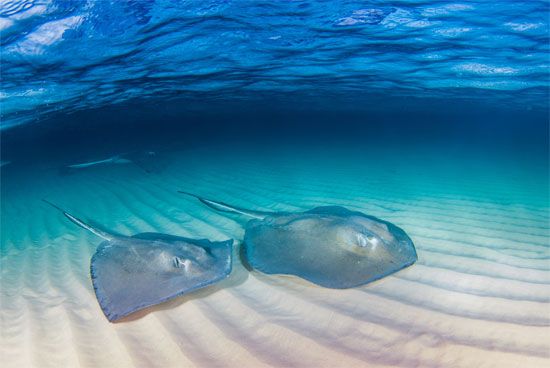
- Manta ray: A large, plankton-feeding ray known for its winglike fins.911
- Common skate: A species found in the Atlantic that is currently listed as critically endangered.12
- Electric ray: Capable of producing powerful electrical shocks for defense or hunting.911
- Sawfish: Distinguished by a long, blade-like snout lined with teeth.911
Chimaeras
- Ratfish: A type of chimaera named for its slender, rat-like tail.13
- Elephant fish: A chimaera characterized by an unusual, hoe-shaped snout.13
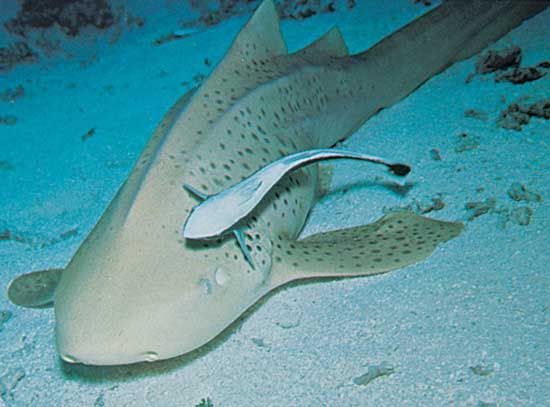
What is the unique skeletal structure of chondrichthyan fish?
The skeletal structure of chondrichthyan fish—a group comprising sharks, rays, and chimaeras—is uniquely defined by its composition of cartilage rather than true bone. While this cartilaginous framework provides the necessary structural support, it is often reinforced through calcification, particularly within the vertebrae.114
Key aspects of this skeletal system include:
- Vertebral Column: Modern sharks possess a vertebral column composed of cartilaginous, partly calcified centra that originate within the sheath of the notochord, leading to the notochord’s partial absorption.15
- Absence of Bone: Unlike bony fishes, chondrichthyans lack true bone throughout their skeleton, with the rare exception of the roots of their teeth.1
- Flexibility and Strength: The cartilage is composed of a dense network of collagen fibers, which grants the skeleton significant tensile strength and flexibility, allowing these fish to bear weight while remaining more pliable than a bony skeleton.16
- Pectoral Girdle: In these fishes, the pectoral girdle is formed as a U-shaped, endoskeletal cartilaginous arch.17
What are some prehistoric chondrichthyan species, and how do they compare to modern ones?
Prehistoric chondrichthyans, or cartilaginous fishes, provide a fascinating look at the evolution of marine life. The earliest forms appeared in the Early Devonian, approximately 400 million years ago, and have remained successful to the present day.3
Notable Prehistoric Species
- Pleurocanthodians: An order of freshwater sharklike fishes that appeared in the Late Devonian. They were characterized by a long, movable spine projecting from the back of the head and teeth with two divergent prongs.20
- Cladoselachians: Marine fishes known from the late Middle Devonian to the Early Permian. They lacked claspers and possessed teeth with a tall central cusp flanked by two smaller ones.20
- Hybodonts: Appearing toward the end of the Devonian, these sharks represent an intermediate evolutionary state. They featured specialized teeth—sharp in the front for seizing prey and rounded in the back for crushing mollusks—and survived until the Late Cretaceous.20
Comparison to Modern Species
Modern sharks, skates, and rays primarily emerged during the Jurassic Period. Key evolutionary differences include:3
- Jaw Mechanics: Modern selachians (sharks and rays) possess a hyostylic jaw, which allows for greater mobility and more efficient predation compared to the more primitive, rigid jaw articulations found in ancestral forms like the cladoselachians and hybodonts.3
- Anatomy: While early forms like the pleurocanthodians had symmetrical tails and specific fin structures, modern species have evolved diverse body plans optimized for their specific ecological niches.20
- Diversification: The primary radiation of modern families occurred during the Cretaceous and Cenozoic, meaning most living chondrichthyans are of relatively recent origin compared to their Paleozoic ancestors.3
Sources
- chondrichthyan - Distinguishing features — Encyclopædia Britannica
- chondrichthyan — Encyclopædia Britannica
- chondrichthyan - Evolution — Encyclopædia Britannica
- chondrostean - Form and function — Encyclopædia Britannica
- fish - Other senses (touch, pain, and special senses) — Encyclopædia Britannica
- lateral line system — Encyclopædia Britannica
- chondrichthyan - Respiration — Encyclopædia Britannica
- fish - The respiratory system — Encyclopædia Britannica
- list of sharks, skates, and rays — Encyclopædia Britannica
- chimaera — Encyclopædia Britannica
- shark - Description and habits — Encyclopædia Britannica
- skate — Encyclopædia Britannica
- ray — Encyclopædia Britannica
- skeleton - Pectoral girdle — Encyclopædia Britannica
- cartilage — Encyclopædia Britannica
- cartilaginous fish — Merriam-Webster
- skeleton - Lower chordates and fishes — Encyclopædia Britannica
- skeleton - Buoyancy devices — Encyclopædia Britannica
- Chordate - Skeleton and support — Encyclopædia Britannica
- Chondrosteiformes — Encyclopædia Britannica
- spiny shark — Encyclopædia Britannica
- chondrostean - Evolution — Encyclopædia Britannica
- fish - Chondrichthyes : sharks and rays — Encyclopædia Britannica
Published on · 4 min read