Karakul
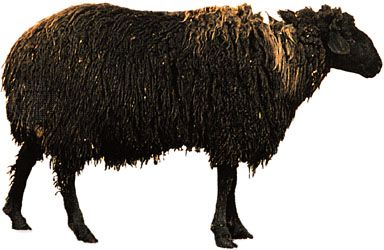
Karakul refers to a hardy, fat-tailed breed of sheep originating from Central or West Asia. These animals are primarily raised for their wool and their pelts.
What is Karakul?
Karakul refers to a hardy, fat-tailed breed of sheep originating from Central or West Asia. These animals are primarily raised for their wool and their pelts.123
Characteristics and Uses
- Lamb Pelts: The skins of very young lambs are highly valued in the fur trade, where they are known as Persian lamb. These pelts are prized for their glossy, tightly curled coats, which come in varieties such as the black arabi, golden sur, and silver-gray shirazi.13
- Mature Wool: The wool of adult Karakul sheep is classified as carpet wool. It consists of a mixture of coarse and fine fibers, typically ranging from 6 to 10 inches in length, with colors spanning from black to various shades of brown and gray.1
The breed is particularly significant to the agricultural economy of regions like Turkmenistan, where it accounts for a large majority of the sheep population.3
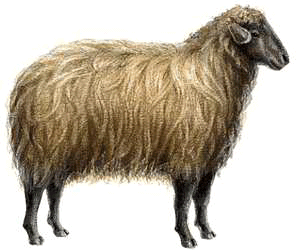
What are the physical characteristics of fat-tailed sheep?
Fat-tailed sheep are a type of mutton sheep characterized by their coarse wool and the significant accumulation of fat on either side of their tail bones.4
Beyond this defining feature, specific breeds within this category, such as the Karakul, exhibit their own distinct physical traits. For instance, the Karakul is known for having a narrow body and a coat of coarse, wiry fur. In general, these sheep are valued for their ability to store energy in their tails, an adaptation that has historically supported their survival in various environments.345
How is carpet wool different from other types of wool?
Carpet wool is distinguished from other types of wool primarily by its physical properties and grade. It is classified as a coarse, rough, and low-grade fiber.6
In contrast to the fine wools used for apparel—which are selectively bred to eliminate long, coarse hairs in favor of a soft, fine undercoat—carpet wool retains a coarser texture. Key differences include:7
- Texture and Diameter: While fine wools typically range from 16 to 40 microns in diameter, carpet wools are significantly coarser.7
- Length: Fine wool fibers are generally shorter (about 1.5 to 3 inches), whereas the extremely coarse fibers found in carpet wool can reach lengths of up to 14 inches.7
- Appearance: Coarse wools often exhibit higher luster than fine types and are more frequently found in natural colors such as brown or black, rather than the whitish hues typical of fine wool.7
- Usage: Due to its durability and coarse nature, this wool is specifically suited for the production of carpets and rugs, whereas finer wools are processed into woolen yarns for clothing and blankets.78
What is the historical significance of the Karakul region in Uzbekistan?
The historical significance of the Karakul region in Uzbekistan is primarily tied to its role as the namesake for the Karakul sheep, a breed of central Asian origin that has been central to the region’s economy for centuries.19
The region, which includes a village of the same name, is historically linked to the development of the fur trade, specifically the production of Persian lamb skins from young lambs. Beyond this, the broader area—including the Bukhara oasis—has served as a vital center for trade and crafts since antiquity, famously positioned along the Silk Road.1910
The legacy of the Karakul sheep remains a cornerstone of the regional identity and economy in Uzbekistan, where the animals are still raised for their wool and skins, alongside other agricultural activities like cotton production and the extraction of natural gas.11123
Sources
- Karakul — Encyclopædia Britannica
- Turkmenistan - Agriculture — Encyclopædia Britannica
- karakul — Merriam-Webster
- fat-tailed sheep — Merriam-Webster
- Sheep — Encyclopædia Britannica
- carpet wool — Merriam-Webster
- wool — Encyclopædia Britannica
- floor covering - Carpet and rug weaving — Encyclopædia Britannica
- Uzbekistan - Economy of Uzbekistan — Encyclopædia Britannica
- Bukhara — Encyclopædia Britannica
- Kashkadarya — Encyclopædia Britannica
- Karakalpakstan — Encyclopædia Britannica
- Karakum Desert - People and economy — Encyclopædia Britannica
- Buxoro — Encyclopædia Britannica
Published on · 3 min read