Dragonet
A dragonet is a term with two primary meanings. Historically and in literature, it refers to a little dragon. In biology, it refers to any of about 40…
What is dragonet?
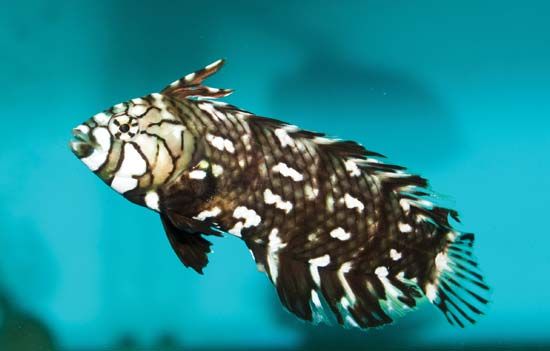
A dragonet is a term with two primary meanings. Historically and in literature, it refers to a little dragon. In biology, it refers to any of about 40 species of marine fishes belonging to the family Callionymidae.12
These fish are typically found in warm temperate or tropical waters, with a high concentration in the Indo-Pacific region. They are characterized by their scaleless bodies, large flattened heads, and elongated fins. While females are generally drab in appearance, males often display bright colors upon reaching sexual maturity. Most dragonets are bottom dwellers that frequently bury themselves in sand in shallow environments, though some species inhabit deep waters. Their eggs are pelagic, meaning they float in open water until they hatch.21
How do dragonets use their fins to move along the ocean floor?
Sorry, the Britannica knowledge base does not contain information regarding the specific mechanics of how dragonets use their fins to move along the ocean floor.
Why do male and female dragonets have different colors?
The difference in coloration between male and female dragonets is a form of sexual dimorphism, where males often develop bright, striking colors upon reaching sexual maturity, while females remain relatively drab.1
This disparity is primarily driven by sexual selection, an evolutionary process where specific physical traits provide a reproductive advantage. In many species, males use these vivid colors to increase their “sex appeal” during courtship to attract females, or to signal their dominance and vitality to competing males.45
While these bright colors can make males more visible to predators—potentially working against natural selection—they serve as an honest signal of a male’s health and genetic robustness. A male that can thrive despite being highly visible demonstrates his fitness, making him a more attractive mate. Conversely, the drab coloration of females often serves as a form of concealing coloration, which helps them remain protected and camouflaged.45
What other types of fish live in the Indo-Pacific region?
The Indo-Pacific region is home to an incredibly diverse array of fish, benefiting from the richest and most extensive coral reefs in the world. This biodiversity is significantly higher than that of the Atlantic’s Caribbean reefs, with a vast number of species adapted to the region’s warm tropical waters and complex landforms.6
Notable Fish Families and Species
The region hosts a wide variety of fish, ranging from small, colorful reef dwellers to larger, commercially significant species:
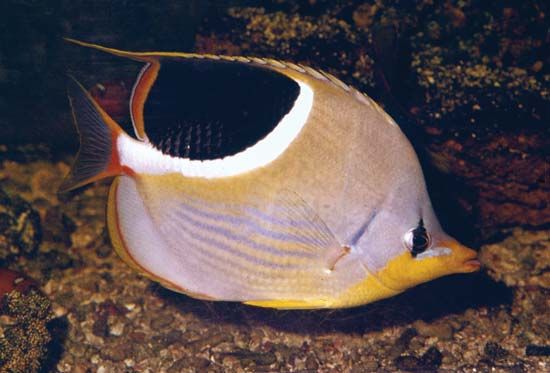
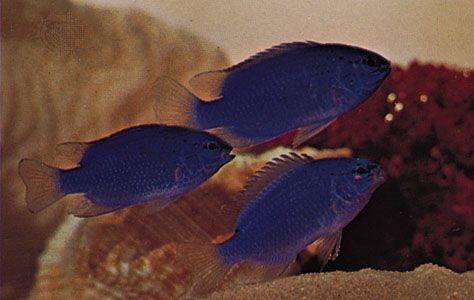
- Reef-Associated Fish: The region is famous for its angelfishes, butterfly fishes, damselfishes, and parrot fishes, which are often brilliantly colored and highly active.7
- Percoids and Shorefishes: Many species of slipmouths, flagtails, and grunters (also known as tigerfishes) are common in these tropical waters.7
- Unique Adaptations: The archer fishes are well-known for their ability to hunt insects by spitting water, while the flying gurnard is noted for its oversized pectoral fins.87
- Sand-Dwelling Species: Several families, such as sand divers and stargazers, have evolved to live buried in sandy bottoms.7
- Commercial and Pelagic Species: The region supports large populations of tunas, which are vital to the economies of many Pacific island nations.96
Additionally, many species found in the region’s inland and coastal waters, such as gouramis and anemone fish, are popular in the aquarium trade.8
Sources
- dragonet — Encyclopædia Britannica
- dragonet — Merriam-Webster
- Locomotion - Ciliary locomotion — Encyclopædia Britannica
- Why are male animals more colorful? — Encyclopædia Britannica
- Sexual dimorphism — Encyclopædia Britannica
- Indonesia - Plant and animal life — Encyclopædia Britannica
- perciform - Annotated classification — Encyclopædia Britannica
- Pacific Ocean - Fisheries — Encyclopædia Britannica
- Pacific Ocean - Biological resources — Encyclopædia Britannica
Published on · 2 min read