Damselfish
Damselfishes (family Pomacentridae) are oviparous fishes, meaning they reproduce by laying eggs that are fertilized externally. During the breeding season…
How do damselfish reproduce and care for their young?
Damselfishes (family Pomacentridae) are oviparous fishes, meaning they reproduce by laying eggs that are fertilized externally. During the breeding season, males often display distinct, bright coloration—including shades of black, white, green, red, blue, and silver—which serves to enhance their courtship and breeding activities.1
Regarding parental care, damselfishes are among the many perciform species that exhibit strong protective behavior through nest-building and guarding. Males generally take the lead in constructing nests, which often involves clearing a small area under rocks or on the open bottom. Once the eggs are laid, the parents—most commonly the male—guard the nest sites against intruders. In addition to protection, these fish provide care by aerating the eggs, which involves using their fins to create a flow of water over the egg mass to ensure proper oxygenation.1
What is the diet of damselfish and how does it vary among species?
The diet of damselfish is diverse and varies significantly across the approximately 250 species within the family Pomacentridae. Because these fish inhabit various niches, primarily along reefs, their feeding habits are adapted to their specific environments and behaviors.1
Dietary patterns among damselfish generally fall into three categories:
- Herbivores: Some species feed primarily on plant matter found in their surroundings.1
- Carnivores: Other species focus their diet on small animals suspended in the water column.1
- Omnivores: Many damselfish are omnivorous, consuming a combination of both plant and animal material.1
These dietary differences are often linked to the species’ territorial nature, as many damselfish aggressively defend specific areas of the reef that provide their preferred food sources.1
In which marine environments are damselfish commonly found?
Damselfishes are primarily found in tropical marine environments across the Atlantic and Indo-Pacific oceans.1
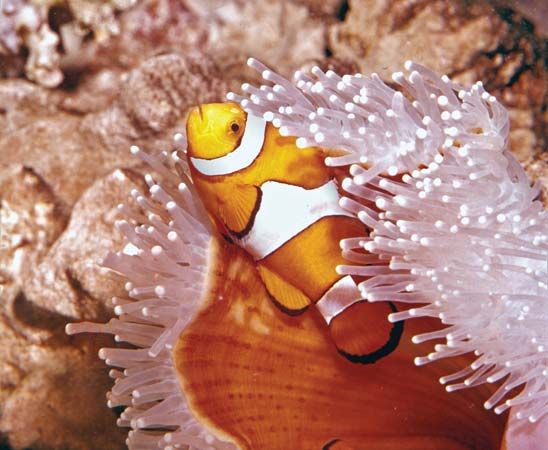
Most species inhabit areas along reefs, where they are known for their lively and territorial behavior. A notable exception is the group of anemone fishes, which have evolved a unique symbiotic relationship, living among the stinging tentacles of sea anemones for protection.1
What are the distinctive physical characteristics of damselfish?
It is important to clarify that damselfish are marine fish of the family Pomacentridae, which are distinct from damselflies, a group of predatory insects.
The physical characteristics of damselfish include:
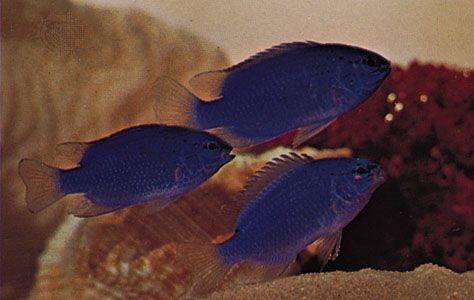
- Body Shape: They are typically deep-bodied fish and usually possess forked tails.1
- Size: Most species are small, generally not exceeding 15 cm (6 inches) in length, though some, like the garibaldi, can reach up to 30 cm.1
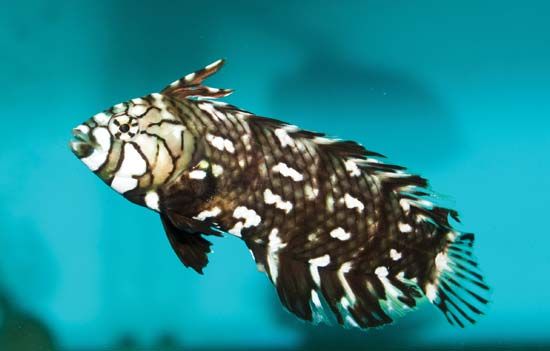
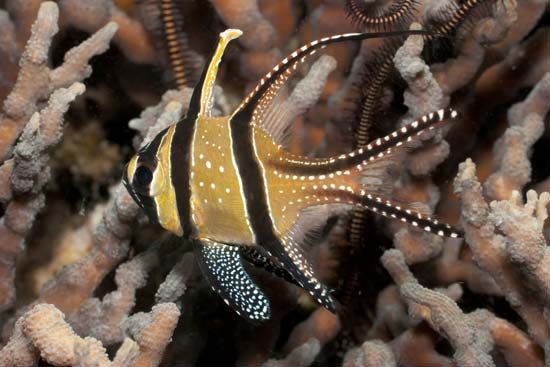
- Coloration: Many species are known for their brilliant colors, often appearing in vibrant shades of red, orange, yellow, or blue.15
- Anatomical Features: They feature a single nostril on each side of the head, interrupted lateral lines, and exactly two anal spines.15
These features help distinguish them as members of the Pomacentridae family, which are well-adapted to life among tropical reefs.1
Sources
- damselfish — Encyclopædia Britannica
- perciform - Life history — Encyclopædia Britannica
- ostariophysan - Parental care — Encyclopædia Britannica
- scorpaeniform - Reproduction — Encyclopædia Britannica
- damselfly — Encyclopædia Britannica
- Pomacentridae — Merriam-Webster
- pomacentrid — Merriam-Webster
Published on · 2 min read