Aholehole
An aholehole is any of several species of fish belonging to the family Kuhliidae (order Perciformes). These fish are typically found in the Indo-Pacific…
What is aholehole?
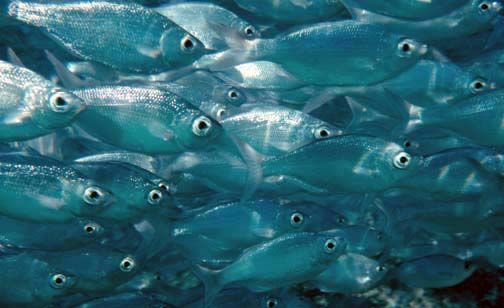
An aholehole is any of several species of fish belonging to the family Kuhliidae (order Perciformes). These fish are typically found in the Indo-Pacific region, inhabiting marine, freshwater, or brackish environments.12
Superficially, aholeholes resemble freshwater sunfishes. While some species in the family can reach lengths of up to 45 cm (18 inches), the Hawaiian aholehole (Kuhlia sandvicensis), which is found throughout the Hawaiian Islands, grows to a maximum length of about 30 cm (12 inches). The term itself is of Hawaiian origin and is also used to refer to the percoid food fish Kuhlia marginata, which is widely distributed in tropical brackish waters.12
What other fish are native to the Hawaiian Islands?
The waters surrounding the Hawaiian Islands host a diverse array of marine life, with approximately one-fourth of all species found there being unique to the region. While the provided information highlights the vast biodiversity of the Papahānaumokuākea Marine National Monument—which supports over 7,000 marine species, including many endemic species—it does not list specific fish species native to Hawaii beyond the previously mentioned aholehole.34
The marine ecosystems in this area range from shallow tide pools to the deep ocean floor, providing critical habitats for various creatures, including the green turtle and the monk seal. Because the provided search results do not contain a comprehensive list of native fish species, I cannot provide further specific examples at this time.34
How do brackish water environments differ from marine habitats?
Brackish water environments and marine habitats differ primarily in their salinity levels and the resulting ecological barriers they create.
Salinity and Environmental Characteristics
- Marine Habitats: These environments are characterized by high, relatively constant salinity, averaging about 35,000 parts per million (35 psu) in the open ocean. The composition of sea salt is uniform throughout the open ocean, and marine organisms have evolved to thrive in these stable, high-salt conditions.56
- Brackish Environments: These occur where seawater is diluted by freshwater from rivers or runoff, such as in estuaries, salt marshes, and coastal lagoons salt marshes, and coastal lagoons. Because they are transition zones, their salinity is highly variable and often fluctuates based on tidal action and river flow.578
Biological Implications
The difference in salt concentration creates a significant barrier for aquatic life. Organisms in these environments must manage osmotic pressure to survive.6
- Adaptation: Marine organisms often face constant water loss and must actively excrete salts, whereas freshwater organisms must constantly replenish ions. Species inhabiting brackish waters are typically euryhaline, meaning they possess the physiological flexibility to tolerate a wide range of salinity levels.67
- Ecosystem Structure: Brackish areas like estuaries act as nutrient-rich zones where organic matter from rivers aggregates, supporting diverse communities of plants and animals that are specifically adapted to these shifting conditions.89
What are the physical characteristics of the Perciformes order?
The order Perciformes, the largest group of fishes in the world, is characterized by significant diversity, making a single definition difficult. However, they generally share several key physical traits.1516
General Physical Characteristics
- Fins: Perciforms typically possess spines on their dorsal, anal, and pelvic fins. The dorsal fin is often divided into two distinct parts or notched, with the anterior portion supported by spiny rays—likely an evolutionary adaptation for defense—and the posterior portion supported by soft rays.1617
- Pelvic Fins: These are usually located in a thoracic position (directly below or slightly ahead of the pectoral fins) and are typically supported by one spine and five or fewer soft rays. This positioning enhances maneuverability.1617
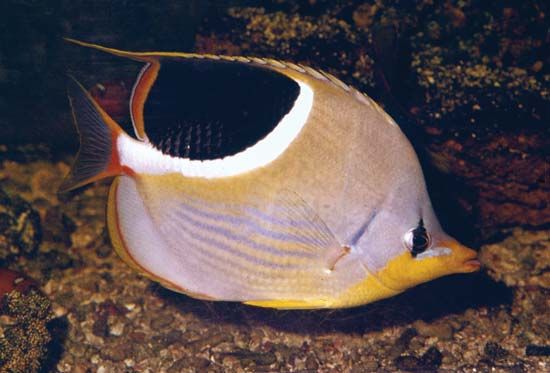
- Jaws and Mouth: Most species have protrusible jaws, though the structure varies widely based on feeding behavior. Some possess thick lips, fleshy projections, or specialized shapes, such as the tubelike mouths of butterfly fishes or the elongated upper jaws of swordfishes.1617
- Scales and Skeleton: Scales are generally ctenoid (rough-edged with small teeth), though some species have smooth, cycloid scales. Their skulls lack an orbitosphenoid bone, and the shoulder girdle lacks a mesocoracoid bone.17
Sources
- aholehole — Encyclopædia Britannica
- aholehole — Merriam-Webster
- Hawaii - Plant and animal life — Encyclopædia Britannica
- Papahānaumokuākea Marine National Monument: Top Questions — Encyclopædia Britannica
- Biosphere - Salinity — Encyclopædia Britannica
- Marine ecosystem - Geography, oceanography, and topography — Encyclopædia Britannica
- brackish — Merriam-Webster
- estuary - Salt wedge estuaries — Encyclopædia Britannica
- Did you know? — Merriam-Webster
- Inland water ecosystem - Population and community development and structure — Encyclopædia Britannica
- Salt marsh — Encyclopædia Britannica
- river - Estuaries — Encyclopædia Britannica
- Inland water ecosystem - Biota of inland waters — Encyclopædia Britannica
- salinity — Encyclopædia Britannica
- perciform — Encyclopædia Britannica
- perciform - Form and function — Encyclopædia Britannica
- perciform - Annotated classification — Encyclopædia Britannica
- perch — Encyclopædia Britannica
Published on · 3 min read