Dragons Mouths
The Dragons Mouths (Bocas del Dragón) is a channel located in the southeastern Caribbean Sea. It serves as a passage between Point Peñas on the Paria…
What is Dragons Mouths?
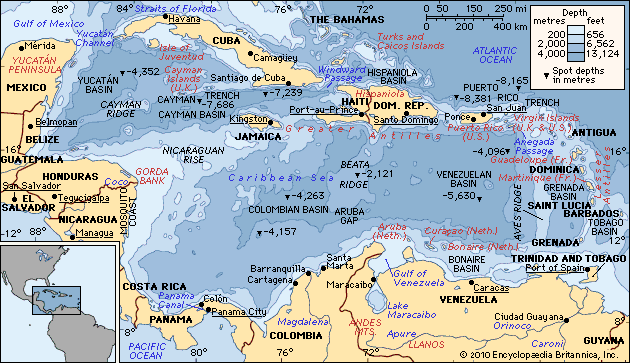
The Dragons Mouths (Bocas del Dragón) is a channel located in the southeastern Caribbean Sea. It serves as a passage between Point Peñas on the Paria Peninsula of northeastern Venezuela and the northwestern tip of the island of Trinidad.1
Measuring approximately 12 miles (20 km) in width, the channel is one of two primary waterways separating Trinidad from the South American mainland, the other being the Serpent’s Mouth to the southwest. These passages enclose the Gulf of Paria. The name “Dragons Mouths” is derived from the numerous teethlike rocky islets found within the channel; these formations, combined with the area’s powerful currents, have historically presented significant hazards to maritime navigation.1
What is the significance of the Gulf of Paria?
The Gulf of Paria is a vital inlet of the Caribbean Sea situated between the coast of Venezuela and the island of Trinidad. Its significance is defined by its historical, economic, and geographical roles:
- Historical Significance: During his third voyage in 1498, Christopher Columbus sailed into the gulf, marking what is widely considered his first sighting of the South American mainland.2
- Economic Hub: The gulf serves as a critical maritime corridor for trade. Major ports such as Port of Spain and San Fernando in Trinidad, along with Venezuelan ports like Güiria and Pedernales, facilitate the shipment of essential commodities, including petroleum, iron ore, bauxite, lumber, and agricultural goods.2
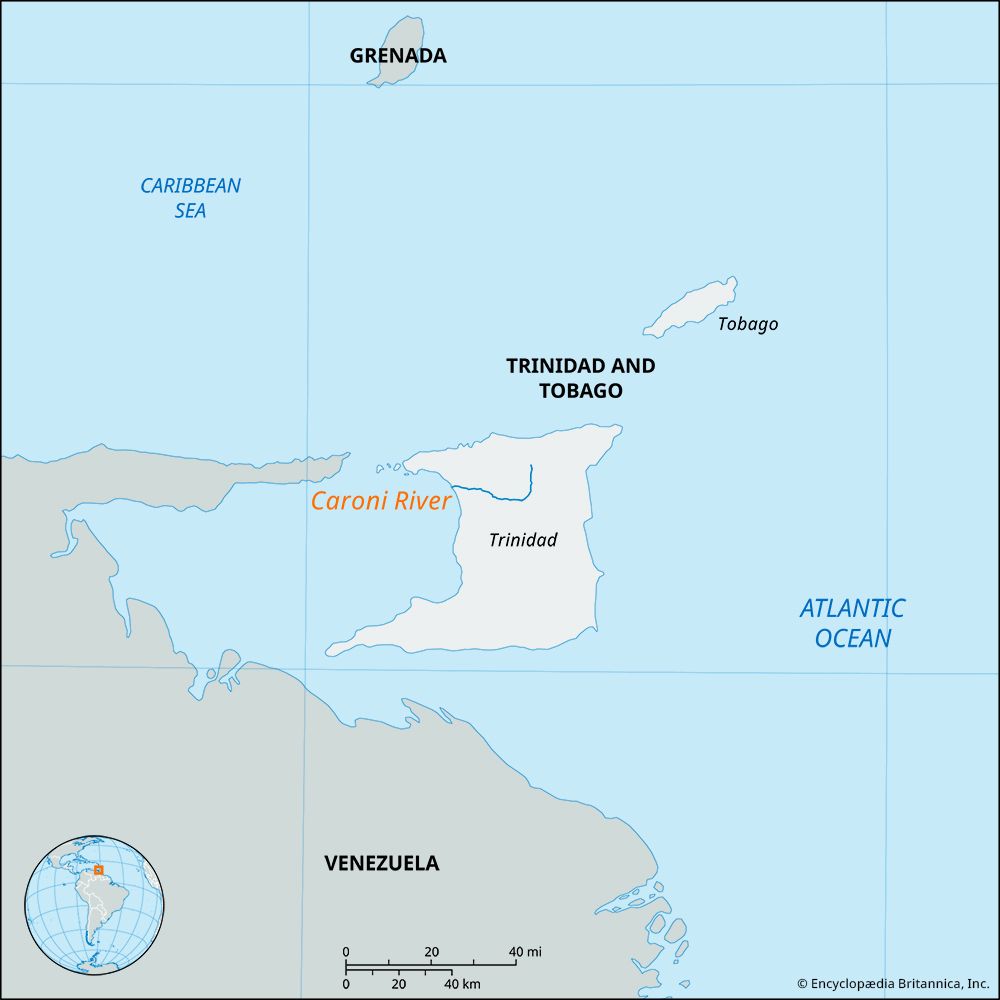
- Geographical Connectivity: The gulf acts as a protected basin linked to the Caribbean via the Dragon’s Mouths and to the Atlantic Ocean via the Serpent’s Mouth. It also serves as a drainage basin for the Orinoco River delta and local waterways like the Caroni River.23
How did the Serpent’s Mouth get its name?
The Serpent’s Mouth (Boca de la Sierpe) is a strait located between the southwestern coast of Trinidad and the northeastern coast of Venezuela, connecting the Gulf of Paria to the Atlantic Ocean.51
While the Dragons Mouths to the north are named for their teethlike rocky islets, the provided information does not specify the origin of the name “Serpent’s Mouth.” It is often associated with the treacherous navigation conditions and strong currents typical of the region, similar to its northern counterpart, but the specific etymological history is not documented in the available records.
What makes navigating the waters around Trinidad challenging?
Navigating the waters around Trinidad presents significant challenges due to the physical geography and hydrodynamics of the straits connecting the Gulf of Paria to the surrounding seas.
The primary hazards include:
- The Dragon’s Mouths: This northern channel is characterized by numerous teethlike rocky islets that pose a constant threat to vessels. Additionally, the channel experiences strong currents that have historically made navigation dangerous.1
- The Serpent’s Mouth: Located off the island’s southwestern coast, this southern passage serves as the second major link between the gulf and the Atlantic Ocean. Like the northern passage, it is known for challenging conditions that require careful navigation.16
- Sedimentation: The Orinoco River delta discharges into the gulf, carrying vast amounts of sediment. This process leads to the frequent formation of shoals and islands, which can alter channel depths and create complex, shifting waterways that complicate maritime transit.2
Sources
- Dragons Mouths — Encyclopædia Britannica
- Gulf of Paria — Encyclopædia Britannica
- Paria, Gulf of — Merriam-Webster
- Caroni River — Encyclopædia Britannica
- Serpent's Mouth — Merriam-Webster
- Orinoco River - Physiography of the Orinoco — Encyclopædia Britannica
Published on · 2 min read