Caroni River
There are two distinct rivers known as the Caroní:
What is Caroni River?
There are two distinct rivers known as the Caroní:
Caroní River (Venezuela)
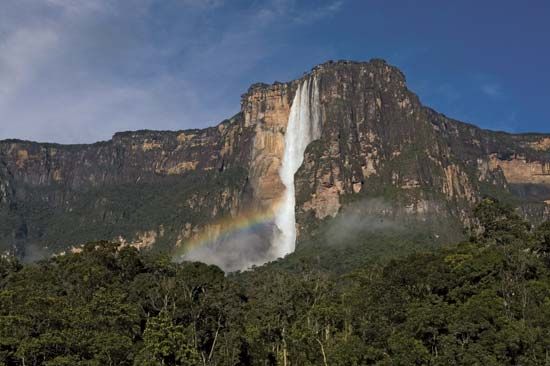
Located in southeastern Venezuela, this 430-mile (690-km) river originates in the Sierra Pacaraima near Mount Roraima. It flows north across the Guiana Highlands before joining the Orinoco River near Ciudad Guayana. Notably, the river features Angel Falls—the world’s highest waterfall—on one of its headstreams, and its significant hydroelectric potential is utilized by the Guri and Macagua dams.1
Caroni River (Trinidad and Tobago)
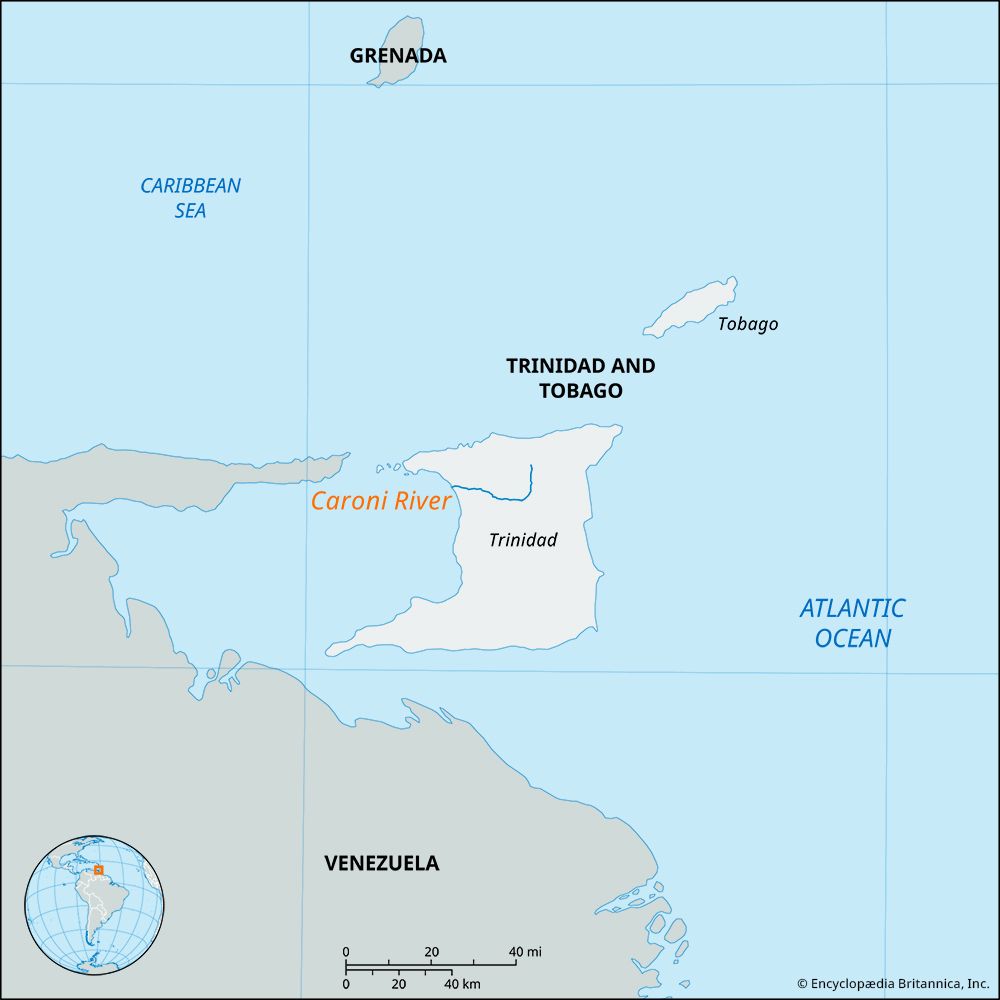
This smaller river, approximately 25 miles (40 km) long, is located in northwestern Trinidad. It flows westward from the Northern Range to empty into the Gulf of Paria through the Caroni Swamp. The swamp is a renowned bird sanctuary, though its wildlife populations have faced threats from pollution and illegal hunting.2
How do hydroelectric dams like Guri impact the environment?
Hydroelectric dams, such as the Guri Dam, provide significant renewable energy but cause substantial environmental and social impacts.
Ecological and Landscape Alterations
Dams fundamentally transform ecosystems by creating large reservoirs that inundate vast areas of land. This process often leads to the destruction of local flora and fauna, the loss of picturesque landscapes, and the displacement of human communities. Furthermore, dams act as physical barriers that block or impede the migration and spawning of fish populations.34
Sediment and Water Management
Dams significantly alter natural river processes by trapping sediment that would otherwise travel downstream. This accumulation of silt in reservoirs can reduce their effective storage capacity and shorten the facility’s operational life. Additionally, while hydroelectric power is renewable, the decomposition of submerged vegetation in reservoirs can release methane, a potent greenhouse gas.564
Social and Ethical Considerations
The construction of large-scale dams has historically forced the relocation of native peoples and local populations, often resulting in the loss of cultural heritage and homelands. These projects frequently spark intense debate, balancing the need for hydroelectric power against the preservation of natural and cultural treasures.3
What makes Angel Falls the tallest waterfall in the world?
Angel Falls is recognized as the tallest waterfall in the world primarily due to its immense vertical drop, which measures 3,212 feet (979 meters).89
The waterfall’s extreme height is a result of the unique geological structure of the Guiana Highlands in southeastern Venezuela. It originates from a flat-topped, sandstone-capped plateau known as Auyán-tepuí (“Devil’s Mountain”). As the Churún River flows off the edge of this sheer, high-altitude cliff, the water plunges nearly vertically, barely making contact with the rock face during its descent.89
While waterfalls are generally temporary features that rivers eventually erode and smooth out over time, the resistant nature of the plateau’s rock formations helps maintain the dramatic drop that defines Angel Falls.10
Why are the Caroni Swamp mangroves important for wildlife?
The Caroni Swamp is a vital ecological sanctuary in Trinidad, serving as a critical habitat for a diverse array of wildlife. It is particularly famous as a nesting and roosting site for various birds, including egrets, flamingos, and the scarlet ibis, which is the national bird of Trinidad and Tobago.122
Beyond its role as a bird sanctuary, the swamp’s mangroves provide essential environmental services. Their complex root systems act as a nursery for coastal and offshore fish, offering a safe environment for breeding and development. By trapping sediments and filtering pollutants, these trees also improve water quality and protect the shoreline from erosion and storm damage.1314
Despite their importance, the wildlife populations within the Caroni Swamp face significant threats from illegal hunting and pollution, which have contributed to a marked decline in bird numbers since the late 20th century. Protecting these keystone species is essential for maintaining the biodiversity of the region.12214
Sources
- Caroní River — Encyclopædia Britannica
- Caroni River — Encyclopædia Britannica
- Guri Dam — Encyclopædia Britannica
- river - Environments of deposition — Encyclopædia Britannica
- dam - Rise of environmental and economic concerns — Encyclopædia Britannica
- hydroelectric power — Encyclopædia Britannica
- dam - Reservoirs — Encyclopædia Britannica
- Angel Falls — Encyclopædia Britannica
- waterfall — Encyclopædia Britannica
- Guiana Highlands — Encyclopædia Britannica
- Auyán-tepuí — Merriam-Webster
- Trinidad and Tobago - Plant and animal life — Encyclopædia Britannica
- Amazing Mangroves — Encyclopædia Britannica
- mangrove: Top Questions — Encyclopædia Britannica
Published on · 3 min read