Euripus
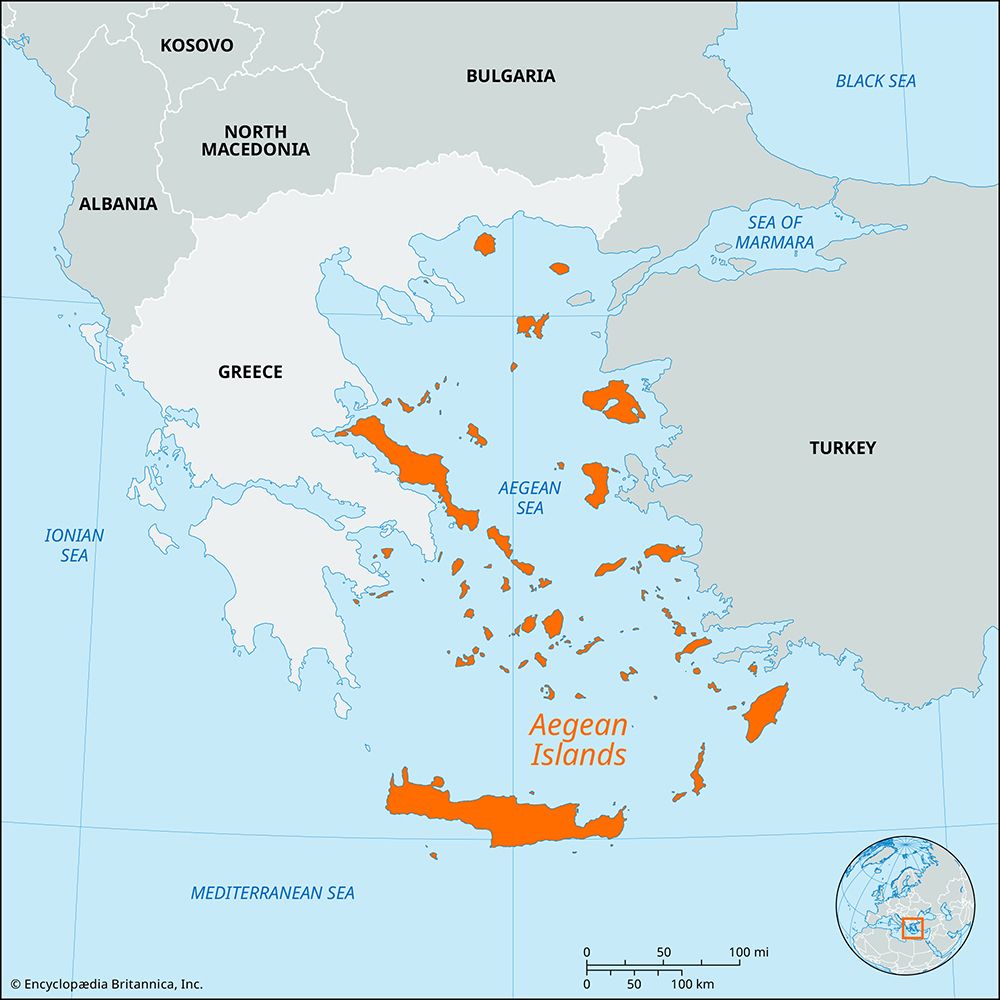
The Euripus is a narrow strait in the Aegean Sea characterized by complex tidal currents that can reach speeds of 12 knots and reverse direction seven or…
What efforts have been made to study and understand the Euripus Strait’s unusual currents?
The Euripus is a narrow strait in the Aegean Sea characterized by complex tidal currents that can reach speeds of 12 knots and reverse direction seven or more times daily.1
While these currents have been a subject of fascination since antiquity, their underlying cause remains not fully understood today. Popular legend suggests that the ancient Greek philosopher Aristotle was so distressed by his inability to explain the phenomenon that he drowned in the strait. Despite the historical interest and the long-standing importance of the area as a trading center near Chalkída, scientific consensus on the precise mechanics driving these irregular tidal shifts has remained elusive.1
What are the unique tidal patterns observed in the Euripus Strait?
The Euripus Strait, located between the Greek island of Euboea and the mainland of central Greece, is renowned for its unique and complex tidal behavior. This phenomenon, often referred to as the “euripus phenomenon,” is characterized by violent, irregular currents that can reach velocities of up to 12 knots.
These currents are notable for their frequency and unpredictability, as they reverse direction seven or more times per day. While the tides in the broader Aegean Sea generally follow the patterns of the eastern Mediterranean, the Euripus Strait displays these distinct, high-speed shifts that have been a subject of scientific interest since the time of Aristotle. Despite centuries of observation, the precise mechanics driving these erratic tidal patterns are not fully understood today.
How does the Euripus Strait connect the North and South Euboean Gulf?
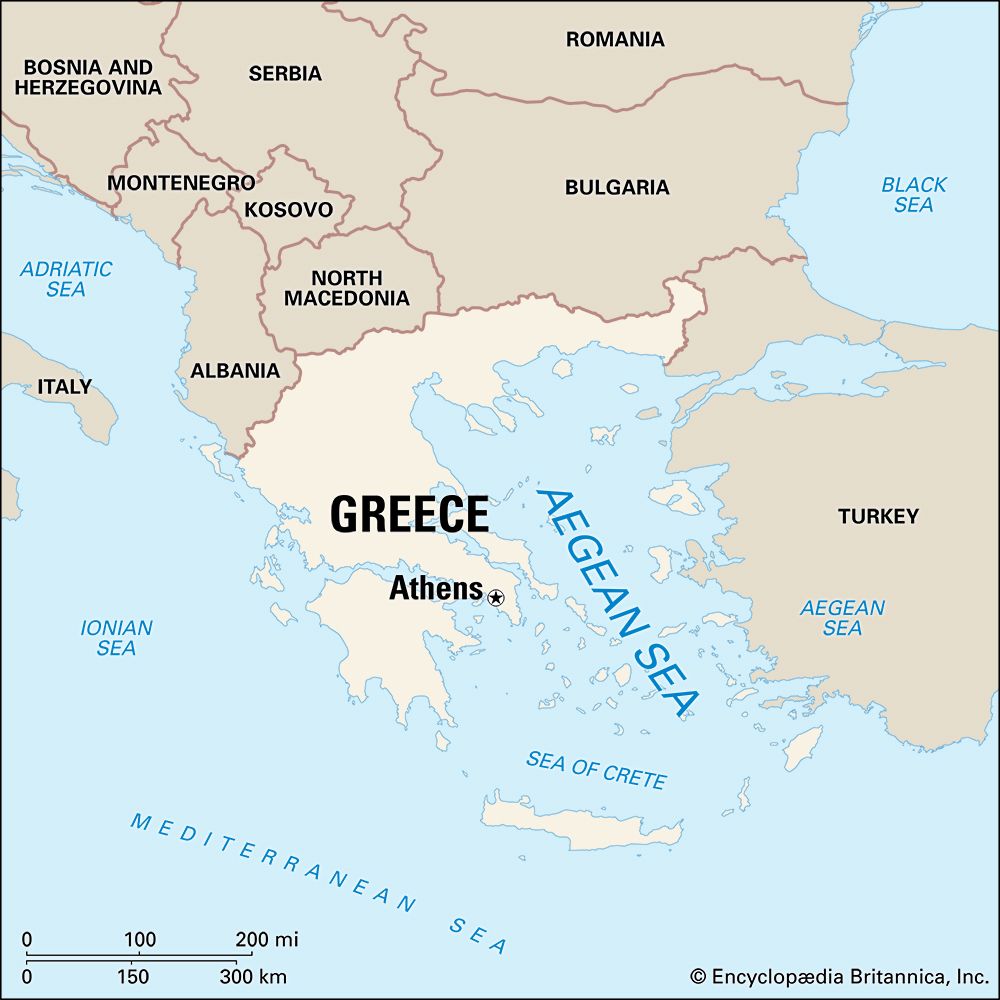
The Euripus Strait serves as the narrow dividing point between the northern and southern sections of the Gulf of Euboea, an arm of the Aegean Sea. Situated at the town of Chalkída, the strait acts as a constricted passage that separates the island of Euboea from the Greek mainland.
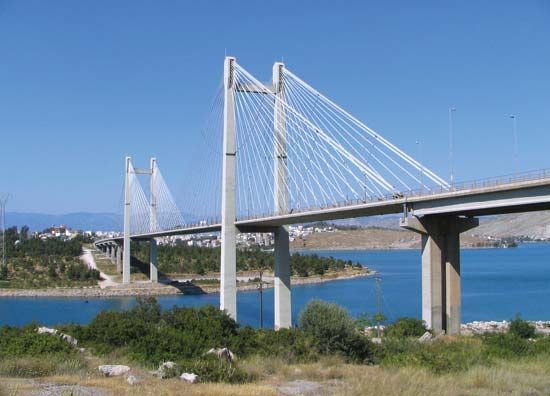
Geologically, the Euripus is considered a submerged river valley. While the northern and southern gulfs extend for tens of miles, the strait itself is only 5 miles (8 km) long and narrows significantly, reaching widths as small as 130 feet (40 meters). Due to its shallow depth of 20 to 27 feet (6 to 8 meters), the passage is navigable primarily by small vessels. The strait has been a site of human intervention since 411 BCE, when it was first spanned by a dike and tower system, and it continues to be crossed today by a movable bridge at Chalkída.
How has the Euripus Strait influenced the development of the nearby city of Chalcis?
The Euripus Strait has been fundamental to the development of Chalcis (Chalkída) by positioning the city as a vital strategic and commercial crossroads. Located at the narrowest point of the channel, the city historically served as a gateway for trade between Thessaly, Thrace, Macedonia, and Attica6.
This geographic advantage facilitated the city’s rise as a powerful maritime force in antiquity, enabling the Ionians of Chalcis to establish numerous colonies across the Mediterranean6. The strait’s strategic importance necessitated early infrastructure; a series of spans connecting Euboea to the mainland has existed since 411 BCE, culminating in the modern movable bridge that supports contemporary transit.61
Beyond its role in trade and connectivity, the strait has defined the city’s identity through its unique, erratic tidal currents. While these currents have long intrigued observers—including Aristotle, who famously spent time in the city—they remain a defining feature of the local landscape. Today, the city continues to leverage its location for agricultural trade and as a popular destination for visitors.61
Sources
- Euripus — Encyclopædia Britannica
- Gulf of Euboea — Encyclopædia Britannica
- Aegean Sea — Encyclopædia Britannica
- subtropical gyre — Encyclopædia Britannica
- ocean current - The subtropical gyres — Encyclopædia Britannica
- Chalcis — Encyclopædia Britannica
Published on · 3 min read