Zelkova
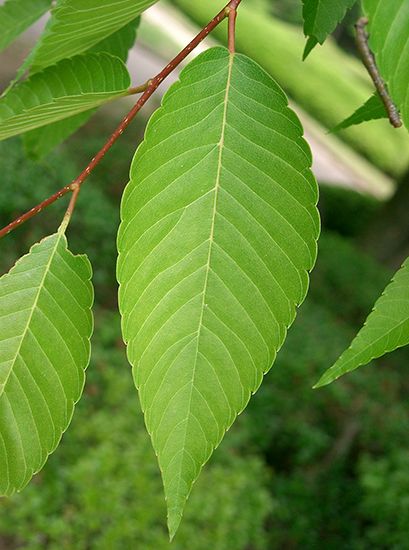
Zelkova is a genus comprising approximately five species of trees and shrubs within the elm family (Ulmaceae), native to Asia.
What is Zelkova?
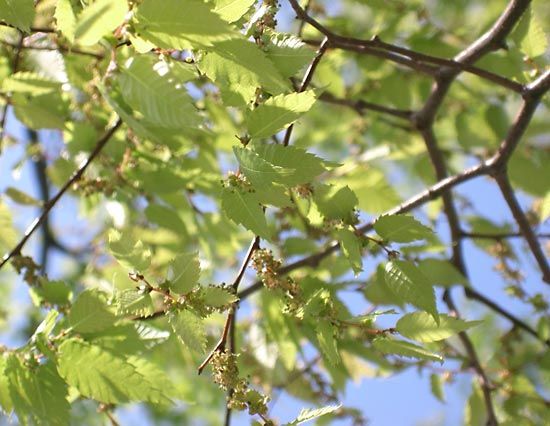
Zelkova is a genus comprising approximately five species of trees and shrubs within the elm family (Ulmaceae), native to Asia.1
The most prominent species is the Japanese zelkova (Zelkova serrata), which can reach heights of up to 30 meters (100 feet). It is highly valued as a timber tree and is a popular subject for bonsai. Because it exhibits resistance to Dutch elm disease, it is frequently planted as a shade tree in regions where the American elm has been decimated by the disease, though it is generally less cold-hardy. Other notable species include Z. carpinifolia from the Caucasus and Z. sinica from China, both of which are typically shorter and feature wavy-toothed leaves.12
The name is derived from the Georgian word dzelkva.2
What is Dutch elm disease?
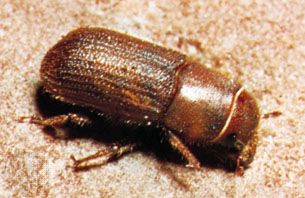
Dutch elm disease is a devastating fungal infection that has significantly reduced elm populations across Europe and North America. The disease is caused by three species of ascomycete fungi in the genus Ophiostoma, which are primarily spread by bark beetles.34
When infected beetles feed on the twigs of healthy trees, they introduce fungal spores into the tree’s xylem. The fungus reproduces rapidly, causing the tree’s leaves to wilt, turn yellow or brown, and eventually drop. This process often leads to the death of the tree, sometimes within a few months for younger, rapidly growing specimens.3
Control efforts focus on managing beetle populations by removing dead or dying wood and using insecticides. While many elms are highly susceptible, some species—such as the Chinese elm and Siberian elm—show good resistance, and researchers continue to experiment with resistant hybrids. Related trees like Zelkova are also susceptible to varying degrees.3
How are bonsai trees cultivated?
Bonsai is the art of training ordinary trees and shrubs to remain small while maintaining an aged, naturalistic appearance. These specimens are not genetically dwarfed; rather, they are kept small through a rigorous system of horticultural techniques.6
Cultivation Techniques
- Pruning: Both roots and branches are pruned throughout the growing season to control growth and shape. During repotting, which occurs every one to five years, gradual root pruning allows the tree to eventually fit into a small, shallow container.6
- Training: Branches are often trained into specific shapes by tying them with wire. The goal is to emulate trees found in nature, such as those growing in rocky mountain crevices.6
- Maintenance: Bonsai require consistent care, including daily watering and the application of liquid fertilizer. While they are typically kept outdoors, they may be brought inside briefly for display.6
- Container Selection: The choice of pot is essential for aesthetic harmony. Containers are usually made of earthenware and must have drainage holes.6
What are the main differences between elm and zelkova trees?
While both elm (Ulmus) and zelkova belong to the same family, Ulmaceae, they are distinct genera with notable differences in disease resistance and hardiness.
Key Differences
- Disease Resistance: The most significant distinction is that many elm species are highly susceptible to Dutch elm disease, which has decimated populations in Europe and North America. In contrast, Zelkova—particularly the Japanese zelkova—is valued as a shade tree substitute precisely because it is resistant to this fungus.125
- Cold Hardiness: Elms are generally noted for their cold hardiness, whereas Zelkova is typically considered less cold-hardy than many elm species.1
- Botanical Characteristics: While both have toothed leaves, elm leaves are often lopsided at the base and produce a nutlike fruit called a samara surrounded by a winglike structure. Zelkova species, such as Z. serrata, are known for their sharply toothed leaves and are widely used as timber trees and in the art of [bonsai].571
Sources
- Zelkova — Encyclopædia Britannica
- zelkova — Merriam-Webster
- Dutch elm disease — Encyclopædia Britannica
- Dutch elm disease — Merriam-Webster
- elm — Encyclopædia Britannica
- bonsai — Encyclopædia Britannica
- Ulmaceae — Encyclopædia Britannica
Published on · 3 min read