Land Reclamation
Land reclamation is the process of improving land to make it suitable for more intensive use. This practice is essential for increasing food and fiber…
What is land reclamation?
Land reclamation is the process of improving land to make it suitable for more intensive use. This practice is essential for increasing food and fiber production by developing new agricultural areas or enhancing the efficiency of existing ones.12
Common reclamation activities include:
- Irrigation and Drainage: Improving rainfall-deficient areas through irrigation and installing drainage systems to manage water tables and soil salinity.12
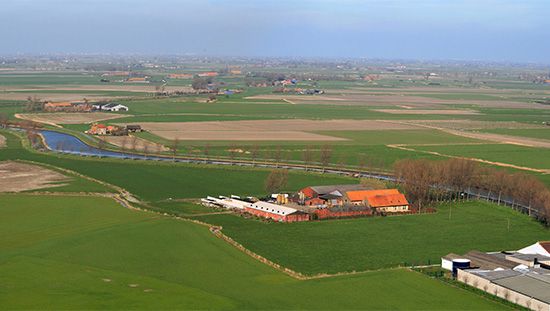
- Coastal Development: Creating land from the sea or tidal marshes by constructing dikes and pumping out water to form polders, a technique famously utilized in the Netherlands.23
- Soil Restoration: Removing detrimental constituents from salty or alkali lands and neutralizing acidic soils, such as those containing sulfides, to support crop growth.13
- Land Rehabilitation: Smoothing and revegetating areas affected by industrial activities like strip mining.1
These efforts often require complex engineering, such as river basin projects for flood control or the use of tide gates to manage seawater levels.23
Why do people use land reclamation?
People use land reclamation primarily to address the critical need for increased food and fiber production by developing new agricultural areas or enhancing the efficiency of existing ones. By transforming land that was previously unsuitable for intensive use, societies can expand their productive capacity to support growing populations.13
The motivations for these projects include:
- Agricultural Expansion: Reclaiming land allows for the cultivation of crops in areas previously hindered by poor soil quality, salinity, or excess water. Techniques such as irrigation and drainage are used to restore abandoned, salt-affected, or waterlogged lands to productivity.31
- Land Scarcity: In regions where land is critically needed, such as in the Netherlands, coastal areas and tidal marshes are reclaimed to create new territory for farming and development.21
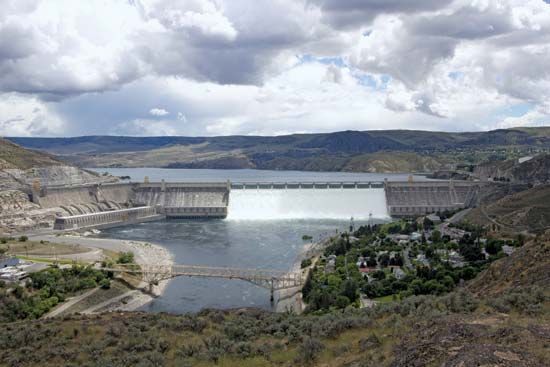
- Environmental and Infrastructure Management: Large-scale projects often integrate flood control and power generation, protecting existing communities while simultaneously creating usable land.14
- Restoration: Reclamation is also used to rehabilitate degraded landscapes, such as strip-mined areas or severely eroded gullies, to prevent further environmental damage and restore the land’s utility.35
How is land reclaimed from water like lakes or seas?
Reclaiming land from bodies of water like seas, lakes, or tidal marshes is a complex engineering process primarily focused on creating dry, usable land through diking and drainage.17
The Process of Creating Polders
The most common method involves constructing dikes roughly parallel to the shoreline to enclose a specific area of water. Once the area is sealed off, the water is removed to create a polder:27
- Dewatering: If the land surface is above low-tide level, water may be discharged through tide gates that open at low tide and close automatically to prevent seawater from re-entering. For land below low-tide level, mechanical pumps are used to lift the water over the dikes.27
- Sedimentation: In some cases, sediment-laden streams are diverted into the diked area. The settling sediment helps build up the polder bottom, which facilitates future drainage.27
- Soil Treatment: Newly reclaimed land often contains high levels of salt, which prevents plant growth. Extensive procedures—such as flushing the soil with fresh water and installing subsurface drainage—are required to make the land agriculturally productive.287
- Chemical Neutralization: If the soil contains high levels of sulfides (often called “cat clays”), drainage can cause the soil to become highly acidic. In these instances, large quantities of lime may be necessary to neutralize the soil before it can support crops.7
What materials are commonly used in land reclamation?
Land reclamation utilizes a variety of materials depending on the specific goals of the project, ranging from agricultural restoration to large-scale coastal development.
Materials Used in Reclamation
- Dredged Spoil: In coastal and harbor projects, materials such as silt, sand, and sometimes softer rock are excavated from river or sea bottoms and transported to reclamation sites. This material is often pumped ashore via floating pipelines or delivered by hopper barges.1
- Soil and Earth: For terrestrial reclamation, such as restoring strip-mined areas, the existing spoil banks and surrounding earth are regraded and smoothed to restore the land’s surface.9
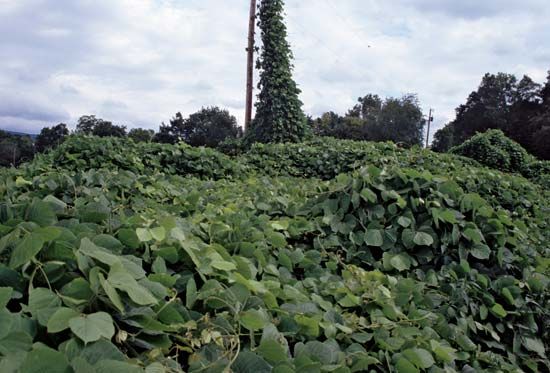
- Vegetation: Plants are essential for stabilizing reclaimed land. In eroded areas, reforestation is common, and specific plants like kudzu have historically been used to stabilize gullies, though such choices are now carefully evaluated for their potential impact as invasive species.10
- Chemical Amendments: To make reclaimed land agriculturally viable, materials like lime are used to neutralize acidic soils, particularly when the soil contains high levels of sulfides.1
Sources
- land reclamation — Encyclopædia Britannica
- Drainage - Land reclamation — Encyclopædia Britannica
- land reclamation - Reclamation of coastal areas — Encyclopædia Britannica
- North Sea - Reclamation and flood-control projects — Encyclopædia Britannica
- land reclamation - Reclamation of eroded, infertile, and “new” lands — Encyclopædia Britannica
- urban renewal — Encyclopædia Britannica
- polder — Encyclopædia Britannica
- land reclamation - Reclamation of swampy lands — Encyclopædia Britannica
- Harbors and sea works - Dredging — Encyclopædia Britannica
- coal mining - Reclamation equipment — Encyclopædia Britannica
Published on · 4 min read