Polder
Polder construction involves significant environmental challenges, primarily centered on soil composition and water management. A major concern is the high…
What are the environmental challenges and concerns associated with polder construction?
Polder construction involves significant environmental challenges, primarily centered on soil composition and water management. A major concern is the high salt content in newly reclaimed land, which prevents most plant growth. To develop agriculturally productive soil, extensive procedures are required to remove this salt, often involving the installation of subsurface drainage systems to lower water tables and flush the soil with fresh water.12
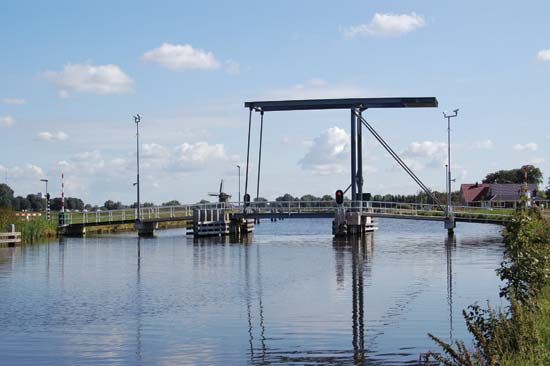
Furthermore, the process of reclaiming land from bodies of water—such as the transformation of the Zuiderzee into the freshwater IJsselmeer—fundamentally alters local ecosystems. These projects require complex engineering, including the construction of dikes, pumping stations, and sluices to manage water levels and prevent flooding. While these efforts successfully create new land for agriculture, industry, and housing, they necessitate ongoing maintenance to stabilize soils and manage the hydrological balance of the reclaimed areas.123
What is a polder and how is it created through land reclamation?
A polder is a tract of low-lying land reclaimed from a body of water, such as a sea or lake, through a systematic process of engineering and drainage.1
The Creation Process
The creation of a polder typically involves several key steps:
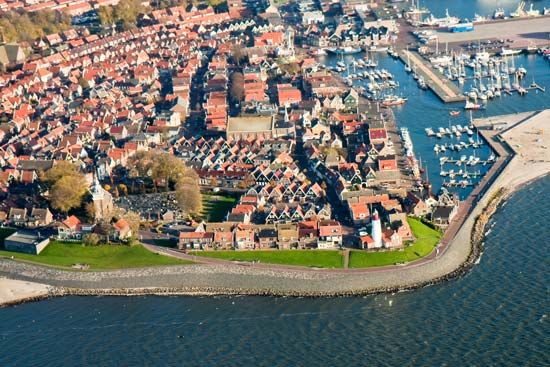
- Diking: Builders construct dikes roughly parallel to the shoreline to enclose the target area, effectively separating it from the surrounding water.1
- Drainage: Once enclosed, the water within the dikes must be removed. If the land surface is above low-tide level, water can be discharged through tide gates that open at low tide and close automatically to prevent seawater from re-entering.1
- Pumping: For land situated below low-tide level, mechanical pumping stations are required to lift the water over the dikes.13
- Soil Preparation: Newly reclaimed land often contains high levels of salt, rendering it unsuitable for most plants. Extensive procedures are necessary to flush the soil and develop it into agriculturally productive land.1
A notable example of this practice is the IJsselmeer project in the Netherlands, where a complex system of dikes, sluices, and locks was used to reclaim large areas for agriculture and development.3
What are some famous examples of large-scale polder projects around the world?
The most prominent and well-documented examples of large-scale polder construction are found in the Netherlands, where centuries of engineering have transformed the landscape.
The IJsselmeer Polders
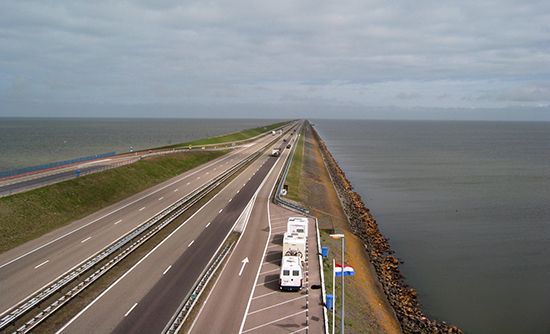
The most notable system of polders was developed following the Zuiderzee project, which began in 1920. By constructing the 19-mile-long Afsluitdijk (completed in 1932), the Dutch sealed off the former Zuiderzee inlet from the North Sea, creating the freshwater IJsselmeer. Within this lake, four major polders were reclaimed:1346
- Wieringermeer Polder: Completed in 1930, this was the first of the major IJsselmeer polders.4
- Northeast (Noordoost) Polder: Completed in 1942, it serves primarily agricultural purposes.46
- East Flevoland Polder: Completed in 1957, this area now supports residential, industrial, and recreational development.46
- South Flevoland Polder: Completed in 1968, it is home to cities such as Lelystad and Almere.46
Historical and Global Context
While the Dutch projects represent the most extensive modern application, other historical examples exist:
- United States: During the colonial period, extensive tidal marshes in the Carolinas and Georgia were diked and drained for rice production. However, these systems were not maintained, and much of the land eventually reverted to tidal marsh.2
- England: Various coastal areas have historically utilized diking and drainage techniques to reclaim land from the sea, similar to the methods employed in the Netherlands.2
What role do polders play in agriculture and food production?
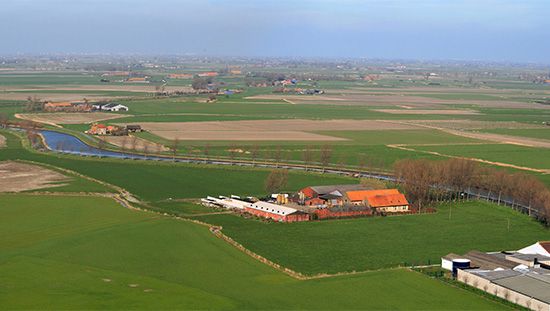
Polders play a significant role in agriculture and food production by transforming previously unusable, water-covered areas into fertile land. Through the construction of dikes and the implementation of drainage systems, these tracts of land are reclaimed for cultivation.14
Agricultural Utility
Once reclaimed, polders often provide highly productive soil, such as the rich marine clay found in the IJsselmeer Polders of the Netherlands. These areas have historically been used to produce a variety of essential crops, including:
- Corn (maize)
- Wheat
- Sugar beets
- Potatoes
- Oilseeds8
Challenges and Soil Management
The transition from water to farmland requires careful soil management. Newly reclaimed areas are often saturated with salt, which inhibits plant growth. To make this land viable for food production, farmers and engineers must employ procedures to flush the soil with fresh, nonsaline water.19
In some cases, soils may contain high levels of sulfides, known as “cat clays,” which can become highly acidic upon drainage. Successfully farming these areas requires significant applications of lime to neutralize the soil, or, in regions with abundant labor, the use of specialized rice cultivation methods that avoid draining the land entirely.4
Sources
- polder — Encyclopædia Britannica
- Drainage - Land reclamation — Encyclopædia Britannica
- Zuiderzee — Encyclopædia Britannica
- IJsselmeer Polders — Encyclopædia Britannica
- land reclamation - Reclamation of swampy lands — Encyclopædia Britannica
- Netherlands - Drainage and dikes — Encyclopædia Britannica
- land reclamation — Encyclopædia Britannica
- land reclamation - Reclamation of coastal areas — Encyclopædia Britannica
- land reclamation - Reclamation of salt-affected soils — Encyclopædia Britannica
Published on · 4 min read