Drake Passage
Navigating the Drake Passage presents significant maritime challenges due to its extreme environmental conditions. Historically, it served as a rigorous test…
What are the challenges of navigating through the Drake Passage?
Navigating the Drake Passage presents significant maritime challenges due to its extreme environmental conditions. Historically, it served as a rigorous test for ships and crews, characterized by stormy seas and icy waters.1
Key challenges include:
- Severe Weather: The passage is known for intense, predominantly westerly winds, which are particularly strong near Cape Horn. Cyclonic low-pressure systems frequently sweep from west to east across the southern edge of the passage.1
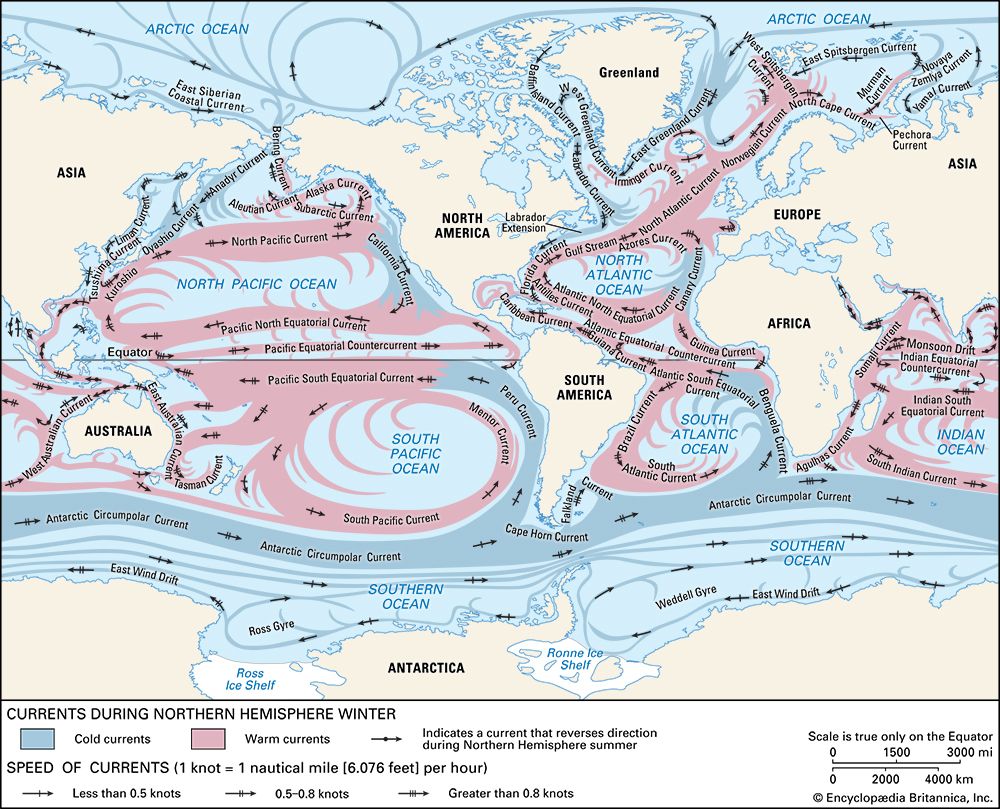
- Powerful Currents: The area is home to the Antarctic Circumpolar Current, the world’s most voluminous current. The physical constriction of the passage accelerates this water flow, causing it to increase rapidly in velocity, especially around latitude 60° S.1
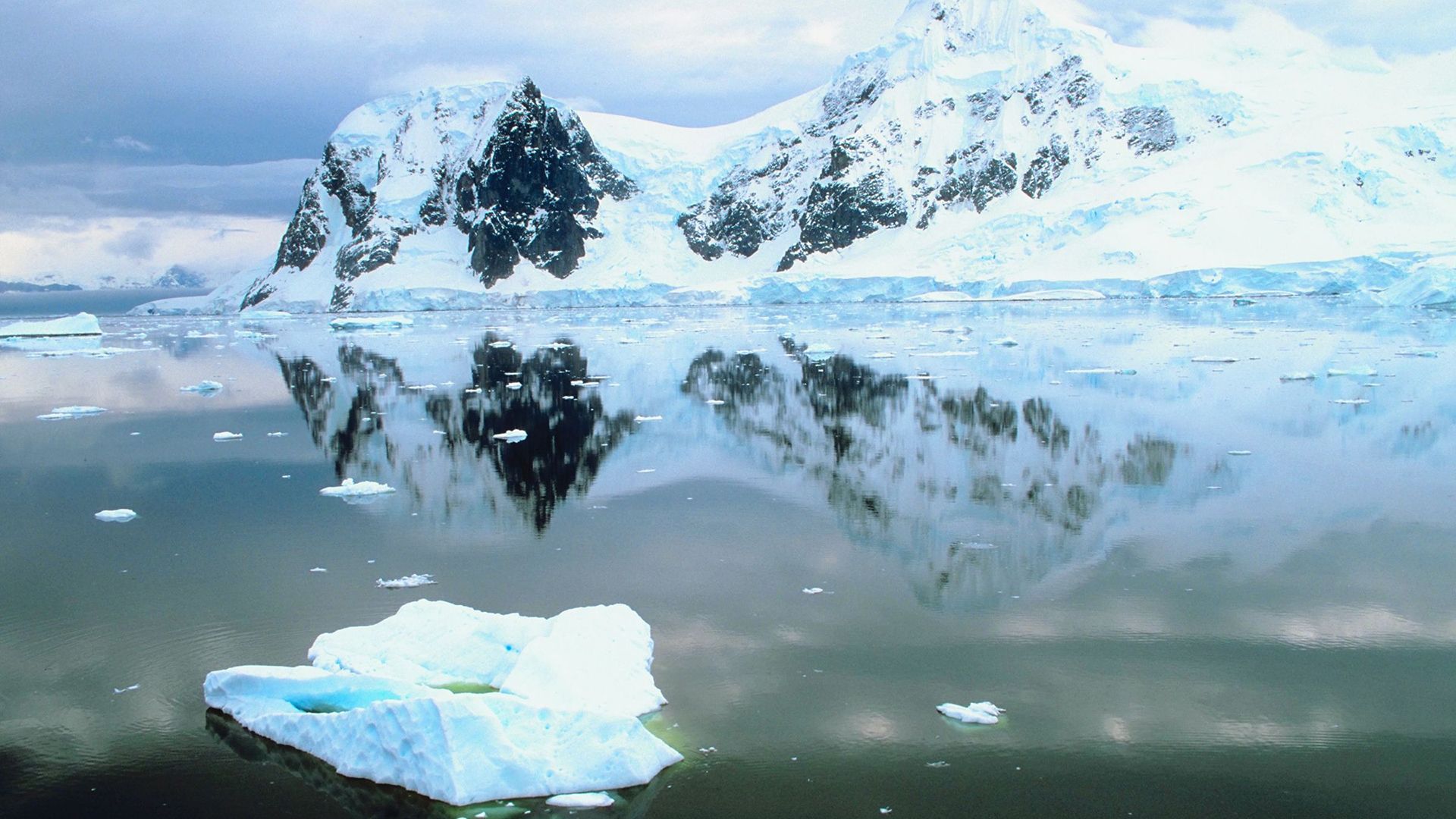
- Ice Hazards: Seasonal sea ice coverage varies, reaching its maximum in September. During this time, ice floes can occasionally reach as far north as Cape Horn, posing a constant threat to navigation.1
- Temperature Extremes: The region marks a transition between subpolar and polar climates, with frigid air and surface water temperatures that drop significantly as one moves south toward Antarctica.1
How does the Drake Passage affect the climate of Antarctica and surrounding regions?
The Drake Passage acts as a critical climatic transition zone, separating the cool, humid conditions of Tierra del Fuego from the frigid, polar environment of Antarctica. Its influence on the climate of the region is primarily driven by its role in atmospheric and oceanic circulation.1
- Oceanic Regulation: The passage facilitates the Antarctic Circumpolar Current, the world’s most voluminous current. This current plays a vital role in global climate regulation and influences the temperature of the Southern Ocean by transporting heat and nutrients. Specifically, the upwelling of warm water masses, such as the Circumpolar Deep Water, can reach the edges of the Antarctic continent, where it contributes to the warming of ice sheet bases and accelerates ice loss.14
- Atmospheric Patterns: The passage is a corridor for cyclonic low-pressure systems that move from west to east. These systems, along with the region’s predominantly westerly winds, dictate local weather patterns, including temperature and precipitation levels.1
- Thermal Gradient: The passage maintains a sharp thermal boundary, known as the Antarctic Convergence, near latitude 60° S, where surface water temperatures drop significantly, reinforcing the isolation of the Antarctic climate.1
How wide and deep is the Drake Passage?
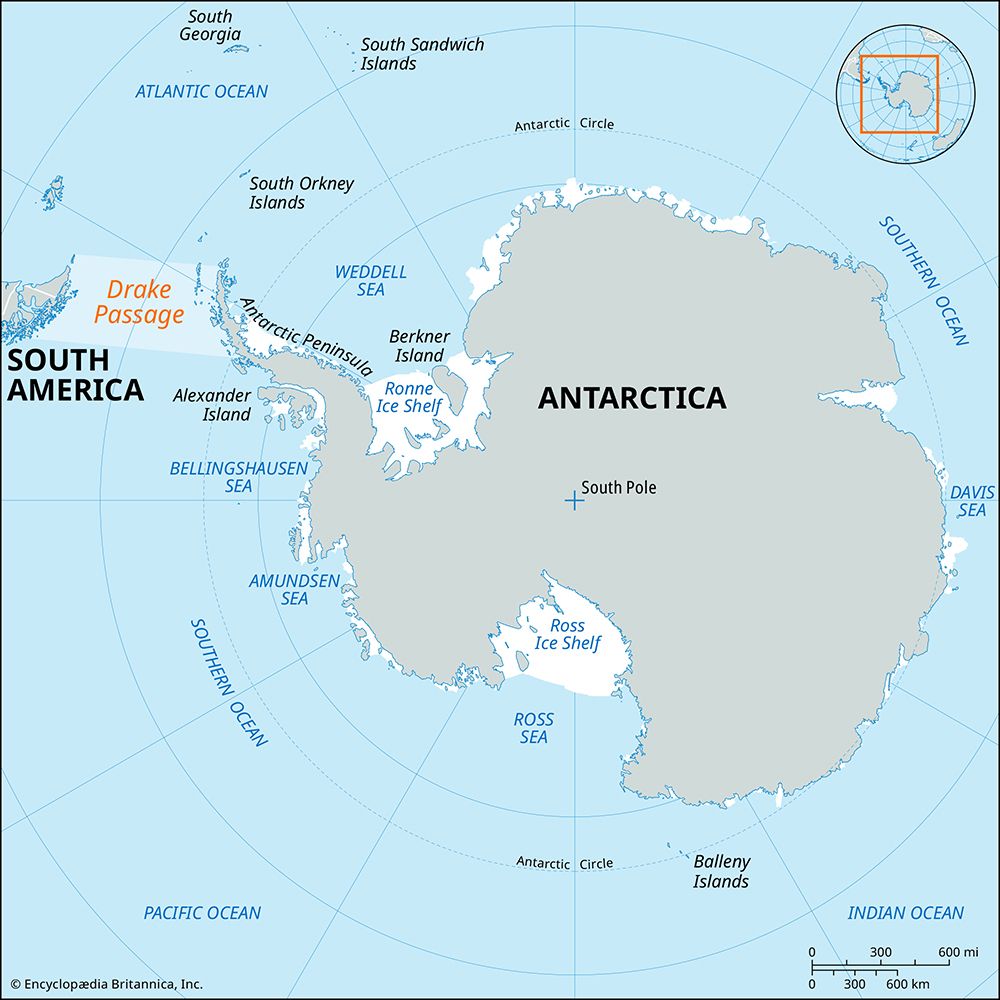
The Drake Passage is a deep waterway that serves as a critical connection between the Atlantic and Pacific oceans. Its physical dimensions are as follows:
- Width: The passage spans approximately 600 miles (1,000 km) in width between Cape Horn and the South Shetland Islands.1
- Depth: It has an average depth of about 11,000 feet (3,400 meters). In certain regions near its northern and southern boundaries, the depth reaches as much as 15,600 feet (4,800 meters).1
What role does the Drake Passage play in global ocean circulation?
The Drake Passage is a fundamental component of global ocean circulation, primarily because it facilitates the Antarctic Circumpolar Current, the world’s most voluminous ocean current. By providing a deep-water connection between the Atlantic and Pacific oceans, the passage enables the global exchange of water masses at all depths.165
Key roles in global circulation include:
- Isolation of Antarctica: The establishment of the passage and the resulting circumpolar flow roughly 25 million years ago isolated Antarctica from warmer subtropical surface waters, contributing to the continent’s cooling and the formation of its ice sheets.78
- Deep-Water Exchange: The passage acts as a conduit for the return flow of water within the thermohaline circulation. It allows for the northward spread of cold, low-salinity Antarctic Intermediate Water and the return of deep waters that compensate for the sinking of North Atlantic Deep Water in the Northern Hemisphere.8
- Heat Regulation: The current’s movement creates meanders and eddies that facilitate the poleward transfer of heat, helping to balance the oceanic heat loss to the atmosphere in the Antarctic region.5
Sources
- Drake Passage — Encyclopædia Britannica
- Drake Passage — Merriam-Webster
- Northwest Passage — Encyclopædia Britannica
- Amundsen Sea — Encyclopædia Britannica
- Antarctic Circumpolar Current — Encyclopædia Britannica
- paleoceanography — Encyclopædia Britannica
- ocean current - The Antarctic Circumpolar Current — Encyclopædia Britannica
- ocean current - Thermohaline circulation — Encyclopædia Britannica
Published on · 3 min read