Drill
The drill (Mandrillus leucophaeus) is a large, short-tailed monkey native to regions spanning southeastern Nigeria, western Cameroon, and Bioko Island. While…
What are drills and how are they related to other primates?
The drill (Mandrillus leucophaeus) is a large, short-tailed monkey native to regions spanning southeastern Nigeria, western Cameroon, and Bioko Island. While sometimes historically misidentified as a baboon, the drill is actually a member of the Old World monkey family, Cercopithecidae, and is closely related to the mandrill and certain species of mangabeys.12
As a primate, the drill shares several characteristics with its relatives, including a stout, quadrupedal body and a gregarious nature. They are omnivorous, terrestrial, and diurnal, often living in troops that can exceed 100 individuals. Like other monkeys, they are highly social, though they are currently classified as endangered due to the severe threats of deforestation and hunting.1
What are the physical characteristics that distinguish drills from other primates?
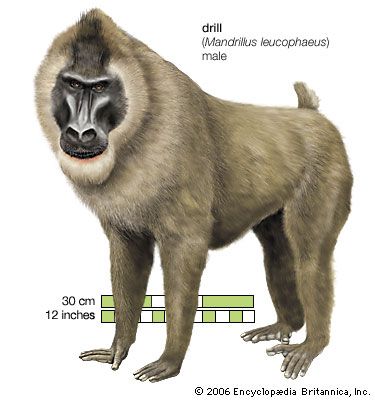
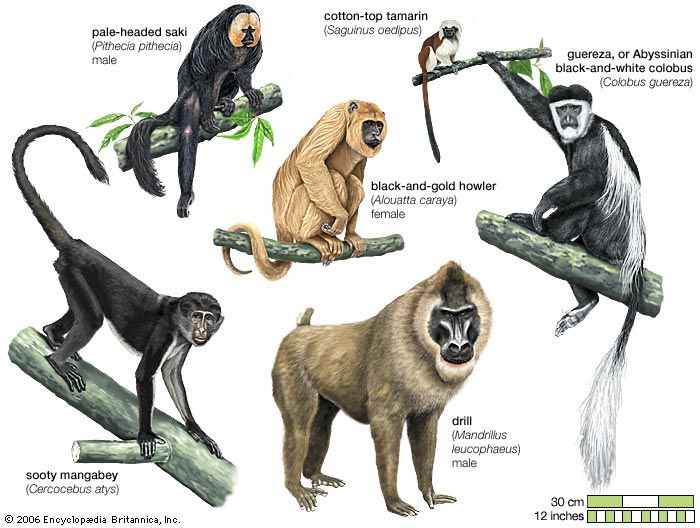
The drill (Mandrillus leucophaeus) is a robust, short-tailed Old World monkey that exhibits several distinct physical characteristics. As a member of the family Cercopithecidae, it shares the group’s defining features, such as narrow noses with downward-facing nostrils and ischial callosities—hard, bare “sitting pads” on the buttocks—which are absent in New World monkeys.14
Key physical traits that distinguish the drill include:
- Body and Size: It is a stout-bodied, quadrupedal primate. Males are significantly larger than females, reaching lengths of approximately 82 cm (32 inches).1
- Facial Features: Drills possess a distinctive black face highlighted by a crimson lower lip. The hair surrounding the face and the tufts located behind each ear are yellowish white.1
- Coloration: The animal’s fur is primarily olive-brown, and like its relative the mandrill, it features vividly colored buttocks.1
- Anatomy: Unlike many New World monkeys, drills lack prehensile tails and possess opposable thumbs, which allow for precise handling of objects.4
How do drill primates compare to their close relatives, such as mandrills and baboons?
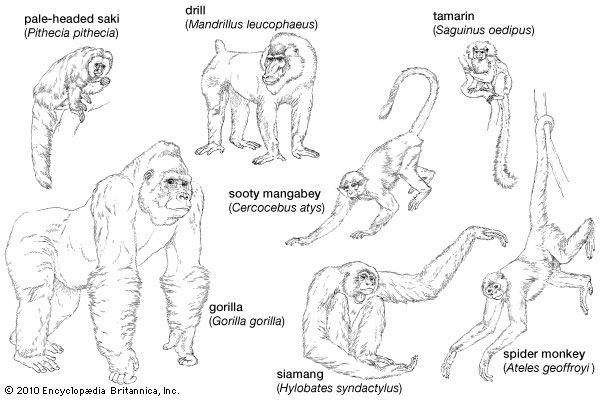
The drill (Mandrillus leucophaeus) and the mandrill are closely related, both belonging to the genus Mandrillus within the Old World monkey family, Cercopithecidae. Historically, both were classified as baboons in the genus Papio, but they are now recognized as distinct from true baboons, sharing closer evolutionary ties to certain mangabeys.17
Compared to their relatives, drills and mandrills share several key traits:
- Physicality: Both are stout-bodied, quadrupedal, and possess vividly colored buttocks.17
- Lifestyle: They are diurnal, omnivorous, and primarily terrestrial, often living in large, gregarious troops.17
- Distinctions: The mandrill is the largest of all Old World monkeys, with males reaching up to 35 kg (77 pounds), whereas the drill is slightly smaller. While mandrills are famous for their striking, multi-colored facial skin (blue, violet, and scarlet), drills are characterized by a black face with a crimson lower lip and yellowish-white hair tufts.17
How endangered are drill primates and what conservation efforts are in place to protect them?
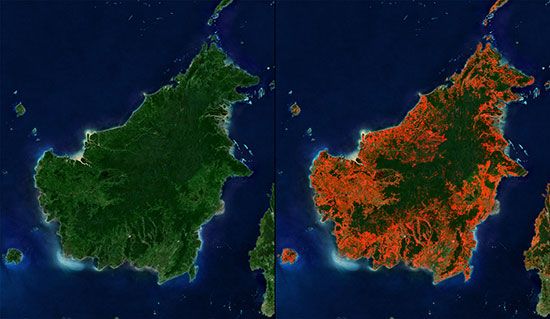
The drill (Mandrillus leucophaeus) is currently classified as a highly endangered species. Its population decline is primarily driven by two major anthropogenic factors: hunting and deforestation.1
These threats are part of a broader crisis affecting primates globally, where approximately 75 percent of all species are experiencing population declines due to habitat loss from logging, mining, and the conversion of land for agriculture and livestock. Additionally, poaching and the illegal trade in wildlife continue to exacerbate the risk of extinction for many species.89
While specific, large-scale conservation programs for the drill are not detailed in the provided records, successful conservation models for other critically endangered primates demonstrate that recovery is possible through:
- Habitat Preservation: Protecting natural areas in perpetuity to prevent further fragmentation.10
- Predation Control: Managing and limiting human predation and poaching activities.10
- Captive Breeding and Reintroduction: Programs like those used for the golden lion marmoset show that managed breeding can help bolster wild populations.10
Sources
- drill — Encyclopædia Britannica
- drill — Merriam-Webster
- monkey — Encyclopædia Britannica
- monkey - Classification — Encyclopædia Britannica
- mandrill — Merriam-Webster
- monkey - Old World monkeys versus New World monkeys — Encyclopædia Britannica
- mandrill — Encyclopædia Britannica
- primate — Encyclopædia Britannica
- critically endangered species — Encyclopædia Britannica
- primate - Distribution and abundance — Encyclopædia Britannica
Published on · 3 min read