Dung Beetle
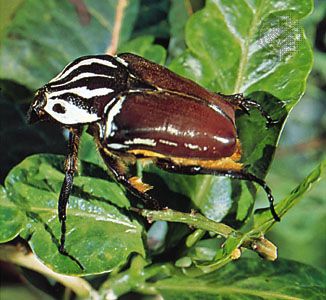
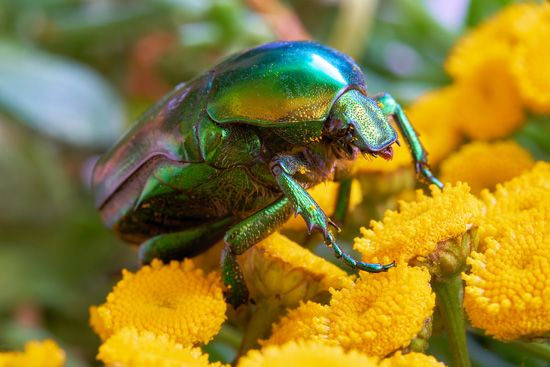
Dung beetles are not a single species but a diverse group of insects primarily classified within the family Scarabaeidae (order Coleoptera). While the term…
What are the different species of dung beetles, and how are they classified?
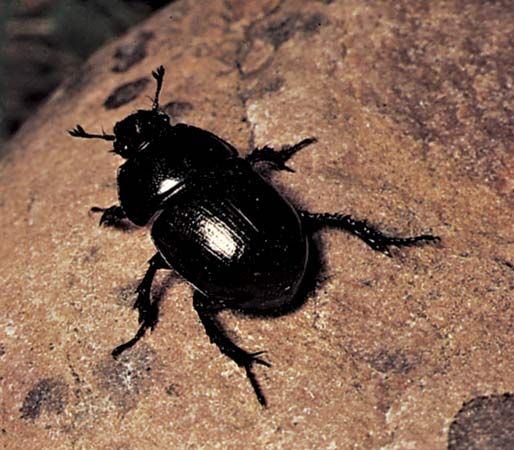
Dung beetles are not a single species but a diverse group of insects primarily classified within the family Scarabaeidae (order Coleoptera). While the term is most commonly associated with the subfamily Scarabaeinae—the “true” dung beetles—it also encompasses members of the subfamilies Aphodiinae and Geotrupinae.12
These beetles are categorized by their feeding and nesting behaviors:
- Scarabaeinae: Often referred to as true dung beetles, these species are famous for forming manure into balls, which they roll to protected locations to bury for feeding or egg-laying. Notable examples include the sacred scarab (Scarabaeus sacer) and the large Australian species Aulacopris maximus.12
- Aphodiinae and Geotrupinae: Unlike the ball-rollers, these groups excavate chambers directly beneath dung piles to feed or deposit eggs. The earth-boring dung beetle (such as Geotrupes) and the common European dor beetle (Geotrupes stercorarius) are members of this classification.1
Dung beetles vary significantly in size, ranging from 4 mm to 30 mm, and are ecologically vital for accelerating the conversion of waste into nutrients usable by other organisms.1
What is the cultural significance of dung beetles in ancient civilizations, particularly in Egypt?
In ancient Egyptian culture, the dung beetle—specifically the sacred scarab (Scarabaeus sacer)—held profound religious and symbolic significance. Egyptians observed the beetle rolling balls of dung across the ground and witnessed new beetles emerging from the earth, which they interpreted as a powerful metaphor for spontaneous creation, growth, and resurrection.456
The beetle was the primary manifestation of the god Khepri, the deity of the morning sun5. Just as the beetle rolled its dung ball, Khepri was believed to roll the sun across the sky at daybreak. This association linked the insect to the sun god Re and the cycle of life, death, and rebirth.657
Because the hieroglyph for the scarab (kheper) represented concepts like existence and manifestation, the beetle became a ubiquitous symbol in Egyptian life:5
- Amulets and Jewelry: Scarabs were crafted from materials like glazed steatite and worn as protective charms to secure the wearer’s rebirth.56
- Funerary Practices: “Heart scarabs” were placed within mummy bandages to symbolically replace the heart and ensure safe passage through the underworld.56
- Seals: Many scarabs functioned as administrative seals, often inscribed with royal names, official titles, or words of good omen.5
What are the different methods dung beetles use to collect and utilize dung?
Dung beetles utilize animal excrement through two primary behavioral strategies, which are largely determined by their taxonomic classification within the family Scarabaeidae:13
- Ball-Rolling (Scarabaeinae): Often called “true” dung beetles, these insects use their scooperlike heads and paddle-shaped antennae to form manure into spherical balls. These balls can sometimes reach the size of an apple. The beetles then roll the dung to a protected location to bury it. They use these buried stores for two purposes: as a food source for themselves or as a site for the female to deposit eggs, ensuring the larvae have a ready food supply upon hatching.13
- Tunneling (Aphodiinae and Geotrupinae): Members of these subfamilies do not form balls. Instead, they excavate chambers directly beneath a pile of dung. These underground chambers serve as the location for both feeding and egg-laying.1
These beetles are highly efficient, capable of consuming more than their own weight in 24 hours, which plays a critical role in ecosystems by accelerating the conversion of waste into nutrients usable by other organisms.1
What is the life cycle of a dung beetle, from egg to adult?
Dung beetles, like all members of the order Coleoptera, undergo complete metamorphosis, which consists of four distinct developmental stages: egg, larva, pupa, and adult.8
- Egg: The female dung beetle deposits her eggs within a prepared supply of excrement. Depending on the species, this may be inside a buried ball of dung or within an excavated underground chamber.91
- Larva: Upon hatching, the larva feeds on the surrounding dung. As it grows, it undergoes a process called molting, where it sheds its skin (cuticle) typically three to five times to accommodate its increasing size.8
- Pupa: After the final larval stage, the insect enters a nonfeeding prepupal stage and then transitions into a pupa. The pupa forms within a protective cell or cocoon made of dung or other materials. During this stage, the insect undergoes a transformation, developing adult features such as wings and hardened appendages.89
- Adult: Once the transformation is complete, the adult emerges from the pupal skin. It breaks through its protective cell to reach the surface, where its skeleton hardens and it assumes its final form and coloration.89
Sources
- dung beetle — Encyclopædia Britannica
- scarab beetle — Encyclopædia Britannica
- Coleoptera - Feeding habits and habitats — Encyclopædia Britannica
- scarab beetle: Top Questions — Encyclopædia Britannica
- scarab — Encyclopædia Britannica
- Khepri — Encyclopædia Britannica
- ancient Egyptian religion - The Gods — Encyclopædia Britannica
- Coleoptera - General features — Encyclopædia Britannica
- Coleoptera - Pupae — Encyclopædia Britannica
Published on · 3 min read