Dung Fly
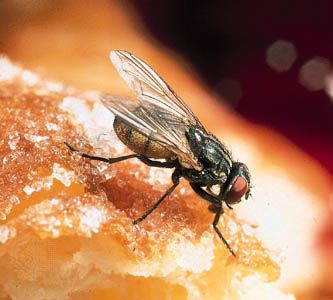
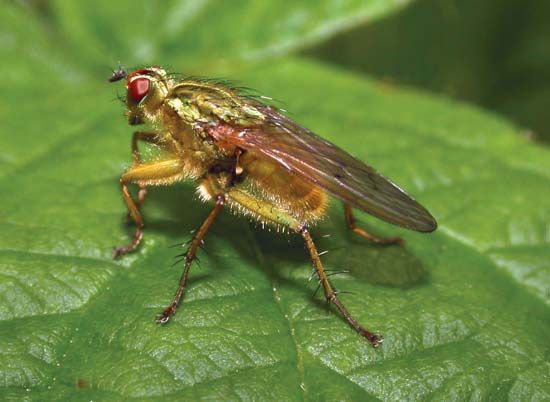
A dung fly is any member of the insect family Scatophagidae within the order Diptera. These insects are typically yellow or brown in color and are commonly…
What is dung fly?
A dung fly is any member of the insect family Scatophagidae within the order Diptera. These insects are typically yellow or brown in color and are commonly found in pastures.1
While the term is broadly used to describe various small, two-winged flies that breed in dung or decaying vegetable matter, members of the family Sphaeroceridae are also specifically referred to as small dung flies. In most Scatophagidae species, the eggs are laid directly in cow dung; the resulting larvae feed on the dung, which helps accelerate its decomposition. Some species, however, have larvae that feed on plants or rotting seaweed, and many are predacious as both larvae and adults.123
How do dung flies help in the decomposition of waste?
Dung flies (family Scatophagidae) play a vital role in the ecosystem by accelerating the decomposition of waste. In most species, the adult flies lay their eggs directly into cow dung.1
Once the eggs hatch, the resulting larvae feed on the dung1. This feeding process physically breaks down the organic matter, which significantly speeds up the natural decomposition cycle. By consuming and processing this waste, these insects help recycle nutrients back into the environment, preventing the accumulation of excrement in pastures.1
What are some other insects that rely on animal waste for their life cycle?
Beyond dung flies, many other insects rely on animal waste (feces) or carrion to complete their life cycles. These insects are essential to ecosystems, as they accelerate the breakdown of organic matter and recycle nutrients back into the soil.13
Insects That Rely on Animal Waste
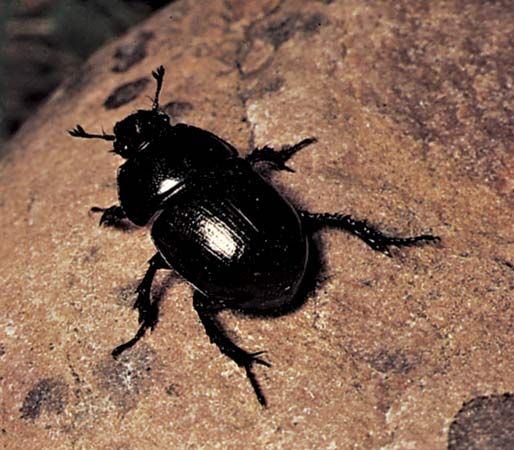
- Dung Beetles (Scarabaeinae): Perhaps the most famous coprophagous insects, these beetles collect animal excrement, often rolling it into balls to bury in protected spots. They lay their eggs on these buried dung balls, providing a food source for their developing larvae.5
- Sphaeroceridae (Small Dung Flies): These tiny, black-brown flies are found worldwide in dung-like materials. Like their larger relatives, they are closely associated with excrement throughout their life cycle.6
- Phoridae (Coffin Flies): These tiny flies scavenge in various organic debris, including carrion and nitrogenous decay products. They are frequently found in the nests of social insects like ants, bees, and termites.6
- Sepsidae: These small, round-headed flies can breed to infestation levels in sewage sludge and other waste materials.6
- Milichiidae: Known as “insect jackals,” these flies breed in dung. Interestingly, the adults often attach themselves to predatory insects or spiders to feed on the prey captured by those predators.6
- Ephydridae (Shore Flies): These insects exhibit a wide range of larval habitats, including excrement, carrion, and sewage, demonstrating a high level of adaptability to decaying organic matter.6
Insects That Rely on Carrion
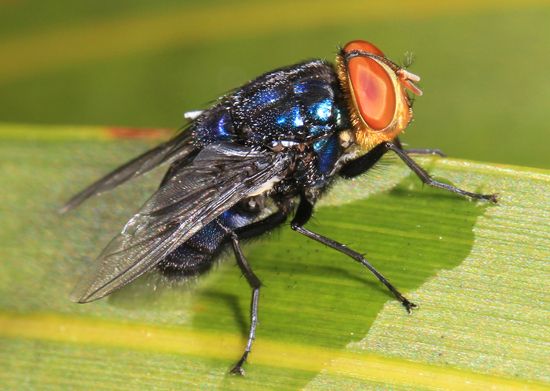
- Blow Flies (Calliphoridae): These flies are primary decomposers of dead meat. Their larvae, known as maggots, feed on carrion, which significantly speeds up the decay process.61
- Flesh Flies (Sarcophagidae): These flies are commonly found around refuse dumps and carrion. Their larvae feed on decaying animal matter, playing a key role in the balance of nature.61
- Carrion Beetles (Silphidae): These beetles locate small dead animals and bury them in the ground, where they lay their eggs so the larvae can feed on the carcass.5
- Dermestids: These beetles are specialized scavengers that feed on dead animal skins, dried remains, and other accumulations of debris.5
Are there any dung flies that are considered pests to humans or livestock?
While members of the family Scatophagidae (true dung flies) are generally beneficial because their larvae accelerate the decomposition of waste, other flies that breed in dung or animal refuse are significant pests to humans and livestock.13
It is important to distinguish between true dung flies and other insects that share similar breeding habits but cause harm. For example, the horn fly (Haematobia irritans), which belongs to the family Muscidae, is a serious pest to cattle. Unlike the beneficial Scatophagidae, adult horn flies cluster on the necks and rumps of cattle to suck blood, leading to weight loss and reduced milk production in the animals.10
Additionally, while not classified as dung flies, other insects like the human bot fly (Dermatobia hominis) and various warble flies (Hypoderma species) are major pests that parasitize livestock and humans, causing significant economic damage to beef and hide production. Some species of Sepsidae and Sphaeroceridae, which are closely associated with dung and sewage, can also reach infestation levels that become problematic in certain environments.113
Sources
- dung fly — Encyclopædia Britannica
- dung fly — Merriam-Webster
- Diptera - Annotated classification — Encyclopædia Britannica
- Diptera - Larvae — Encyclopædia Britannica
- Coprophagy — Encyclopædia Britannica
- insect - Role in nature — Encyclopædia Britannica
- Coleoptera - Feeding habits and habitats — Encyclopædia Britannica
- major types of pollinators - Beetles and flies — Encyclopædia Britannica
- soil organism — Encyclopædia Britannica
- horn fly — Encyclopædia Britannica
- bot fly — Encyclopædia Britannica
Published on · 3 min read