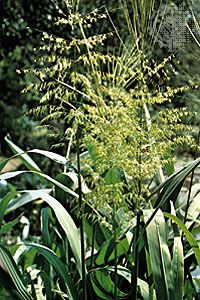
Durum Wheat
Durum wheat (Triticum durum) is a hard variety of wheat known for producing a glutenous flour.
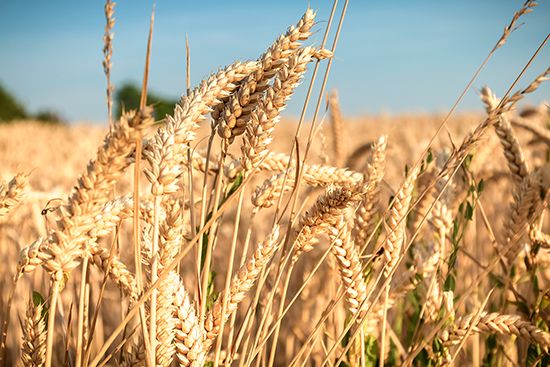
What is Durum wheat?
Durum wheat (Triticum durum) is a hard variety of wheat known for producing a glutenous flour.12
Unlike common wheat, which is primarily used for breadmaking, durum wheat is specifically valued for its endosperm. When processed, this part of the grain yields semolina, a coarse, purified middling that serves as the essential ingredient for making pasta products, such as spaghetti and macaroni.12
As a member of the Poaceae family, it shares the general characteristics of other cereal grasses in the Triticum genus but is distinct in its application and culinary utility.2
How does gluten affect the texture of pasta?
Gluten is a mixture of water-insoluble proteins—specifically gliadin and glutenin—that plays a critical role in the structure of pasta. When semolina derived from durum wheat is combined with water, these proteins form a network that provides the necessary consistency for high-quality alimentary pastes.341
For pasta, the gluten must be reasonably strong to maintain the product’s shape and texture during cooking. However, it requires different properties than the gluten used in bread making; while bread requires highly elastic gluten to trap gas and allow the dough to rise, pasta requires a structure that is less elastic. This specific balance ensures that the final product has the desired “bite” and structural integrity without becoming overly chewy or rubbery.314
What are the main differences between hard and soft wheat?
The primary differences between hard and soft wheat lie in their protein content and the resulting characteristics of their flour, which dictate their best culinary uses.
Hard Wheat
- Protein Content: Contains a higher protein level, typically ranging from 11% to 15%.62
- Gluten Properties: Known for “strong” gluten, which possesses high elasticity. This network is essential for trapping gas in leavened products, allowing dough to rise effectively.624
- Primary Uses: Because of its structural strength, hard wheat is the preferred choice for bread making, resulting in loaves with a desirable structure.62
Soft Wheat
- Protein Content: Contains lower protein levels, generally around 8% to 10%.2
- Gluten Properties: Produces “weak” gluten, which creates a soft, flowy dough that lacks the elasticity of hard wheat.64
- Primary Uses: Its properties are ideal for confectionery and delicate baked goods, such as cakes, biscuits, cookies, and pastries, where a light or tender texture is desired rather than a strong, elastic structure.62
In the industry, these are often referred to as “strong” and “weak” flours, respectively, based on their performance in the kitchen.6
How is semolina flour processed from the wheat kernel?
Semolina is produced through a process known as gradual reduction, which focuses on isolating the endosperm of durum wheat while removing the bran and germ.327
The processing steps include:
- Cleaning and Conditioning: The wheat is screened to remove impurities and dampened to ensure the kernel breaks properly without damaging the gluten protein.27
- Break Rolls: The grain passes through a series of steel cylinders with grooved surfaces, known as “break” rolls. These rolls tear the grain open rather than grinding it, releasing the inner endosperm in the form of coarse nodules called semolina.7
- Sieving and Purification: The resulting mixture is sieved to separate the semolina from the flour and larger pieces of grain. Air purifiers are then used to remove any remaining branny impurities, ensuring the final product is clean and free of specks.37
- Refinement: Unlike flour production, which uses many reduction rolls to grind particles into a fine powder, semolina production prioritizes the recovery of these coarse, purified middlings.37
Sources
- Durum wheat — Encyclopædia Britannica
- Wheat — Encyclopædia Britannica
- semolina — Encyclopædia Britannica
- Gluten — Encyclopædia Britannica
- Cereal processing - Semolina — Encyclopædia Britannica
- Cereal processing - Wheat: varieties and characteristics — Encyclopædia Britannica
- Cereal processing - Milling — Encyclopædia Britannica
Published on · 3 min read