Fairy Slipper
The fairy slipper (Calypso bulbosa) is a terrestrial orchid belonging to the family Orchidaceae. It is native to regions across North America and Eurasia…
What is Fairy slipper?
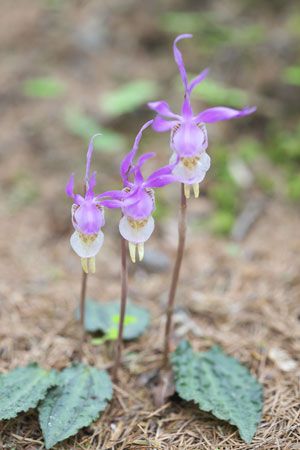
The fairy slipper (Calypso bulbosa) is a terrestrial orchid belonging to the family Orchidaceae. It is native to regions across North America and Eurasia, where it typically thrives in cool coniferous forests and bogs.12
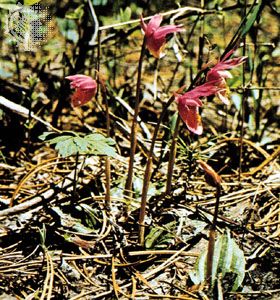
As the only species in its genus, this small, short-lived perennial plant is characterized by a single dark green, crinkled leaf and one fragrant, purplish-pink or white flower. The flower features a distinctive, pouchlike lower lip—the “slipper”—which is often speckled and bears yellow hairs on its upper surface. The plant grows from a rounded corm and relies on specific mycorrhizal fungi in the soil to survive.12
What are mycorrhizal fungi and why are they important for orchids?
Mycorrhiza refers to a symbiotic, often mutualistic, association between the branched filaments (hyphae) of a fungus and the roots of higher plants. In this relationship, both partners typically benefit: the plant provides carbohydrates from photosynthesis to the fungus, while the fungus supplies essential nutrients, such as fixed nitrogen, from the soil to the plant.34
For orchids, this relationship is critical for survival. Orchid seeds are extremely small and lack the endosperm necessary to fuel initial growth. Consequently, all orchid species are “initial mycoheterotrophs,” meaning they must rely on fungal partners to provide the nutrients required for germination and early development.354
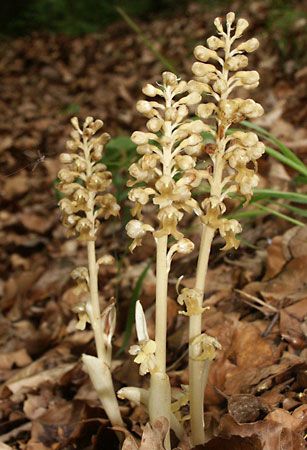
While most orchids eventually transition to autotrophy (gaining energy through photosynthesis), at least 210 species remain fully mycoheterotrophic throughout their lives, depending entirely on fungi for nutrition. Even in mature, photosynthetic orchids, the presence of mycorrhizal fungi likely aids in nutrient uptake and prevents the loss of vital resources from root tissues.45
How do orchids adapt to living in coniferous forests?
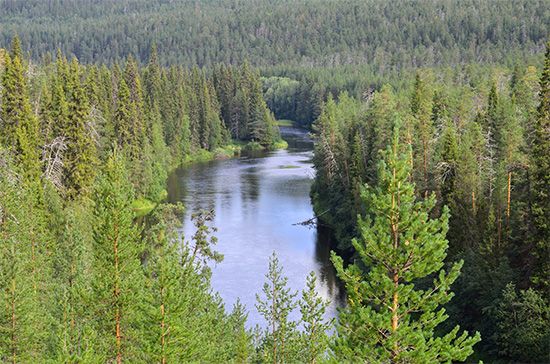
Orchids that inhabit coniferous forests have evolved specialized strategies to survive in environments characterized by acidic soils, low mineral content, and limited light due to dense tree cover.16
Their primary adaptation is a reliance on mycorrhizal fungi. Because orchid seeds are extremely small and lack the endosperm necessary to fuel initial growth, they depend on these fungal networks to provide the nutrients required for germination and early development.1
In the shaded understory of coniferous forests, some orchids further adapt through mycoheterotrophy. While many species transition to photosynthesis as they mature, others remain partially or fully dependent on fungi for their carbon-based nutrition throughout their lives. This allows them to thrive in areas where sunlight is insufficient for traditional autotrophic growth. For example, the fairy slipper (Calypso bulbosa) is a terrestrial orchid specifically adapted to these cool, shaded forest habitats, utilizing a corm to store energy and maintaining a vital, lifelong association with specific fungal partners to survive in the forest soil.15
What are some other unique types of orchids found in North America?
North America is home to a diverse array of unique orchids that have adapted to various environments, ranging from boggy wetlands to forest floors. Here are some notable examples:
- Lady’s Slippers (Cypripedium): These well-known temperate orchids are named for their distinctive, slipper-shaped lip, which acts as a trap to ensure insect pollination. Notable species include the yellow lady’s slipper (C. calceolus) and the pink lady’s slipper (C. acaule), also known as the moccasin flower.610
- Jewel Orchids: These are primarily cultivated for their striking foliage rather than their flowers. The downy rattlesnake plantain (Goodyera pubescens), native to eastern North America, is a prime example, featuring dark green leaves adorned with intricate silver and white veins.11
- Greenfly Orchid (Epidendrum conopseum): While the Epidendrum genus is largely tropical, the greenfly orchid is the only species native to nontropical North America. It is primarily epiphytic and produces clusters of small, purplish-green flowers.12
- Bog and Wetland Species: Many North American orchids, such as various species of Spiranthes (ladies’ tresses) and Habenaria, thrive in wet, boggy habitats, including roadside ditches and the Florida Everglades.13
Sources
- fairy slipper — Encyclopædia Britannica
- fairy slipper — Merriam-Webster
- mycorrhiza — Encyclopædia Britannica
- orchid - Seeds — Encyclopædia Britannica
- mycoheterotroph — Encyclopædia Britannica
- orchid - Ecology — Encyclopædia Britannica
- orchid: Top Questions — Encyclopædia Britannica
- conifer - Sporophyte phase — Encyclopædia Britannica
- Coniferous forest — Encyclopædia Britannica
- lady’s slipper — Encyclopædia Britannica
- rattlesnake plantain — Merriam-Webster
- lady's slipper — Merriam-Webster
- jewel orchid — Encyclopædia Britannica
- Epidendrum — Encyclopædia Britannica
Published on · 3 min read