Earth First!
Earth First! is a radical environmental movement established in 1980 as a response to what its founders perceived as the overly moderate approach of…
What is Earth First!?
Earth First! is a radical environmental movement established in 1980 as a response to what its founders perceived as the overly moderate approach of mainstream organizations like the Sierra Club. Operating as a decentralized network rather than a formal organization, the group adopted the motto, “No compromise in defense of Mother Earth,” and grounded its philosophy in deep ecology—the belief that all species possess an inherent right to exist regardless of their utility to humans.1
The group is best known for its rejection of traditional lobbying in favor of direct action, including civil disobedience and “monkeywrenching”—a term for sabotage against environmental exploiters popularized by Edward Abbey. While early tactics like tree-spiking aimed to halt logging, they became controversial due to the potential for worker injury. Over time, internal ideological shifts and increased scrutiny from the Federal Bureau of Investigation led to the emergence of more radical offshoots, such as the Earth Liberation Front.12
What is the philosophy of deep ecology?
Deep ecology is an environmental philosophy and social movement that advocates for a radical shift in how humans relate to the natural world. Originating in 1972 with Norwegian philosopher Arne Naess, it rejects the “shallow ecology” of mainstream environmentalism, which often prioritizes nature only for its utility to human interests.3
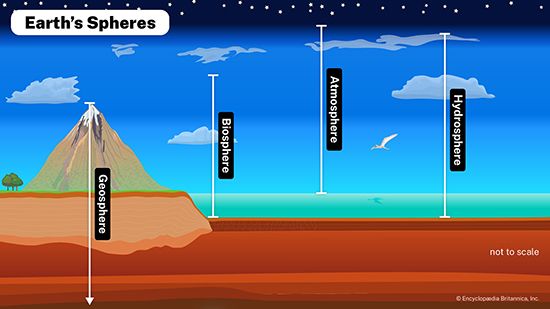
At its core, deep ecology posits that all living beings possess an inherent right to exist, regardless of their usefulness to humans. It challenges anthropocentrism—the view of humanity as the conqueror of nature—and promotes an ecocentric or biocentric worldview where the biosphere is the primary focus.3
Key concepts include:
- The Ecological Self: A rejection of the “independent ego” in favor of a self that is deeply connected to and in harmony with nature.3
- Biocentric Egalitarianism: The belief that every natural entity is inherently equal to every other.3
- The Deep Ecology Platform: An eight-point guide developed by Naess and George Sessions that emphasizes the intrinsic value of life, the need for population reduction, and the obligation to implement structural economic and ideological changes.3
How does civil disobedience differ from ecoterrorism?
The distinction between civil disobedience and ecoterrorism lies primarily in the methods employed and the intent behind them.
Civil Disobedience
Civil disobedience is defined as the refusal to obey governmental demands or laws, typically as a nonviolent and collective strategy to force policy changes. It often involves peaceful protest, such as activists chaining themselves to equipment or occupying spaces to prevent environmental destruction. The focus is on public visibility and moral persuasion rather than physical harm or property destruction.256
Ecoterrorism and Monkeywrenching
The term ecoterrorism is broad and often contested. It can refer to:
- Environmental Warfare: The deliberate destruction of the environment by states or groups during armed conflict, which is classified as a war crime.7
- Criminal Sabotage: Activities intended to hinder environmental exploitation, sometimes called “monkeywrenching” or “ecotage”. While some monkeywrenching is nonviolent, other acts—such as arson or tree spiking—can cause significant economic harm or pose severe risks of injury to workers.687
Legally, the definition of ecoterrorism has expanded in the United States to include the “physical disruption” of enterprises that causes economic loss or injury, leading to harsh penalties for activists. While some activists view their actions as a necessary defense of life, these methods are frequently categorized by authorities as terrorism due to their destructive nature.76
Who was Edward Abbey and how did he influence environmental activism?
Edward Abbey (1927–1989) was an American author and essayist whose writings became foundational texts for the modern environmental movement. Drawing on his experiences as a National Park Service ranger in the American Southwest, Abbey developed a philosophy that championed the intrinsic value of wilderness and expressed deep skepticism toward industrial encroachment and the modern state.9
His influence on environmental activism was profound, particularly through two seminal works:
- Desert Solitaire (1968): An acclaimed meditation on the wilderness of Utah that critiqued human incursions into natural landscapes.9
- The Monkey Wrench Gang (1975): A novel depicting a band of guerrilla environmentalists that popularized the concept of monkeywrenching—a form of nonviolent disobedience and sabotage directed at those perceived to be ecological exploiters.92
Abbey’s work provided a literary and ideological framework for radical environmental groups, inspiring tactics ranging from civil disobedience to the destruction of unattended property. His legacy remains tied to his “uncompromising environmentalist philosophy” and his advocacy for direct, often unorthodox, action to protect the earth.92
Sources
- Earth First! — Encyclopædia Britannica
- monkeywrenching — Encyclopædia Britannica
- deep ecology — Merriam-Webster
- deep ecology — Encyclopædia Britannica
- ecoterrorism — Encyclopædia Britannica
- civil disobedience — Merriam-Webster
- civil disobedience — Merriam-Webster
- ecoterrorism — Merriam-Webster
- Edward Abbey — Encyclopædia Britannica
Published on · 3 min read