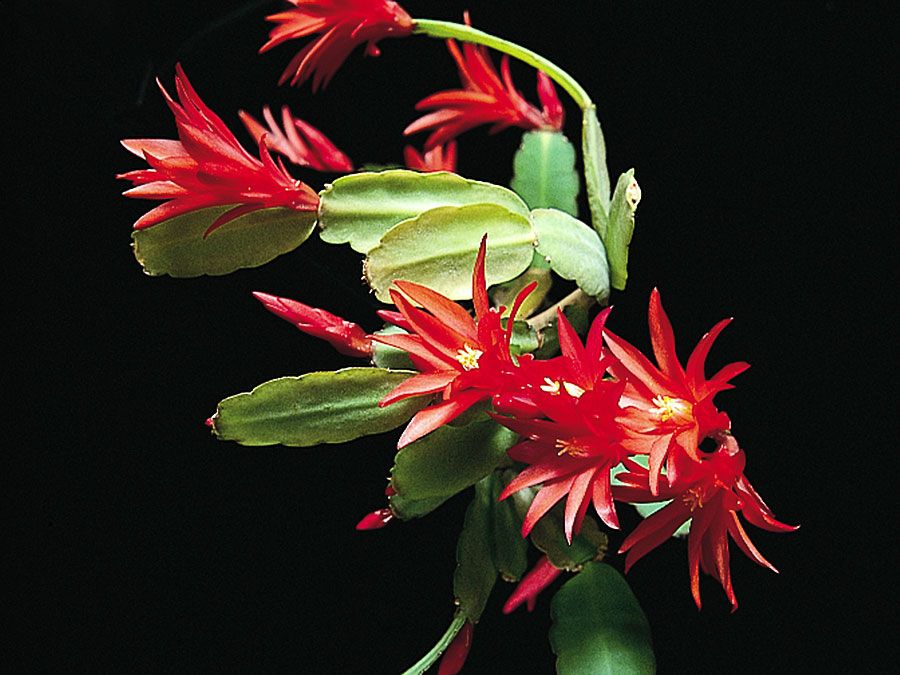
Easter Cactus
The Easter cactus (Hatiora gaertneri) is a popular spring-flowering plant belonging to the Cactaceae family. Native to the rainforests of Brazil, it grows as…
What is Easter cactus?
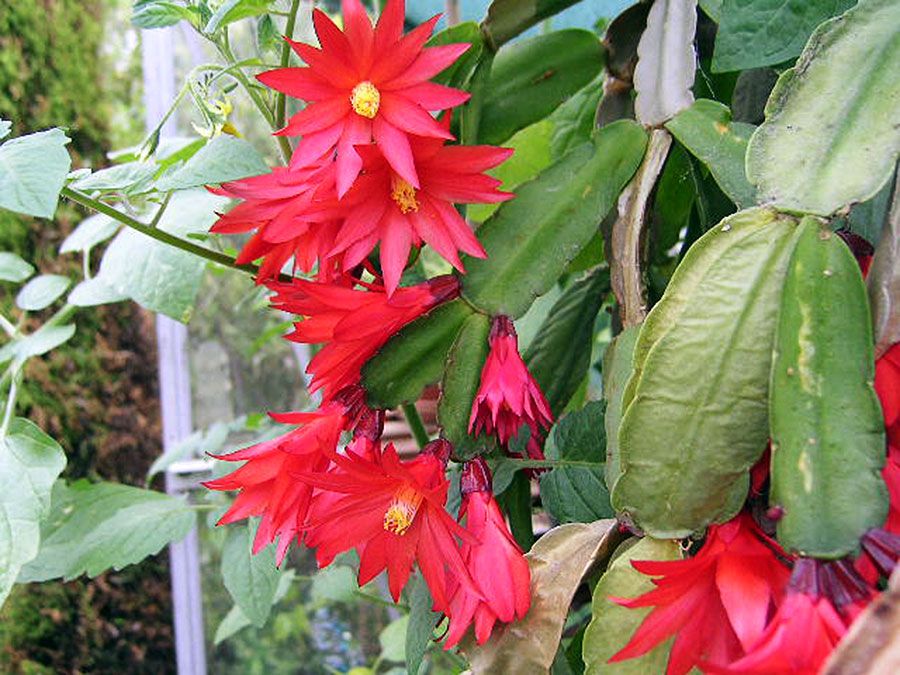
The Easter cactus (Hatiora gaertneri) is a popular spring-flowering plant belonging to the Cactaceae family. Native to the rainforests of Brazil, it grows as an epiphyte, meaning it naturally grows on other plants rather than in soil.1
The plant is characterized by its pendulous, branching habit and lack of spines. Its stems consist of flattened cladodes with notched margins. It is prized for its bright, funnel-shaped flowers that typically bloom around Easter time in the Northern Hemisphere. To encourage optimal flowering, the plant requires a period of cool temperatures (approximately 10 °C or 50 °F) during the winter.1
The taxonomy of the Easter cactus has historically been complex; it was formerly grouped with the genus Schlumbergera, which includes the Christmas cactus, but it is now classified as Hatiora gaertneri.12
How can you tell the difference between an Easter, Christmas, and Thanksgiving cactus?
Distinguishing between the Thanksgiving, Christmas, and Easter cacti is best achieved by examining the shape of their stem segments (cladodes) and their typical blooming periods.
Key Differences
Cactus Type
Stem Margin Shape
Typical Bloom Time
Thanksgiving Cactus
(
Schlumbergera truncata
)
Sharply saw-toothed or pointed projections
Late fall (around Thanksgiving)
Christmas Cactus
(
Schlumbergera
×
buckleyi
)
Rounded, scalloped, or crenated indentations
Around Christmastime
Easter Cactus
(
Hatiora gaertneri
)
Notched, smoother margins
Early spring (around Easter)
Identification Tips
- Thanksgiving vs. Christmas: The Thanksgiving cactus is often erroneously sold as a Christmas cactus. You can tell them apart by looking closely at the edges of the stem segments: the Thanksgiving cactus has distinct, sharp, claw-like teeth, whereas the Christmas cactus has softer, rounded edges.3
- Easter Cactus: While the others belong to the genus Schlumbergera, the Easter cactus is classified as Hatiora gaertneri. Its flowers are generally funnel-shaped, and it requires a cool temperature period during the winter to trigger its spring bloom.32
What does it mean for a plant to be an epiphyte?
An epiphyte is any plant that grows upon another plant or object solely for physical support. Often referred to as “air plants,” they do not rely on their host for nourishment and are not parasitic, as they do not penetrate the host to extract water or nutrients.678
Instead, epiphytes obtain moisture from rain and water vapor in the air, often absorbing it through their roots or specialized leaves. They typically acquire nutrients from organic debris that collects on the supporting structure. By growing above the ground, these plants gain better access to sunlight in dense, shaded environments like tropical rainforests.7
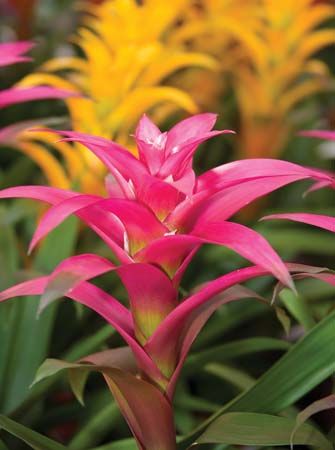
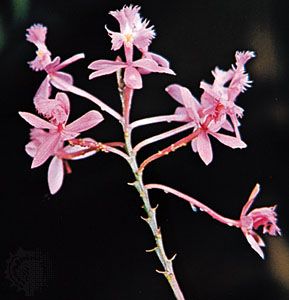
Common examples include many species of orchids, ferns, mosses, and members of the pineapple family (Bromeliaceae). While most prevalent in moist tropical regions, some species, such as ball moss, can be found in arid environments where they capture moisture from fog.67
Why do these cacti need cool temperatures to bloom?
These cacti, including the Easter cactus and various Schlumbergera species, are native to the Brazilian rainforests, where they grow as epiphytes in the canopy. In their natural habitat, these plants have evolved to respond to seasonal environmental cues that signal the appropriate time for reproduction.29
For the Easter cactus specifically, a period of cool temperatures—approximately 10 °C (50 °F)—during the winter months is essential to stimulate the development of flower buds. This physiological response acts as a biological trigger, ensuring that the plant invests its energy into blooming only when conditions are optimal for pollination and seed dispersal. By requiring this “chilling” period, the plant effectively synchronizes its flowering cycle with the changing seasons of its native environment.2
We could dive deeper into how these plants also utilize photoperiodism—the length of daylight—to further regulate their blooming schedules.
Sources
- Easter cactus — Merriam-Webster
- Easter cactus — Encyclopædia Britannica
- Christmas cactus — Encyclopædia Britannica
- 7 Especially Fitting Common Names for Plants | Christmas Cactus — Merriam-Webster
- Schlumbergera — Encyclopædia Britannica
- Did you know? — Merriam-Webster
- epiphyte — Encyclopædia Britannica
- parasitic plant — Encyclopædia Britannica
- Christmas plants and animals: 12 festive species - Christmas cactus ( Schlumbergera × buckleyi ; alternatively, S. bridgesii ) — Encyclopædia Britannica
Published on · 3 min read