Ebro River
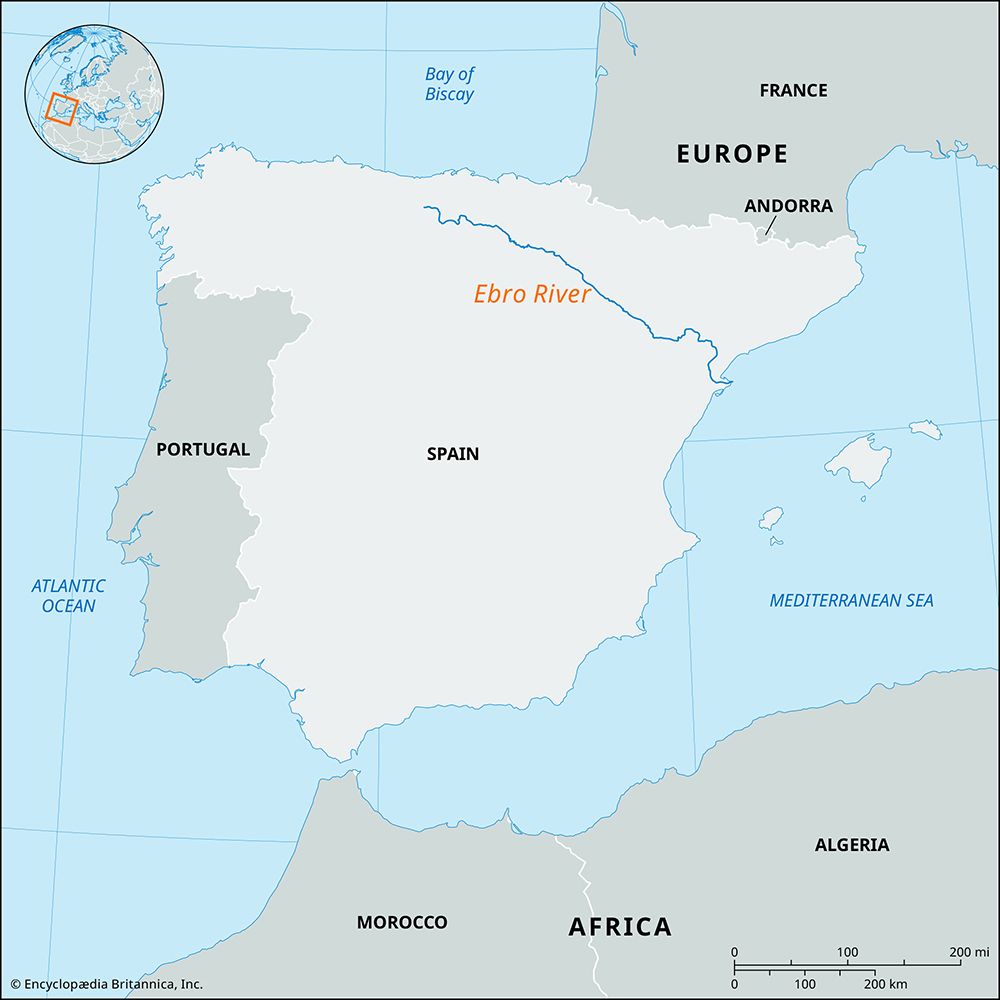
The Ebro River flows for 565 miles (approximately 910 km) and holds the distinction of being the longest river located entirely within Spain.
What is the length of the Ebro River and how does it compare to other major rivers in Spain?
The Ebro River flows for 565 miles (approximately 910 km) and holds the distinction of being the longest river located entirely within Spain.1
While the Tagus River (626 miles) and the Douro River (556 miles) are also among Europe’s longest, the Ebro is unique among Spain’s major rivers because it is the only one that drains into the Mediterranean Sea; the others flow westward into the Atlantic Ocean. Furthermore, the Ebro is distinguished by its significant water volume. While most Spanish rivers experience long periods of low water, the Ebro maintains a relatively constant and substantial flow, largely due to snowmelt and rainfall from the Pyrenees. It also possesses the largest drainage basin in the country, covering 33,000 square miles.21
What is the historical significance of the Ebro River in Spanish culture and development?
The Ebro River has played a pivotal role in the history and development of Spain, serving as both a strategic geographic boundary and a vital resource for the nation.
Historical Significance
Throughout antiquity, the Ebro served as a critical frontier. During the Second Punic War, it functioned as a strategic line of defense for Roman forces after their initial setbacks against Carthage. Centuries later, the river remained a significant landmark during the Spanish Civil War (1936–39), where it acted as a major geographic divide between Nationalist and Republican territories during the conflict’s progression.12
Cultural and Economic Development
The Ebro has been central to Spain’s agricultural and industrial evolution:
- Irrigation and Agriculture: The river’s basin has been a focus of human ingenuity for centuries. The Imperial Canal system, initiated in the 16th century, exemplifies early efforts to harness the river for irrigation. Today, modern projects continue to support agriculture in otherwise arid regions.3
- Viticulture: The upper basin, particularly the Rioja Alta region near Logroño, is world-renowned for the production of Rioja wine, which takes its name from the river’s influence on the local landscape.3
- Energy Production: By utilizing its tributaries, particularly those originating in the Pyrenees, the Ebro system has become a cornerstone of Spain’s hydroelectric power infrastructure, while its lower basin provides essential lignite for thermoelectric energy.3
Are there any notable dams or reservoirs along the Ebro River, and what purposes do they serve?
The Ebro River basin is supported by a sophisticated system of dams and reservoirs that are essential to Spain’s infrastructure. While the river itself is characterized by a relatively constant flow, its tributaries—particularly those originating in the Pyrenees—are heavily managed to maximize utility.12
Purposes of Dams and Reservoirs
The primary functions of these water management systems include:
- Hydroelectric Power: A network of major dams, particularly located in the upper La Noguera valleys, produces a significant portion of Spain’s hydroelectric power. These facilities leverage the high volume and consistent flow provided by the river’s left-bank tributaries.1
- Irrigation: Since the mid-20th century, irrigation has been intensified to support agriculture in the arid interior basin. Modern canal networks, such as those connecting the Bárdenas project with the Monegros and Cinca valleys, rely on these water management systems to sustain crops in regions that would otherwise be too dry for intensive farming.1
- Water Regulation: By capturing snowmelt and rainfall, these reservoirs help regulate the river’s flow, mitigating the risks associated with the irregular water regimes common to other Spanish rivers.12
What role does the Ebro River play in Spain’s water management and irrigation systems?
The Ebro River is central to Spain’s water management, serving as the country’s most significant fluvial artery due to its substantial and relatively constant flow, which contrasts with the irregular regimes of other major Spanish rivers.12
Irrigation Systems
The Ebro’s drainage basin covers one-sixth of Spain, providing essential water for agriculture in an otherwise arid interior. Key components of this infrastructure include:1
- Historical Canals: The Imperial Canal system, dating back to the 16th century, remains a vital part of the irrigation network near Zaragoza.1
- Modern Networks: Since the mid-20th century, irrigation has been significantly intensified. Extensive canal systems, such as those connecting the Bárdenas project with the Monegros and Cinca valleys, as well as the Lodosa and Tauste canals, support agriculture across the middle reaches of the river.1
Hydroelectric and Industrial Use
The river’s left-bank tributaries, originating in the Pyrenees, provide the majority of the Ebro’s volume. These are heavily utilized for:1
- Energy Production: A system of major dams in the upper La Noguera valleys generates a significant portion of Spain’s hydroelectric power.1
Sources
- Ebro River — Encyclopædia Britannica
- Spain - Drainage — Encyclopædia Britannica
- Spain - The conquest — Encyclopædia Britannica
- Spanish Civil War — Encyclopædia Britannica
Published on · 4 min read