Elatinaceae
Elatinaceae is a family of flowering plants within the order Malpighiales that consists of two genera and approximately 35 species of herbs to subshrubs.…
What is Elatinaceae?
Elatinaceae is a family of flowering plants within the order Malpighiales that consists of two genera and approximately 35 species of herbs to subshrubs. These plants are native to moist or wet habitats worldwide, though they are most common in tropical and subtropical regions.12
The family includes two primary genera:
- Elatine: Known as waterworts, these are mostly aquatic herbs that often grow in mats. Some species are used in aquariums.12
- Bergia: This genus includes about 25 species that adapt to both aquatic and terrestrial environments, sometimes exhibiting distinct root structures depending on their habitat.12
Members of Elatinaceae typically feature opposite, toothed leaves with small stipules and very small flowers. While some species are considered weeds in rice fields and irrigation ditches, they serve an important ecological function by helping to prevent soil erosion. In terms of seed anatomy, the family is closely related to Clusiaceae.12
How do aquatic plants adapt to living underwater?
Aquatic plants have evolved a variety of structural and physiological adaptations to thrive in underwater environments, which present challenges such as lower oxygen availability and higher water density compared to air.5
Key adaptations include:
- Aerenchyma: Many aquatic plants possess this modified tissue, which contains large intracellular air spaces. This structure facilitates efficient gaseous exchange and helps the plant maintain buoyancy within the water column.6
- Anchorage Mechanisms: To survive in flowing water and avoid being washed downstream, plants have developed specialized structures to secure themselves to the substrate. For example, some species use thin, wiry roots to anchor into soft sediment, while others utilize specialized holdfasts.78
- Reproductive Strategies: Aquatic plants often employ unique methods for pollination. Some species produce flowers that reach the surface to interact with wind or insects, while others have evolved elaborate mechanisms where water acts as the primary vector for pollen transfer. In some marine species, pollen is released in chains that move with water currents to increase the likelihood of contacting a stigma.9
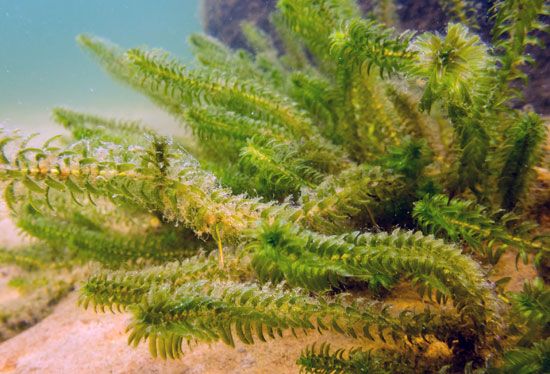
- Growth and Morphology: Many submerged plants, such as those in the genus Elodea, are adapted to grow entirely underwater, where they efficiently perform photosynthesis and oxygen production.7
What are some other examples of plants found in aquariums?
Beyond the Elodea genus, several other aquatic plants are commonly utilized in aquariums due to their aesthetic appeal and ability to support ecosystem health through oxygen production.
- Canadian waterweed (Elodea canadensis): A popular choice for aquariums, this plant is valued for its rapid growth and efficiency in oxygenating water, though it can become an invasive species if introduced into natural waterways.6
- Brazilian elodea (Egeria densa): Formerly classified under the genus Elodea, this species is frequently used in both educational settings to demonstrate photosynthesis and in home aquariums for its robust growth habits.6
These plants belong to the Hydrocharitaceae family, which is well-regarded for its members’ adaptability to submerged environments. Their ability to thrive and contribute to the oxygen levels of an aquarium makes them staples for hobbyists and researchers alike.6
Why are some plants considered weeds in rice fields?
Plants are considered weeds in rice fields primarily because they compete with the crop for essential resources, reduce overall yields, and interfere with agricultural operations. In the context of monoculture, where farmers aim to grow a single plant species free from competition, any plant that deviates from the intended crop is viewed as an impediment to achieving the highest possible yield.1011
Specific reasons for their classification as weeds include:
- Resource Competition: Weeds compete with rice for sunlight, water, and soil nutrients. Some, such as witchweed (Striga), are parasitic; they attach to the roots of rice plants, robbing them of water and food, which can cause the crop to wilt, stunt, or die before reaching maturity.1112
- Operational Interference: Weeds can impede the flow of irrigation water, interfere with the application of pesticides, and complicate the harvesting process.10
- Crop Contamination: Certain plants, such as wild red rice, are particularly problematic because they are closely related to the cultivated crop, making them difficult to manage and potentially lowering the quality of the final harvest.13
- Disease Harboring: Weeds can serve as hosts for various disease organisms and pests that threaten the health of the rice crop.10
Sources
- Elatinaceae — Encyclopædia Britannica
- Elatinaceae — Merriam-Webster
- Malpighiales - Malpighiaceae and Elatinaceae — Encyclopædia Britannica
- waterwort — Merriam-Webster
- aerenchyma — Merriam-Webster
- Elodea — Encyclopædia Britannica
- Alismatales - Order characteristics — Encyclopædia Britannica
- Inland water ecosystem - Biota of inland waters — Encyclopædia Britannica
- Biosphere - Water currents — Encyclopædia Britannica
- Cereal processing - Cultivation — Encyclopædia Britannica
- weed - Mechanical control — Encyclopædia Britannica
- Plant disease - Witchweed — Encyclopædia Britannica
- Agricultural technology - Weed control — Encyclopædia Britannica
Published on · 3 min read