Crowberry
Crowberry (genus Empetrum) refers to a group of three species of low-growing, evergreen shrubs belonging to the heath family (Ericaceae). These plants…
What is crowberry?
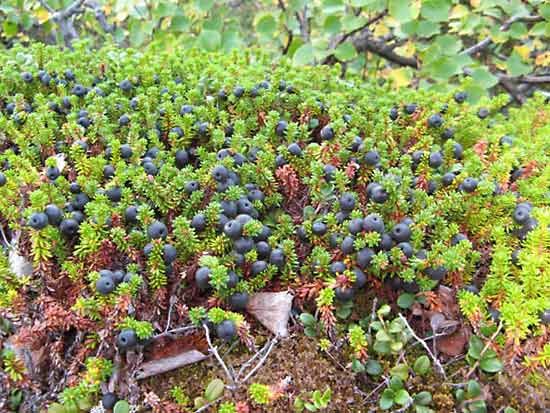
Crowberry (genus Empetrum) refers to a group of three species of low-growing, evergreen shrubs belonging to the heath family (Ericaceae). These plants typically reach about 25 cm (10 inches) in height and feature narrow, succulent leaves and small, purplish-pink flowers.1
The genus produces juicy, acidic fruits that serve as a vital food source for various songbirds, waterfowl, and mammals such as bears and voles1. Indigenous peoples have historically utilized these berries for both food and medicinal purposes.1
The three primary species include:
- Black crowberry (Empetrum nigrum): The most common species, found in cool regions across North America, Asia, and Europe.1
- Purple crowberry (E. eamesii): Native to eastern Canada and the northeastern United States.1
- Red crowberry (E. rubrum): Found in Chile, Argentina, and the Falkland Islands, where it is a significant component of peat deposits.12
How do crowberries survive in harsh subarctic climates?
Crowberries (Empetrum) are remarkably well-adapted to survive in harsh subarctic, alpine, and boreal environments through their specific physical characteristics. Their low-growing, trailing habit—typically reaching only about 25 cm (10 inches) in height—allows them to remain close to the ground, where they are protected from high winds and can benefit from the warmth of the soil surface.1
Furthermore, these evergreen shrubs possess narrow, succulent leaves that are approximately 1 cm long. This leaf structure is an evolutionary advantage in cold or nutrient-poor climates, helping the plant conserve moisture and withstand the physiological stresses associated with extreme temperatures. By maintaining this compact, hardy form, the crowberry successfully thrives in regions where many other plants would struggle to survive.1
What other plants belong to the heath family?
The Ericaceae family, commonly known as the heath family, is a diverse group of flowering plants comprising approximately 126 genera and 4,000 species. These plants are widely distributed, thriving in environments ranging from tropical mountains to subarctic regions, and they are frequently found in acidic, nutrient-poor soils.34
Many members of this family are highly valued in horticulture for their attractive flowers or are cultivated for their edible fruits. Notable plants within the family include:54
- Ornamentals: Rhododendrons and azaleas, mountain laurel (Kalmia), heather (Calluna vulgaris), and heath (Erica).35
- Food Crops: Various species of Vaccinium, such as blueberries, cranberries, bilberries, and lingonberries, as well as huckleberries (Gaylussacia).5
- Other Notable Species: Manzanita and bearberry (Arctostaphylos), wintergreen, sourwood, and the unique Indian pipe (Monotropa), which lacks chlorophyll.54
How have indigenous cultures traditionally used crowberries?
Indigenous cultures have long utilized the crowberry as a vital resource, relying on the plant for both sustenance and medicinal purposes.1
The juicy, edible fruits, which range in color from reddish to purple or black depending on the species, have served as a traditional food source in the various cool and subarctic regions where these shrubs grow. Beyond their role in human diets, these berries are also ecologically significant, providing essential nourishment for wildlife such as bears, voles, songbirds, and waterfowl.1
While the berries are noted for their somewhat acidic taste, their historical importance to indigenous peoples highlights the plant’s enduring value in northern and alpine ecosystems.1
Sources
- crowberry — Encyclopædia Britannica
- red crowberry — Merriam-Webster
- Ericaceae — Encyclopædia Britannica
- Ericales — Encyclopædia Britannica
- heath — Encyclopædia Britannica
- azalea — Encyclopædia Britannica
- list of economically important members of the family Ericaceae — Encyclopædia Britannica
- Ericales - Ericaceae — Encyclopædia Britannica
Published on · 2 min read