Eelgrass
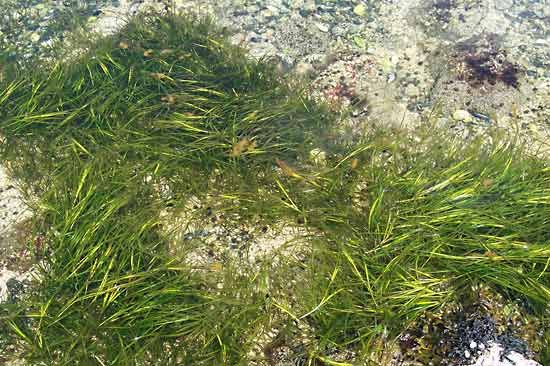
Eelgrass refers to the genus Zostera, which comprises approximately 15 species of marine plants found in temperate and subtropical coastal regions globally.…
What are the different species of eelgrass found around the world?
Eelgrass refers to the genus Zostera, which comprises approximately 15 species of marine plants found in temperate and subtropical coastal regions globally. While these species are often confused with surf grasses or freshwater tape grass, true eelgrasses are distinct marine perennials.1
The distribution of Zostera species is widespread:
- Northern Hemisphere: The common eelgrass (Z. marina) is the most widely distributed species, found across the Pacific and Atlantic coasts of North America and Eurasia.1
- Asia: Species include Z. asiatic, Z. caespitosa, and Japanese eelgrass (Z. japonica).1
- Europe: Notable species include Z. angustifolia and dwarf eelgrass (Z. noltei).1
- Africa: Z. capensis is found along African coasts.1
- South America: Z. chilensis is native to the coasts of Chile and is currently listed as an endangered species.1
- Australia: The region hosts several species, including Z. capricorni, Z. mucronata, garweed (Z. muelleri), Z. nigricaulis, Z. polychlamys, and Z. tasmanica.1
What traditional or modern uses do humans have for eelgrass?
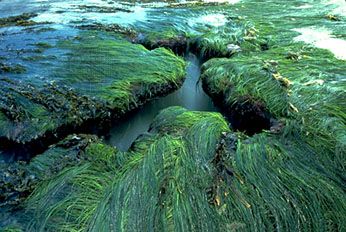
Humans have utilized eelgrass, particularly the common eelgrass (Zostera marina), for various practical purposes throughout history.
Historically, the dried leaves and stems of these marine plants have been valued for their durability and texture. Common traditional uses include:
- Packing Material: The dried leaves were frequently used to pack and protect fragile glass articles during transport.12
- Upholstery: The dried foliage served as a stuffing material for cushions.1
- Woven Goods: The stems and leaves have been incorporated into the production of various woven items.2
Beyond these direct human applications, eelgrass plays a vital role in the environment by forming large underwater meadows that provide essential food and habitat for a wide variety of marine organisms. They serve as a critical protective intermediary habitat for young fish before they migrate into deeper waters.1
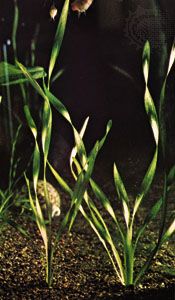
How does eelgrass compare to other types of seagrasses in terms of ecology and importance?
Eelgrass (Zostera) is a true flowering plant that evolved from land-dwelling ancestors to live submerged in marine environments, distinguishing it from seaweed, which are algae lacking true vascular tissues.13
Ecologically, eelgrass and other seagrasses are vital components of coastal ecosystems. Like other seagrasses, eelgrass forms extensive underwater meadows that provide essential food and habitat for diverse marine life. These meadows act as critical nursery grounds, offering protection for young fish before they move into deeper waters.13
While eelgrass functions as a primary producer and habitat builder, it often exists alongside other coastal features like mangroves. Mangroves provide complementary ecological services, such as buffering shorelines against storm surges and trapping sediments, which helps maintain the water quality necessary for healthy seagrass beds to thrive. Unlike some other marine vegetation that merely anchors to surfaces, eelgrass utilizes true rhizomes and roots to thrive in sandy or muddy substrates, playing a foundational role in supporting marine biodiversity.413
What is eelgrass and where is it typically found?
Eelgrass refers to a genus of about 15 species of marine plants known as Zostera, which belong to the family Zosteraceae. These perennial plants are characterized by long, alternate leaves that emerge from spreading rhizomes, often forming extensive underwater meadows.1
These plants are typically found in temperate and subtropical coastal regions worldwide, specifically in intertidal and subtidal zones. They thrive in shallow areas, such as estuaries, where they grow fully submerged in sandy or muddy substrates.12
The distribution of eelgrass is global:
- Northern Hemisphere: The common eelgrass (Z. marina) is the most widely distributed species, found along the Atlantic and Pacific coasts of North America and Eurasia.1
- Asia and Europe: Various species, such as Z. japonica and Z. noltei, are found along the coasts of Asia and Europe.1
- Southern Hemisphere: Species are distributed along the coasts of Africa, Chile, and Australia.1
Note that some freshwater plants, such as tape grass (Vallisneria), are sometimes colloquially referred to as “freshwater eelgrass,” though they are distinct from the marine genus Zostera.1
Sources
- eelgrass — Encyclopædia Britannica
- eelgrass — Merriam-Webster
- mangrove: Top Questions — Encyclopædia Britannica
- Is seaweed a plant? — Encyclopædia Britannica
Published on · 3 min read