Eider
Eiderdown is a highly valued material derived from the eider, a type of large sea duck. Its primary significance lies in its exceptional insulating…
What is the significance of eider down, and how is it harvested?
Eiderdown is a highly valued material derived from the eider, a type of large sea duck. Its primary significance lies in its exceptional insulating properties, making it a premium filling for high-quality jackets, pillows, quilts, and sleeping bags.12
The harvesting process is unique and relies on the bird’s natural nesting behavior. During the breeding season, the hen plucks down feathers from her own breast to line her nest and insulate her eggs. In regions like Iceland, where these birds are strictly protected, the down is collected from the nests after the breeding cycle without harming the birds. It is estimated that a pound of down can be gathered from approximately 35 to 40 nests, ensuring that the collection process does not interfere with the health or reproduction of the Anatidae family members.12
What are the distinctive physical characteristics of eider ducks?
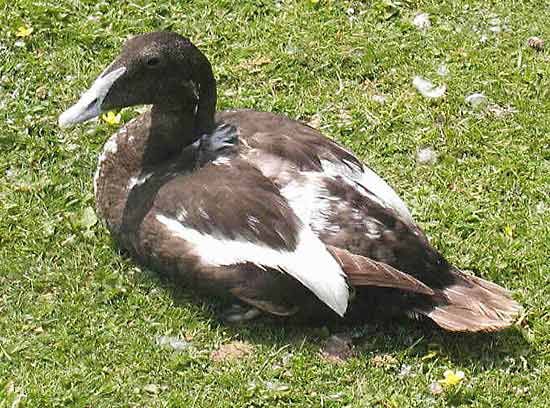
Eider ducks are large, heavy, and round-bodied sea ducks characterized by a distinct sloping profile created by their humped bills. They are well-adapted to the cold environments of the far north.21
The species exhibits notable sexual dimorphism in their plumage:
- Hens: Typically display a mottled dark brown coloration, which provides camouflage while nesting.21
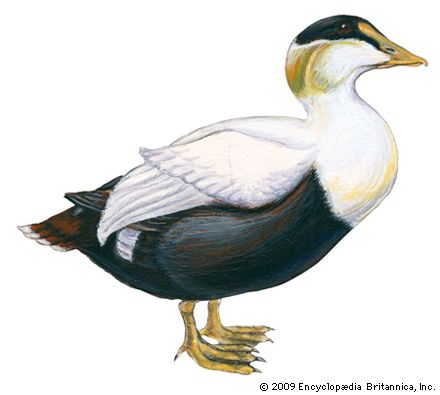
- Drakes (males): Feature striking, bold patterns and a unique green pigment on their heads. In the common eider, the male is primarily white on its upper body, contrasted by a black crown, belly, and tail.21
Are there different species of eider ducks, and how do they vary?
There are four distinct species of eider ducks, all of which are large, heavy-bodied sea ducks belonging to the family Anatidae. While they share a characteristic sloping profile caused by their humped bills and a preference for the cold, far-northern climates, they are primarily distinguished by the appearance of the males (drakes).12
The most well-known species is the common eider (Somateria mollissima). This species is further divided into four or five distinct races, which vary primarily based on the color and length of the bill.1
Across all four species, the females maintain a consistent appearance, featuring mottled dark brown plumage that serves as camouflage while nesting. In contrast, the males are known for their bold, striking patterns and a unique green pigment on their heads. While the common eider drake is recognized for its mostly white upper body contrasted by a black crown, belly, and tail, other species exhibit their own specific color variations.12
Where are eider ducks commonly found, and what are their preferred habitats?
Eider ducks are primarily found in the cold, far-northern regions of the world. They are specialized sea ducks that thrive in harsh, icy environments.12
Their preferred habitats are coastal areas, where they are well-adapted to life at sea. During the breeding season, they nest along icy coastlines, with ranges extending as far south as the Netherlands in Europe and the Gulf of St. Lawrence in North America. During the winter months, these birds move to open sea environments, migrating as far south as France, New England, and the Aleutian Islands.1
Because they are highly dependent on these specific northern ecosystems, the protection of their coastal nesting grounds is essential for their survival, particularly in regions like Iceland where they are carefully managed for the sustainable harvest of eiderdown. the sustainable harvest of eiderdown.1
Sources
- Eider — Encyclopædia Britannica
- Did you know? — Merriam-Webster
- Plumage — Encyclopædia Britannica
Published on · 3 min read