Emu-wren
An emu-wren is any of the three species of small songbirds belonging to the Australian genus Stipiturus within the family Maluridae.
What is Emu-wren?
An emu-wren is any of the three species of small songbirds belonging to the Australian genus Stipiturus within the family Maluridae.1
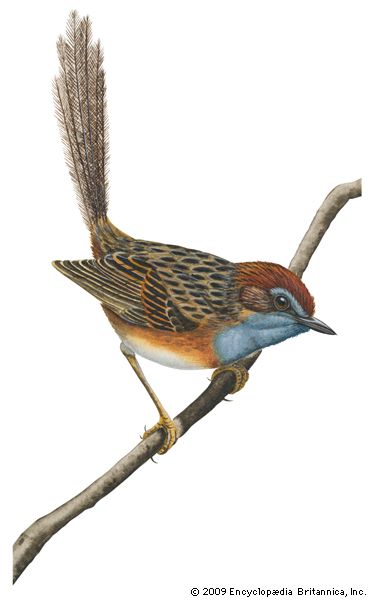
These birds are distinct from the true wren family (Troglodytidae), which are primarily found in the Western Hemisphere. Emu-wrens are characterized by their narrow, cocked tails consisting of six wispy feathers that resemble the plumage of an emu. They are shy, small birds that inhabit both wet and dry scrublands. The most widespread species, the southern emu-wren, is known for its streaked brown appearance and the male’s distinctive pale-blue throat.213
How do emu-wrens differ from true wrens?
Emu-wrens and true wrens are distinct groups of birds that are not closely related, despite their similar names and small size.
Taxonomic and Geographic Differences
- True Wrens: These birds belong to the family Troglodytidae and are primarily native to the Western Hemisphere. They are generally chunky, brownish birds with short, rounded wings and a short, cocked tail.1
- Emu-wrens: These birds belong to the genus Stipiturus within the Australian family Maluridae. They are considered unrelated to the true wrens of the family Troglodytidae.31
Physical Characteristics
The most notable difference lies in their tail structure. While true wrens typically possess a short, cocked tail, emu-wrens are named for their unique, narrow tails consisting of six wispy feathers that are long and loosely barbed, resembling the plumage of an emu. Additionally, while true wrens are often uniform in their brownish coloration, male emu-wrens, such as the southern emu-wren, often display distinct features like a pale-blue throat.32
What are some other unique birds found in Australia?
Australia is home to a diverse array of unique bird species, many of which are iconic symbols of the continent. Here are some notable examples:
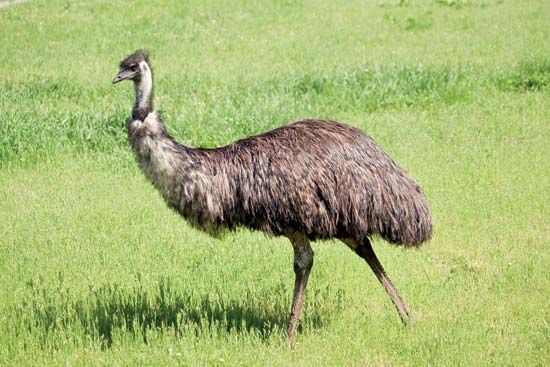
- Emu: As the second-largest living bird in the world, the emu is a flightless, long-legged species that serves as a national emblem of Australia. It is known for its speed, capable of running nearly 50 km (30 miles) per hour, and its unique booming call during the breeding season.678
- Kookaburra: A member of the kingfisher family, the kookaburra is famous for its distinctive call, which sounds like human laughter. These woodland-dwelling birds are territorial and are known to hunt invertebrates and small vertebrates, including venomous snakes.9
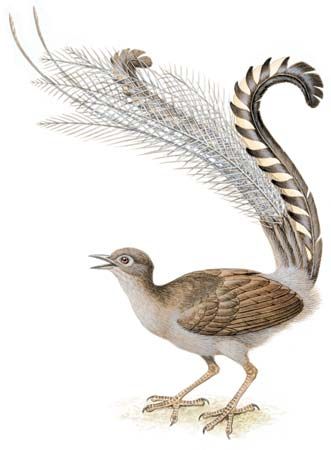
- Lyrebird: These ground-dwelling birds are renowned for their incredible vocal mimicry and the male’s elaborate courtship display. During this display, the male raises its tail feathers, which resemble a lyre, while singing a complex song that often incorporates the sounds of other creatures and mechanical noises.10
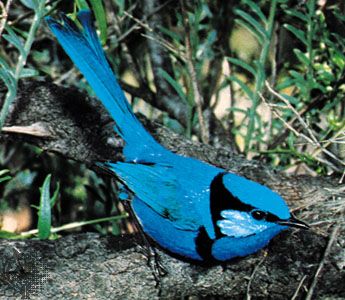
- Fairy Wren: These small, vibrant songbirds are favorites in Australian gardens. The males are often characterized by striking blue and black markings and a narrow tail that is typically carried in a cocked position.11
- Cassowary: Found in the Australo-Papuan region, these large, flightless birds are easily identified by their black plumage, naked blue heads, and a protective bony helmet called a casque. They are powerful birds capable of moving rapidly through dense forest.12
Why are the emu-wren’s tail feathers so unusual?
The emu-wren’s tail is considered unusual because it consists of only six narrow, wispy feathers that are loosely barbed. This unique structure gives the tail a distinct appearance that resembles the plumage of an emu, which is the primary reason for the bird’s common name2. These delicate, cocked tail feathers are a defining characteristic of the three species within the Australian genus Stipiturus.2
Sources
- Emu-wren — Encyclopædia Britannica
- emu wren — Merriam-Webster
- Wren — Encyclopædia Britannica
- Stipiturus — Merriam-Webster
- stipiture — Merriam-Webster
- Kookaburra — Encyclopædia Britannica
- Lyrebird — Encyclopædia Britannica
- Fairy wren — Encyclopædia Britannica
- Emu — Encyclopædia Britannica
- Cassowary — Encyclopædia Britannica
- Casuariiform - Form and function — Encyclopædia Britannica
- Emblems of Australia — Encyclopædia Britannica
- Australia - National and state emblems of Australia — Encyclopædia Britannica
- South Australia - Plant and animal life — Encyclopædia Britannica
Published on · 3 min read