Duck
Ducks are generally categorized into three major groups based on their characteristic behaviors and habitat preferences:
What are the different types of ducks and their habitats?
Ducks are generally categorized into three major groups based on their characteristic behaviors and habitat preferences:
Dabbling Ducks
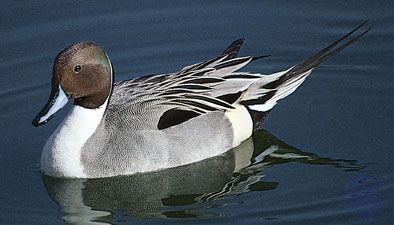
Dabbling ducks, such as mallards, pintails, and wigeons, typically inhabit shallow ponds, marshes, and wetlands. They feed by “tipping up”—tilting their bodies forward to reach vegetation beneath the water’s surface—or by foraging on land for seeds, grasses, and small invertebrates.12
Diving Ducks
Diving ducks are adapted for underwater foraging in deeper environments, including lakes, bays, and coastal waters. This group includes:13
- Bay Ducks: Species like the canvasback and scaup that frequent estuaries and tidal lagoons.13
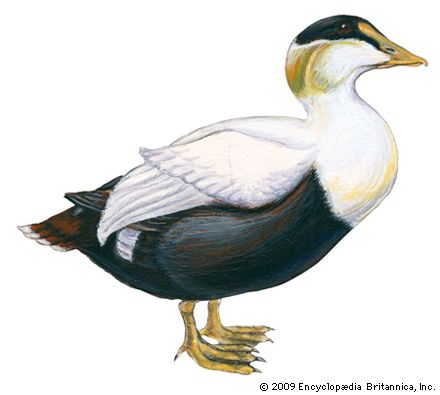
- Sea Ducks: Species such as eiders and scoters that are often found in marine environments, though some also utilize inland waters.23
Perching Ducks
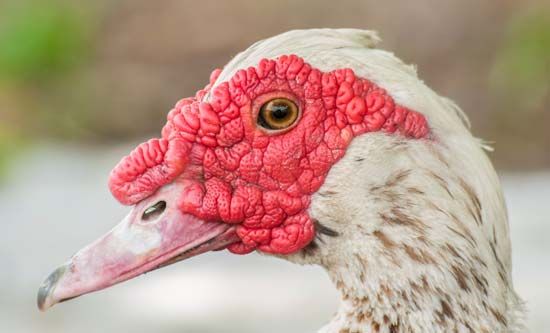
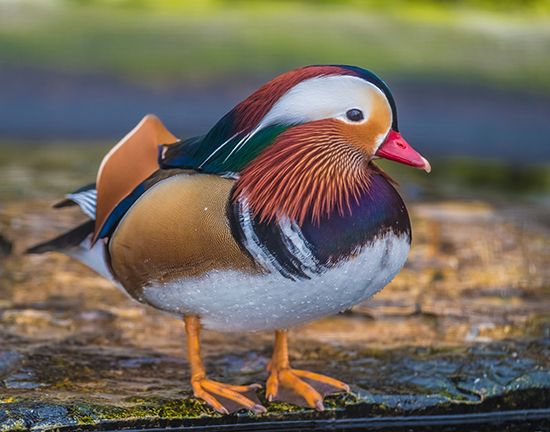
Perching ducks, such as the wood duck and Muscovy duck, are the most arboreal of the group. They typically inhabit wet woodlands and possess long-clawed toes that allow them to roost in trees.24
What is the life cycle of a duck, from egg to adult?
The life cycle of a duck is a complex process shaped by environmental factors and evolutionary adaptations.
Nesting and Incubation
The cycle begins with nest site selection, primarily by the female, in locations ranging from marsh vegetation to tree holes or even abandoned burrows. The female constructs the nest and lines it with down plucked from her breast to insulate the eggs. Typically, one egg is laid per day until a clutch of 3 to 12 eggs is complete. Incubation, performed almost exclusively by the female, lasts between 22 and 39 days. During this time, the female may fast, and she covers the eggs with down whenever she leaves the nest to feed.6
Hatching and Early Development
Hatching is generally synchronized, often completing within six hours. After the down dries, the hatchlings remain in the nest overnight, where they become imprinted on the female. Within 24 to 48 hours, the young leave the nest and can swim and forage, though they remain under the protection and guidance of a parent.67
Maturation and Adulthood
Young ducks retain their downy plumage for two to six weeks before transitioning to juvenal plumage. Flight feathers develop last, and once fledged, young ducks must navigate their first migration. While some species reach adult-like size and plumage within six months, others take longer. In the wild, ducks face high mortality rates in their first year, but those that survive can live for many years, with some individuals reaching 15 to 20 years of age.7
What are the defining physical characteristics of ducks?
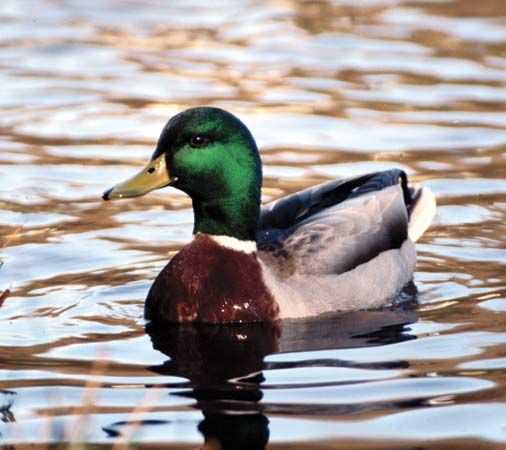
Ducks are defined by several distinct physical characteristics that adapt them to their aquatic lifestyles. As members of the family Anatidae, they are generally characterized as relatively small, short-necked, and large-billed waterfowl.2
Key physical features include:
- Bill Structure: Ducks possess a skin-covered, lamellate bill equipped with platelike structures used for sifting food from water or mud. These bills vary by species; for example, dabbling ducks have rounded bills, while mergansers have toothlike projections for catching fish.28
- Legs and Feet: Unlike geese, true ducks have legs placed toward the rear of the body, which results in a characteristic waddling gait. Their feet are typically webbed to aid in swimming, and they feature overlapping scales on the skin of the leg.28
- Plumage and Molting: Most species exhibit sexual dimorphism, where males (drakes) and females (hens) differ in plumage and vocalizations. Males typically undergo two molts annually.2
- Preen Gland: Ducks possess a well-developed preen gland at the base of the tail, which secretes oils used to waterproof their feathers and maintain the integrity of their plumage.910
How do ducks migrate, and why do they do so?
Ducks migrate primarily to exploit fluctuating food resources and to move between breeding and wintering grounds that offer optimal conditions for survival and reproduction. This behavior is deeply integrated into their annual life cycle and is essential for species inhabiting regions where productivity varies significantly by season.1
Why Ducks Migrate
Ducks often breed in northern regions, such as the Arctic, where food production is high during the summer. As winter approaches and resources become scarce, they migrate to warmer tropical or temperate regions where the rainy season or milder conditions increase food availability. This movement allows them to avoid areas where life would be unsustainable during the winter and to take advantage of peak productivity in different habitats. Some ducks also perform a “molt migration,” moving to secure areas where they can safely undergo the flightless period associated with replacing their feathers.11213
How They Migrate
Migration is triggered by a combination of internal physiological rhythms and external environmental factors.14
- Physiological Preparation: Controlled by the pituitary gland, ducks undergo metabolic changes prior to migration, such as the accumulation of body fat to provide energy for long flights.14
- Environmental Triggers: While internal cycles prepare the birds, external factors like day length, temperature, and food availability initiate the actual departure.14
- Navigation: Ducks rely on a combination of familiar landmarks—such as coastlines, river systems, and mountain ranges—and other environmental cues to navigate their traditional flyways.126
Sources
- What do ducks eat? — Encyclopædia Britannica
- Duck — Encyclopædia Britannica
- Perching duck — Encyclopædia Britannica
- Anseriform - Importance to humans — Encyclopædia Britannica
- Diving duck — Encyclopædia Britannica
- Anseriform - Life history — Encyclopædia Britannica
- Anseriform - Reproductive behaviour — Encyclopædia Britannica
- Locomotion - Tetrapodal vertebrates — Encyclopædia Britannica
- Anseriform - Anatomy — Encyclopædia Britannica
- Preen gland — Encyclopædia Britannica
- Bird - Other external features — Encyclopædia Britannica
- Migration - Physiological stimulus of migration — Encyclopædia Britannica
- Migration - Ecological significance of migration — Encyclopædia Britannica
- Migration - In Europe — Encyclopædia Britannica
- Migration - Navigation and orientation — Encyclopædia Britannica
Published on · 4 min read