North America
Human activity has profoundly transformed North America’s natural environment, shifting from early indigenous land management to the intensive industrial and…
How has human activity, such as urbanization and agriculture, impacted North America’s natural environment?
Human activity has profoundly transformed North America’s natural environment, shifting from early indigenous land management to the intensive industrial and agricultural practices of the modern era.12
Agricultural Impact
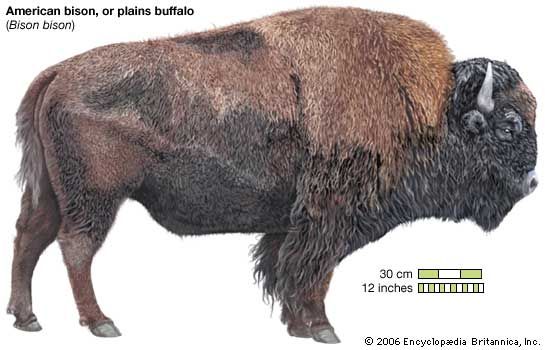
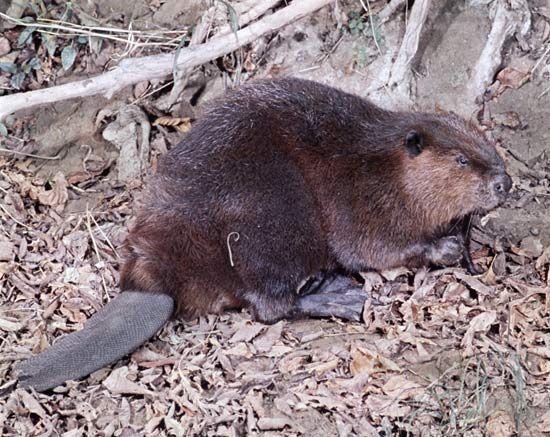
Historically, agriculture significantly altered the landscape through the clearing of forests and the conversion of grasslands into fields. Early indigenous societies practiced diverse agricultural techniques, including controlled burning to manage forest understories and irrigation systems to support urban populations. Following European settlement, the drive for large-scale production led to the widespread plowing of prairies and the exploitation of timber, often resulting in rampant soil erosion and the near-extinction of species like the bison and beaver.132
Urbanization and Industrialization
Urbanization has converted vast tracts of forests, wetlands, and deserts into residential and industrial zones. This expansion fragments ecosystems, creating “edge habitats” that favor generalist species over specialists. Furthermore, the prevalence of impermeable surfaces—such as roads and roofs—impedes water absorption, increasing flood risks and carrying pollutants into aquatic ecosystems. Industrial activities and high energy consumption in urban areas contribute to air and water pollution, while the reliance on fossil fuels exacerbates global warming.4561
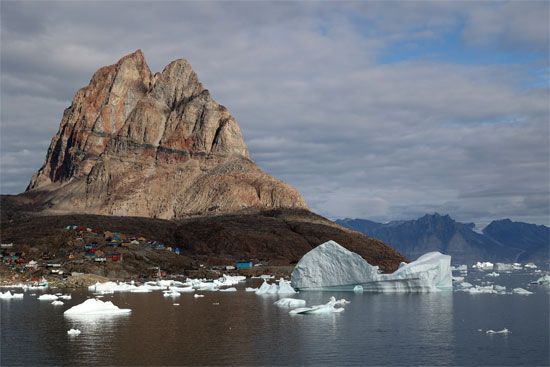
What are the geographical boundaries and major physical features of North America?
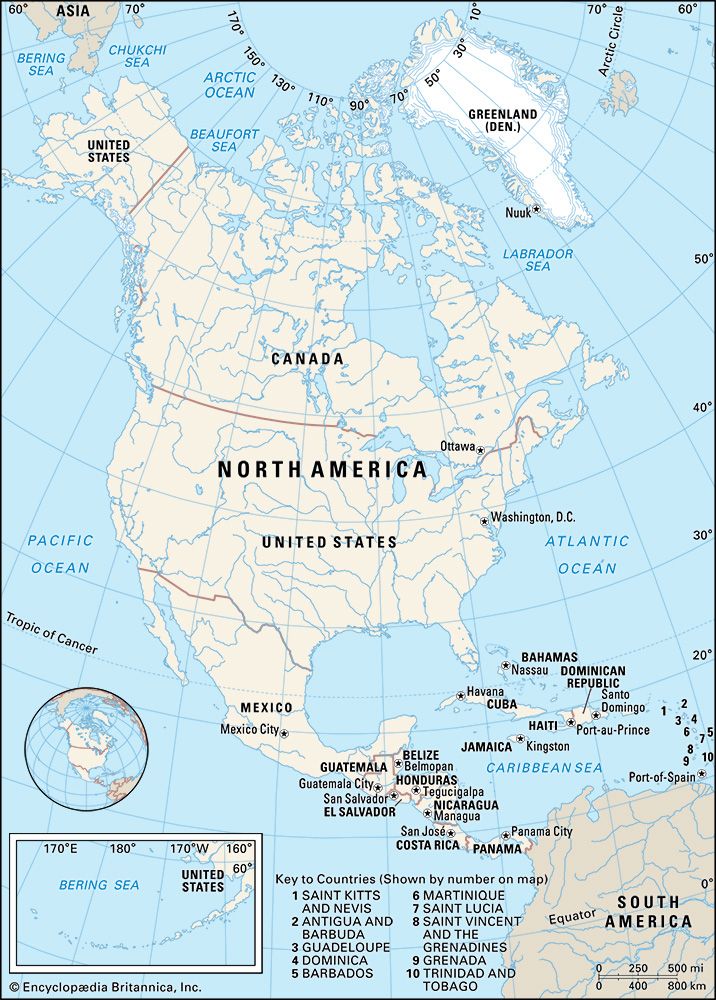
North America is the third-largest continent, covering approximately 9,355,000 square miles (24,230,000 square km) in the Western Hemisphere.7
Geographical Boundaries
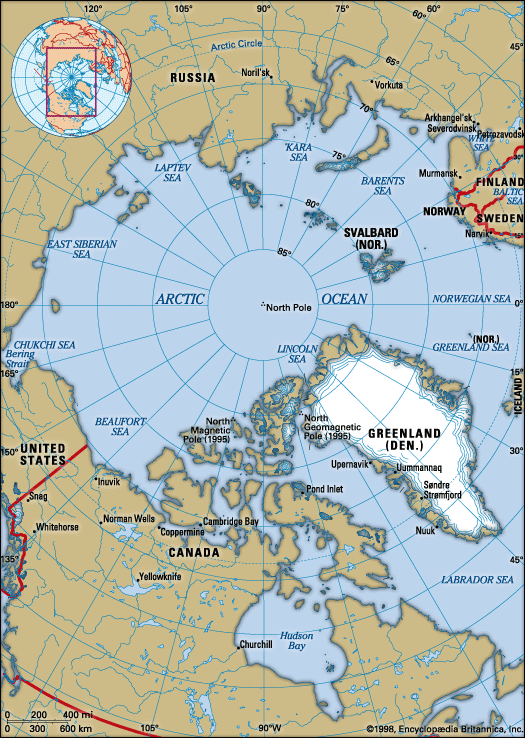
The continent is bounded by four major bodies of water:
- North: Arctic Ocean9
- East: North Atlantic Ocean7
- South: Caribbean Sea7
- West: North Pacific Ocean7
North America is connected to South America by the Isthmus of Panama. To the northwest, it is separated from Asia by the Bering Strait, and to the northeast, Greenland is separated from Iceland by the Denmark Strait.7
Major Physical Features
The continent’s geologic structure is centered on the Canadian (Laurentian) Shield, a stable platform of ancient Precambrian rock. Surrounding this core are several distinct physiographic regions:7
- Mountain Belts: The ancient Appalachian Mountains lie to the southeast, while the younger, taller North American Cordillera dominates the west, occupying nearly one-third of the continent.78
- Lowlands: Between the mountain belts lie the Great Plains in the west and the Central Lowlands in the east.7
- Drainage Systems: The continent features immense river systems, including the Mississippi, the Great Lakes–St. Lawrence system, and the Mackenzie River, which drain the vast interior plains.9
How many countries are in North America, and which are the largest by land area and population?
North America comprises 23 sovereign states. Regarding size and population, the continent is dominated by three primary nations:
- Largest by Land Area: Canada is the largest country in North America, covering 3,848,758 square miles (9,968,242 square km). The United States follows as the second largest, with 3,809,525 square miles (9,866,632 square km), and Mexico is the third largest, covering 758,449 square miles (1,964,375 square km).12
- Largest by Population: The United States holds the largest population on the continent, accounting for considerably more than half of the total North American population. In contrast, Canada’s share of the total continental population is relatively small, representing less than 10 percent.1314
How has North America’s biodiversity evolved over time, and what are some unique species found only on this continent?
North America’s biodiversity has been shaped by millions of years of tectonic shifts, climatic fluctuations, and, more recently, human activity. Following the breakup of Pangea, the continent evolved a distinct fauna, rich in placental mammals. Approximately 3 million years ago, the formation of the Isthmus of Panama created a land bridge that allowed for a massive faunal interchange between North and South America, significantly altering the composition of both continents’ ecosystems.1516
The end of the Pleistocene Epoch marked a major turning point, characterized by the extinction of 32 genera of large mammals in North America, including mammoths, mastodons, and sabre-toothed cats. Scientists debate whether this was driven by human overpredation or abrupt climatic changes.217
Unique Species
North America hosts several species and families that are either endemic or uniquely representative of the continent:
- Pronghorn: A distinctive hoofed animal that represents a family intermediate between deer and true antelopes.18
- Appalachian Salamanders: The Appalachian region is a global center for salamander diversity, hosting seven of the world’s eight families.18
- Wren-tits: The only bird family entirely distinctive to North America, found in California’s chaparral.18
- Mountain Beaver: A primitive, non-beaverlike rodent confined to the Cascades and Sierras.18
- Tailed Frog: A primitive species found in icy mountain brooks, representing a unique family.18
Sources
- North America - The human imprint on the landscape — Encyclopædia Britannica
- North America - Biological resources — Encyclopædia Britannica
- Origins of agriculture - North America — Encyclopædia Britannica
- urban sprawl - Environmental costs — Encyclopædia Britannica
- Urban ecosystem: Top Questions — Encyclopædia Britannica
- Urban ecosystem - The structure of urban ecosystems — Encyclopædia Britannica
- Canada - Relief of Canada — Encyclopædia Britannica
- North America - Drainage — Encyclopædia Britannica
- North America — Encyclopædia Britannica
- mountain - The North American Cordillera — Encyclopædia Britannica
- North America - Dry climates — Encyclopædia Britannica
- North America: Top Questions — Encyclopædia Britannica
- North America - The role of Canada — Encyclopædia Britannica
- North America - The role of the United States — Encyclopædia Britannica
- Pleistocene Epoch - Megafaunal extinctions — Encyclopædia Britannica
- plate tectonics - Evolution — Encyclopædia Britannica
- Isthmus of Panama — Encyclopædia Britannica
- Quaternary - Fauna and flora — Encyclopædia Britannica
- North America - Plant and animal life — Encyclopædia Britannica
- Panama - Plant and animal life — Encyclopædia Britannica
- endangered species - Human beings and endangered species — Encyclopædia Britannica
- North America - Tectonic evolution — Encyclopædia Britannica
- United States - Animal life — Encyclopædia Britannica
Published on · 4 min read