Electric Eel
The electric eel (genus Electrophorus) is not a true eel but is instead a type of elongated South American knifefish related to piranhas and neon tetras.…
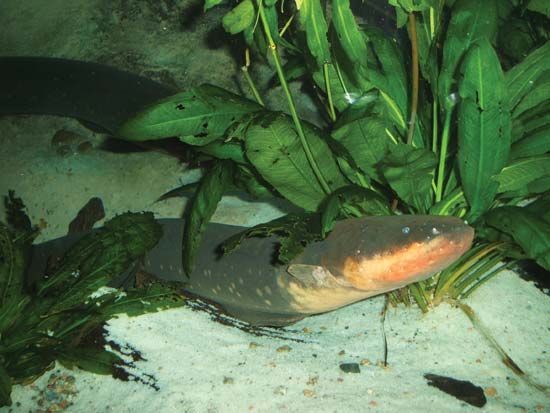
What is an electric eel?
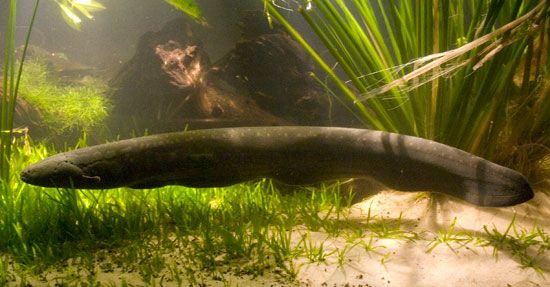
The electric eel (genus Electrophorus) is not a true eel but is instead a type of elongated South American knifefish related to piranhas and neon tetras. Found in the Amazon River and its tributaries, these sluggish, scaleless creatures can grow up to 2.75 meters (9 feet) in length.12
Electric eels are famous for their ability to generate powerful electric shocks using three specialized electric organs derived from modified muscle cells. These organs allow the fish to:12
- Stun prey: By discharging up to 860 volts, they incapacitate fish, protecting their sensitive mouths from injury.12
- Navigate and communicate: Lower-voltage pulses help them move through murky waters and interact with others.12
- Defend themselves: They can deliver shocks to deter predators, sometimes leaping out of the water to maximize the current’s impact.1
Because they breathe air, they must surface every few minutes, utilizing their blood-vessel-rich mouths as lungs.12
Where do electric eels live?
Electric eels (genus Electrophorus) are native to South America, where they are found in the Amazon River and its various tributaries.1
These fish are specifically adapted to slow-moving freshwater environments1. They are particularly prominent in the white-water flooded forests known as varzea, where they serve as principal aquatic predators and can account for more than 70 percent of the total fish biomass in certain areas. Because they must surface every few minutes to gulp air, they prefer habitats that allow them to easily access the water’s surface.41
How does an electric eel produce electricity?
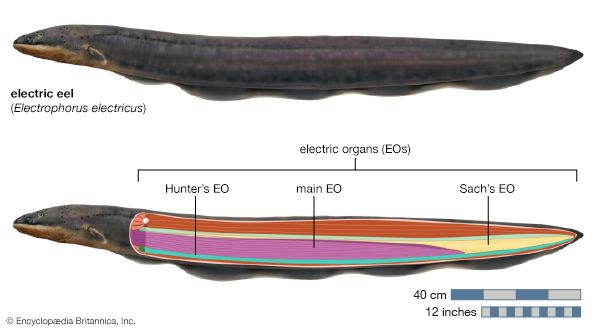
Electric eels produce electricity through specialized bioelectric organs—the main organ, Hunter’s organ, and Sach’s organ—which make up most of the fish’s body and are composed of modified muscle cells.3
The fundamental units of these organs are disc-shaped cells called electrocytes. Each electrocyte maintains a negative charge, with a potential difference of about 100 millivolts. When the eel’s nervous system releases the neurotransmitter acetylcholine, it triggers a change in the cell membrane, allowing potassium ions to flow and releasing approximately 50 millivolts of electricity per cell.3
Because these thousands of electrocytes are stacked in series and parallel, the firing of one cell triggers a cascade, creating a powerful collective discharge. This process allows the eel to release up to 860 volts to stun prey, navigate, or defend itself. By timing these nervous impulses, the eel ensures the simultaneous action of the entire array.531
What do electric eels eat and how do they hunt?
Electric eels are primarily carnivorous predators that feed on other fish, though they also consume fruit that falls into the water from overhanging trees.1
Hunting Strategies
Electric eels employ several sophisticated methods to capture their prey:
- Stunning: They use high-voltage discharges to paralyze prey, which protects their sensitive mouths from injury caused by struggling, spiny fish. Once stunned, the prey is sucked directly into the stomach the prey is sucked directly into the stomach.134
- Detection: Electrical discharges can induce a twitching response in hidden prey, forcing them to reveal their position.14
- Manipulation: For larger or more elusive prey, eels may curl their bodies around the target to double the strength of the electric field. They then deliver a series of shocks that fatigue the prey’s muscles, making it easier to manipulate for consumption.1
- Social Predation: Some species, such as Volta’s electric eel (E. voltai), engage in pack hunting, where they coordinate movements and electrical discharges to ambush or corral schools of fish.1
- Direct Capture: Occasionally, an eel will simply gulp its prey faster than the fish can react, bypassing the need for a shock.14
Sources
- electric eel — Encyclopædia Britannica
- electric eel — Merriam-Webster
- 14 Questions About Aquatic Animals Answered - Which undersea creatures are known for making electricity? — Encyclopædia Britannica
- 10 of the World’s Most Dangerous Fish - Electric Eel — Encyclopædia Britannica
- bioelectric organ — Encyclopædia Britannica
Published on · 3 min read