Elephant Shrew
The evolutionary history of elephant shrews (order Macroscelidea) is confined to Africa and dates back to the Late Eocene (41.3 to 33.9 million years ago).…
How have elephant shrews evolved over time?
The evolutionary history of elephant shrews (order Macroscelidea) is confined to Africa and dates back to the Late Eocene (41.3 to 33.9 million years ago). While they were once thought to be related to tree shrews and other insectivores, they have been recognized as a distinct order since the 1950s.12
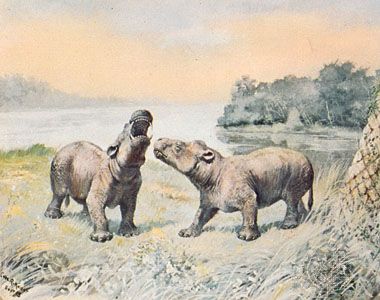
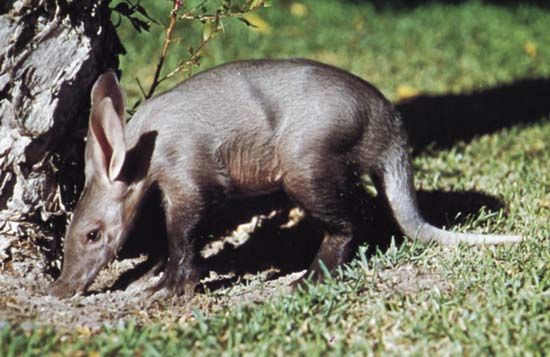
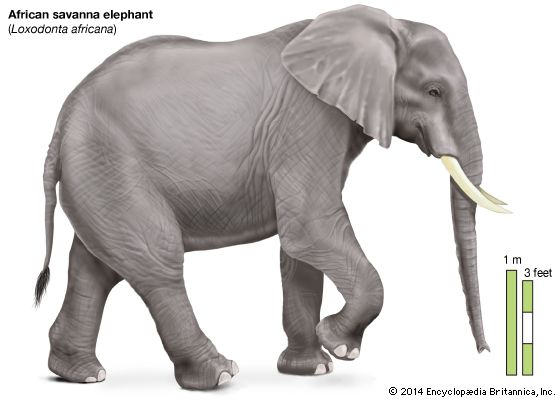
Current research suggests that elephant shrews are not closely related to true shrews. Instead, molecular data indicates they may belong to an ancient group that includes aardvarks, elephants, hyraxes, and sirenians.1
The fossil record reveals eight extinct genera within the family Macroscelididae. Some of these ancient species possessed teeth similar to those of antelopes, suggesting they were likely herbivores, unlike the modern species which primarily forage for arthropods and earthworms.1
What are the defining characteristics of elephant shrews?
Elephant shrews, which belong to the order Macroscelidea, are defined by several distinct physical and behavioral characteristics:
Physical Features
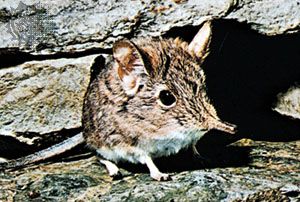
- Snout: They are named for their long, tapered, and flexible snout, known as a proboscis.1
- Body Structure: These rat-sized mammals possess slim bodies, slender limbs, and notably long hind legs and feet.1
- Size and Fur: Species vary significantly in size, ranging from 30 grams to 0.7 kilograms. Their fur can be soft and dense or short and stiff, often colored to match their native soil.1
- Sensory Organs: They have large eyes and ears, which assist them in their terrestrial environment.1
Behavior and Habitat
- Locomotion: When alarmed, they run swiftly on their toes along established paths, sometimes leaping over obstacles.1
- Foraging: They are active during the day, using their paws and mobile proboscis to search through leaf litter for arthropods, ants, termites, and earthworms.1
- Environment: They inhabit diverse African landscapes, including tropical forests, savannas, scrub, and rocky, semiarid plains. Depending on the species, they may nest in leaf piles or den in rock crevices and burrows.1
What is the diet of elephant shrews and how do they forage for food?
Elephant shrews are primarily carnivorous, feeding on a diet that consists of small insects—most notably ants and termites—as well as other arthropods and earthworms.1
To secure their food, these animals are active during the day and utilize specialized foraging behaviors. They move along established pathways that they construct and maintain within their habitat. While traversing these routes, they use their paws and their highly mobile, constantly moving proboscis to turn over soil and leaf litter in search of prey.1
What role do elephant shrews play in their ecosystem?
Elephant shrews play a functional role in their African ecosystems primarily as active predators of small invertebrates. By foraging through leaf litter and soil, they consume significant quantities of ants, termites, other arthropods, and earthworms.1
Beyond their dietary impact, their physical activity helps shape their immediate environment. They construct and maintain distinct pathways through their habitats, which can range from dense tropical forests to rocky, semiarid plains. Furthermore, some species utilize and inhabit termite mounds or create dens beneath fallen tree trunks and among tree roots, integrating themselves into the structural complexity of their surroundings.1
While their specific ecological contributions are often studied in the context of their prey consumption, their evolutionary history—stretching back to the Eocene Epoch—highlights their long-standing presence as unique members of the African mammalian fauna.1
Sources
- elephant shrew — Encyclopædia Britannica
- shrew - Classification and paleontology — Encyclopædia Britannica
- Did you know? — Merriam-Webster
Published on · 3 min read