Elysia Chlorotica
Elysia chlorotica is a sea slug that performs photosynthesis by incorporating chloroplasts from the alga Vaucheria litorea into cells surrounding its…
How does Elysia chlorotica perform photosynthesis, and what makes this ability unique?
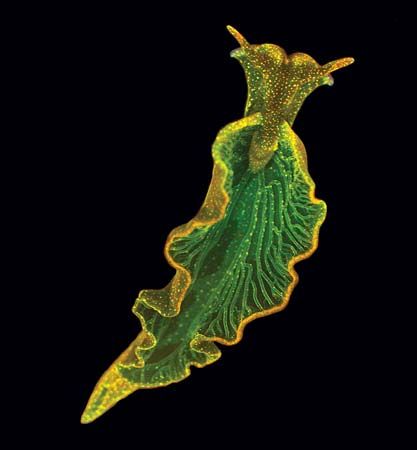
Elysia chlorotica is a sea slug that performs photosynthesis by incorporating chloroplasts from the alga Vaucheria litorea into cells surrounding its digestive tract.1
This ability is unique because it represents a rare instance of an animal utilizing the photosynthetic machinery typically reserved for plants. Once ingested, these chloroplasts can continue to produce nutrients for the slug for several months. While E. chlorotica also assimilates the genes of the alga into its own genetic structure, these genes do not appear to be active, and the extent to which the slug relies on this process for energy remains a subject of scientific study, as the animals can survive long periods without light.1
How does Elysia chlorotica’s unique ability impact its role in marine ecosystems?
The provided search results do not contain information regarding how Elysia chlorotica’s photosynthetic ability specifically impacts its role or function within marine ecosystems. While the literature confirms that the sea slug inhabits salt marshes and inlets along the Atlantic coast and consumes the alga Vaucheria litorea, the ecological consequences of its unique photosynthetic process remain unaddressed by these sources.123
We could dive deeper into the general ecological importance of sea slugs in coastal habitats or explore other aspects of Elysia chlorotica’s biology if you are interested.
How long can Elysia chlorotica survive without eating, thanks to its photosynthetic ability?
Elysia chlorotica can survive for up to several months without eating by incorporating chloroplasts from the alga Vaucheria litorea into its own cells. Once these chloroplasts are assimilated, the sea slug may forgo the ingestion of food entirely, as the structures continue to produce nutrients through photosynthesis.12
However, the extent to which the slug relies on this photosynthetic capacity for energy is not fully understood. Scientists have observed that E. chlorotica can also survive long periods of darkness, which suggests it may sustain itself by digesting its stored plastids when light is unavailable.1
How does Elysia chlorotica’s diet change throughout its life stages?
The diet of Elysia chlorotica does not undergo a fundamental change in its food source throughout its life stages. Across its 9–10 month lifespan, the sea slug consistently consumes the yellow-green alga Vaucheria litorea.1
While the slug’s dietary behavior remains focused on this specific alga, its physiological relationship with the food evolves. Upon ingestion, E. chlorotica incorporates chloroplasts from the alga into cells lining its digestive tract. These structures allow the slug to perform photosynthesis, effectively producing its own nutrients from solar energy. Although the slug also assimilates the genes of V. litorea into its own genetic structure, these genes remain inactive, and the slug may eventually rely on digesting its stored plastids for energy, particularly during periods of darkness.1
Sources
- Elysia chlorotica — Encyclopædia Britannica
- photosynthesis - Recent and contemporary research — Encyclopædia Britannica
- Vaucheria — Encyclopædia Britannica
Published on · 2 min read