Biodiversity Loss
A biodiversity hotspot is a biogeographic region characterized by exceptional levels of biodiversity that is under significant threat from human activity.…
What is the concept of ‘biodiversity hotspots’ and why are they important?
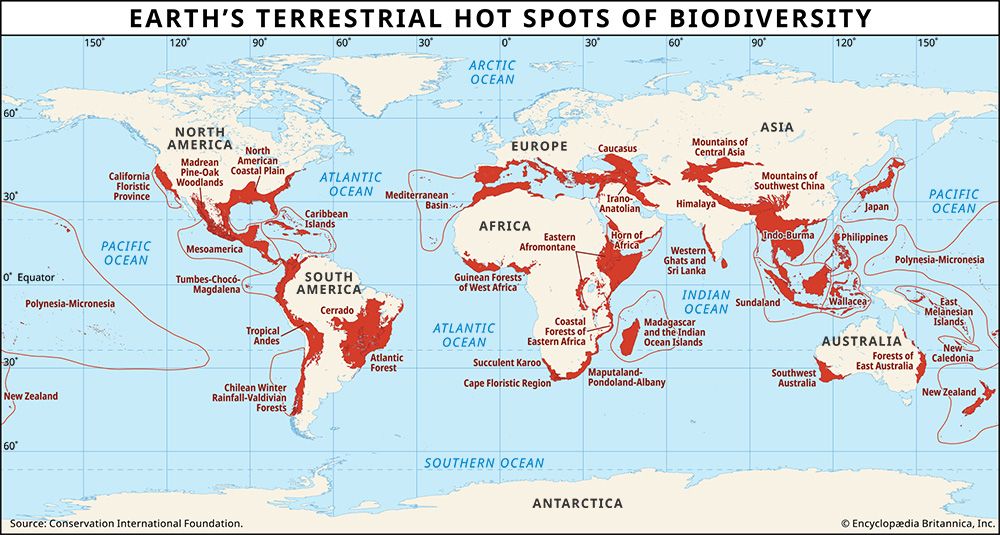
A biodiversity hotspot is a biogeographic region characterized by exceptional levels of biodiversity that is under significant threat from human activity. The concept, introduced by conservationist Norman Myers, requires a region to meet two strict criteria to qualify: it must host at least 1,500 species of endemic vascular plants and have lost 70 percent or more of its primary vegetation.1
These regions are vital because, despite covering less than 3 percent of Earth’s surface, they are home to a significant portion of the world’s mammal, bird, reptile, amphibian, and plant species. By focusing conservation efforts on these specific areas, scientists and policymakers can work systematically to prevent large-scale extinctions and protect irreplaceable habitats. Currently, there are 36 recognized hotspots worldwide, which are increasingly threatened by deforestation, climate change, and other human-driven habitat loss.1
What are the main causes of biodiversity loss in modern times?
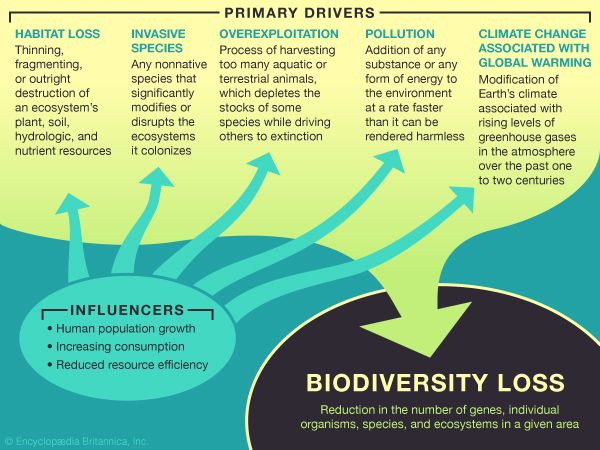
In modern times, biodiversity loss is primarily driven by human activities that transform the natural world to support a growing population and its consumption of resources. Researchers have identified five key drivers of this decline:2
- Habitat loss and degradation: This is the leading cause of biodiversity loss. It involves the destruction, fragmentation, or thinning of natural areas—such as forests, wetlands, and grasslands—to make room for agriculture, urban development, and infrastructure.32
- Invasive species: Non-native species introduced by human activity can outcompete native organisms for food and living space, or act as disease vectors, often leading to the localized extinction of native populations.243
- Overexploitation: The harvesting of animals, fish, and other organisms at rates faster than they can reproduce leads to population depletion and, in many cases, extinction.25
- Pollution: The introduction of harmful substances or energy into the environment at rates exceeding the ecosystem’s ability to disperse or neutralize them creates health and reproductive problems for many species.23
- Climate change: Driven by the burning of fossil fuels, global warming alters temperature and precipitation patterns, forcing species to migrate or face extinction if they cannot adapt to their changing environments.25
These drivers are often interconnected; for example, fragmented ecosystems are more susceptible to invasive species, and habitat loss combined with hunting pressure significantly accelerates the decline of vulnerable species.2
How does biodiversity loss affect food webs and ecosystem stability?
Biodiversity loss significantly disrupts the structure and function of food webs and undermines ecosystem stability. As species are lost, the complexity of biotic interactions decreases, leaving fewer organisms to fulfill critical ecological roles. This reduction in complexity diminishes an ecosystem’s ecological resilience—its ability to recover from disturbances—and can eventually lead to a total collapse or rapid restructuring of the environment.67
The removal of key species, particularly top predators, often triggers a trophic cascade. This phenomenon causes reciprocal changes in the populations of predators and prey throughout a food chain, which can dramatically alter nutrient cycling and primary production. For instance, the loss of top carnivores can lead to “mesopredator release,” where medium-sized predators increase in number, further suppressing the populations of species they consume and potentially causing broader ecological imbalances.8
Conversely, species-rich communities are generally more stable and productive. Studies show that diverse ecosystems recover faster from disturbances, such as drought, and maintain more consistent biomass levels. Maintaining high biodiversity is therefore essential to preserving the intricate web of interactions that sustains the natural services upon which life depends.9
What are some examples of keystone species and how does their loss impact ecosystems?
A keystone species is an organism that exerts a disproportionately large influence on its environment relative to its abundance. Their presence is vital for maintaining the structure and biodiversity of their communities, often by controlling dominant populations or providing essential resources.10
Examples of Keystone Species
- Sea Otters (Enhydra lutris): In Pacific coastal waters, sea otters act as keystone predators by consuming sea urchins. By keeping urchin populations in check, they prevent these herbivores from overgrazing kelp forests, which serve as critical habitats for many other marine species.117
- Starfish (Pisaster ochraceus): In rocky intertidal zones, this predatory starfish controls populations of mussels. Without the starfish, mussels can expand rapidly, crowding out other species and reducing overall community diversity.10
- Wolves (Canis lupus): As apex predators, wolves regulate populations of large herbivores like deer and elk. Their presence prevents overgrazing, which allows vegetation such as aspen and willow to thrive.1211
- Fig Trees: In some tropical forests, certain plants act as keystone species by providing fruit year-round. This makes them a critical food resource for many birds and mammals during times when other food is scarce.10
Impact of Loss
The loss of a keystone species often triggers a trophic cascade, leading to dramatic shifts in ecosystem structure. For example, the removal of sea otters leads to an explosion in urchin populations and the subsequent destruction of kelp forests. Similarly, the loss of top predators can lead to “mesopredator release,” where medium-sized predators increase in number, causing further imbalances in the food web. Because these species are fundamental to ecological stability, their disappearance can lead to a significant decline in local biodiversity and the loss of essential ecosystem services.1110
Sources
- hot spot — Encyclopædia Britannica
- biodiversity loss - Human-driven biodiversity loss — Encyclopædia Britannica
- invasive species — Encyclopædia Britannica
- habitat loss — Encyclopædia Britannica
- extinction — Encyclopædia Britannica
- biodiversity loss - Ecological effects — Encyclopædia Britannica
- trophic cascade — Encyclopædia Britannica
- community ecology - Community equilibrium and species diversity — Encyclopædia Britannica
- biodiversity loss — Encyclopædia Britannica
- apex predator — Encyclopædia Britannica
- keystone species — Encyclopædia Britannica
- sea otter — Encyclopædia Britannica
Published on · 4 min read