Przewalski’s Horse
Reintroducing Przewalski’s horse to the wild is a complex conservation effort that faces significant environmental and human-related challenges.
What challenges do Przewalski’s horses face when being reintroduced to the wild?
Reintroducing Przewalski’s horse to the wild is a complex conservation effort that faces significant environmental and human-related challenges.
While reintroduction programs in Mongolia, China, and other parts of central Asia have achieved moderate success, the horses must contend with the following pressures:
- Resource Competition: As nomadic pastoralists expand into previously uninhabited regions, the horses face direct competition for limited pasture and scarce water supplies.1
- Habitat Encroachment: The encroachment of human activity into the horses’ natural semidesert steppe environment reduces the available range for these animals to roam and forage.1
- Historical Genetic Risks: Prior to their reclassification as critically endangered, scientists speculated that the last wild individuals may have interbred with half-wild domesticated horses, potentially diluting the subspecies’ distinct genetic characteristics.2
Despite these hurdles, the species has seen a recovery from being declared extinct in the wild to having several hundred individuals living in natural habitats as of 2011.2
What are the main threats that led to the near-extinction of Przewalski’s horse in the wild?
The near-extinction of Przewalski’s horse in the wild was driven by a combination of environmental pressures and genetic dilution.
The primary factors contributing to their decline include:
- Genetic Dilution: Scientists have speculated that the last remaining wild individuals likely interbred with half-wild domesticated horses. This process is believed to have caused the subspecies to lose its distinct genetic characteristics and physical traits.1
- Human Encroachment and Competition: As nomadic pastoralists expanded into previously uninhabited regions, the horses faced increasing pressure from human activity. This encroachment led to direct competition for limited pasture and scarce water supplies, which are critical for survival in their semidesert steppe environment.2
- Habitat Loss: The expansion of human settlement into the remote steppe country on the border between Mongolia and China significantly reduced the available range for the species.12
These combined pressures led to the species being declared extinct in the wild by the mid-1990s, though successful captive breeding and reintroduction efforts have since helped restore a wild population.1
What are the unique physical characteristics of Przewalski’s horse?
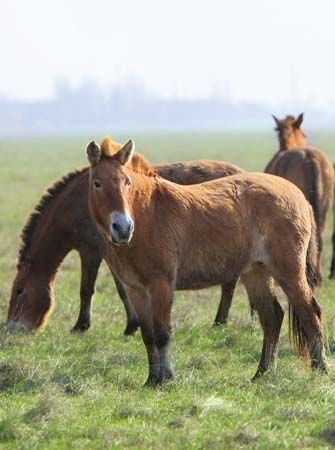
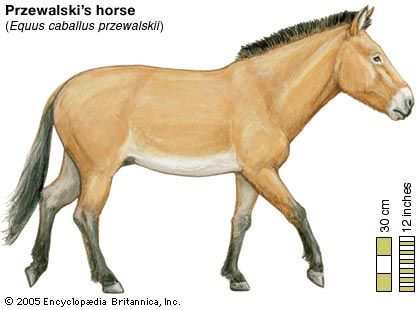
Przewalski’s horse is a small, stocky wild horse that physically resembles a coarse pony. Its unique physical characteristics include:13
- Coloration: The coat is typically yellowish or light red, often referred to as dun, and is frequently accompanied by a dark dorsal stripe.13
- Mane and Tail: It possesses a dark mane and tail. Notably, the mane is short and stands erect, and the animal lacks a forelock.13
- Body Structure: The horse has a large head, low withers that blend into a narrow back, and a short, steep croup.13
- Size: It stands approximately 12 to 14 hands (48 to 56 inches, or 122 to 142 cm) tall.1
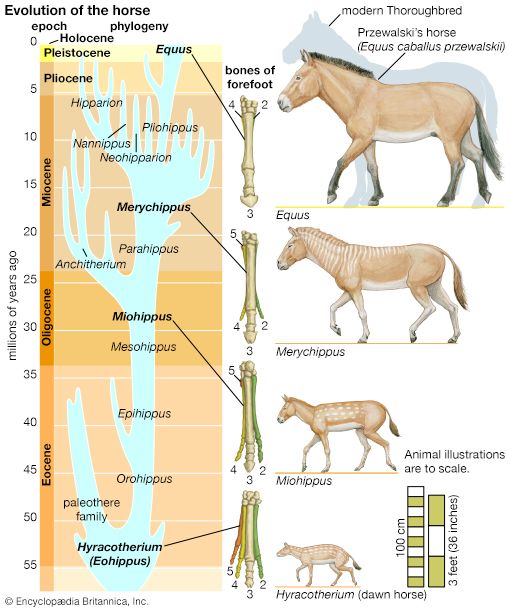
These features distinguish it from other modern equines and have led some researchers to consider it the last surviving distinct breed of wild horse.14
What role does Przewalski’s horse play in its ecosystem, and why is its conservation important?
As the last surviving subspecies of wild horse, Przewalski’s horse plays a vital role as a large herbivore within the Eurasian Steppe ecosystem. These animals are naturally adapted to the harsh, semiarid conditions of the steppe, where they contribute to the ecological balance by grazing on grasses and interacting with other native wildlife in this vast, open landscape.152
Conservation of this species is of critical importance for several reasons:
- Biodiversity Preservation: As a unique evolutionary lineage, Przewalski’s horse represents a significant component of global biodiversity. Its survival helps maintain the natural heritage of the Central Asian grasslands.12
- Ecological Integrity: By occupying their natural niche, these horses help sustain the health of the steppe habitat, which is currently threatened by overgrazing and the conversion of wild lands into agricultural areas.5
- Restoration Success: The species serves as a powerful symbol of successful conservation. After being declared extinct in the wild, intensive zoo breeding and subsequent reintroduction programs in Mongolia and China have demonstrated that human intervention can reverse the loss of endangered species.1
Sources
- Przewalski’s horse — Encyclopædia Britannica
- perissodactyl - The wild horse — Encyclopædia Britannica
- Przewalski's horse — Merriam-Webster
- horse - Evolution of the horse — Encyclopædia Britannica
- Steppe — Encyclopædia Britannica
Published on · 3 min read