Esker
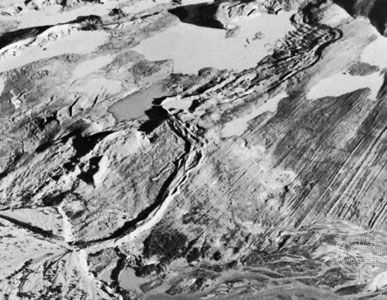
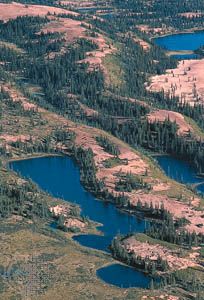
An esker is a long, narrow, winding ridge formed by stratified sand and gravel deposited by meltwater streams flowing within or beneath stagnant glaciers.
Are there any famous or particularly noteworthy eskers around the world?
An esker is a long, narrow, winding ridge formed by stratified sand and gravel deposited by meltwater streams flowing within or beneath stagnant glaciers.12
While individual eskers are often identified by their local geography rather than specific proper names, they are notably prevalent in several regions globally. Significant concentrations of these glacial landforms are found in:
- Maine, U.S.: Known for extensive esker systems that reflect the state’s glacial history.12
- Canada: Home to numerous long, winding ridges formed during the retreat of massive ice sheets.12
- Ireland: The term itself derives from the Irish word eiscir, meaning “ridge,” highlighting the prominence of these features in the Irish landscape.23
- Sweden: Features notable areas of esker deposits that are characteristic of the region’s post-glacial terrain.12
In Scotland, the glacial topography—including eskers and moraines—has even been noted for its influence on the natural landscape of historic sites like St. Andrews. Because these ridges are composed of sorted sediment, they are frequently quarried for construction materials.21
What materials are eskers typically composed of?
Eskers are primarily composed of stratified sand and gravel.1
These materials are deposited by meltwater streams flowing through tunnels within or beneath a glacier. Because the sediment is sorted by grain size and often features cross-laminations, it reflects the channelized nature of the water flow. As the glacier retreats and the ice melts away, these deposits are left behind on the ground surface as long, winding ridges. Due to the ease of access to these sorted materials, esker deposits are frequently quarried for use in construction.14
How are eskers used by geologists to study glacial history and climate change?
Geologists use eskers as vital indicators of past glacial environments. Because these long, winding ridges are formed by meltwater streams flowing through tunnels within or beneath stagnant glaciers, they provide a physical record of the drainage systems that existed during the final stages of glaciation.15
By analyzing the sediment within an esker—which is sorted by grain size and often features cross-laminations—geologists can determine the direction and intensity of subglacial water flow. Because esker formation typically occurs only after a glacier has stagnated, these landforms help researchers map the retreat patterns of former ice sheets. Furthermore, the presence and orientation of these ridges allow scientists to reconstruct the landscape of the Quaternary period, offering insights into how melting ice influenced regional drainage and surface topography as climates shifted.15
What are the typical characteristics and dimensions of eskers?
Eskers are characterized as long, narrow, and winding ridges formed by meltwater streams flowing within or beneath stagnant glaciers. These landforms consist of stratified sand and gravel that were deposited in subglacial or englacial tunnels and subsequently left on the ground surface as the ice retreated.14
The typical dimensions of eskers are as follows:
- Height: 16 to 160 feet (5 to 50 meters)14
- Width: 160 to 1,600 feet (50 to 500 meters)14
- Length: Ranging from a few hundred feet to tens of miles14
Eskers may appear as continuous, unbroken ridges or as a series of detached segments. The sediment within them is typically sorted by grain size, often exhibiting cross-laminations that indicate a single direction of water flow. Because they are composed of easily accessible, sorted materials, these ridges are frequently quarried for construction purposes.14
Sources
- esker — Encyclopædia Britannica
- 12 Lovely and Unusual Words for the Natural World | Esker — Merriam-Webster
- esker — Merriam-Webster
- glacial landform - Glaciofluvial deposits — Encyclopædia Britannica
- Quaternary - Landforms — Encyclopædia Britannica
Published on · 3 min read