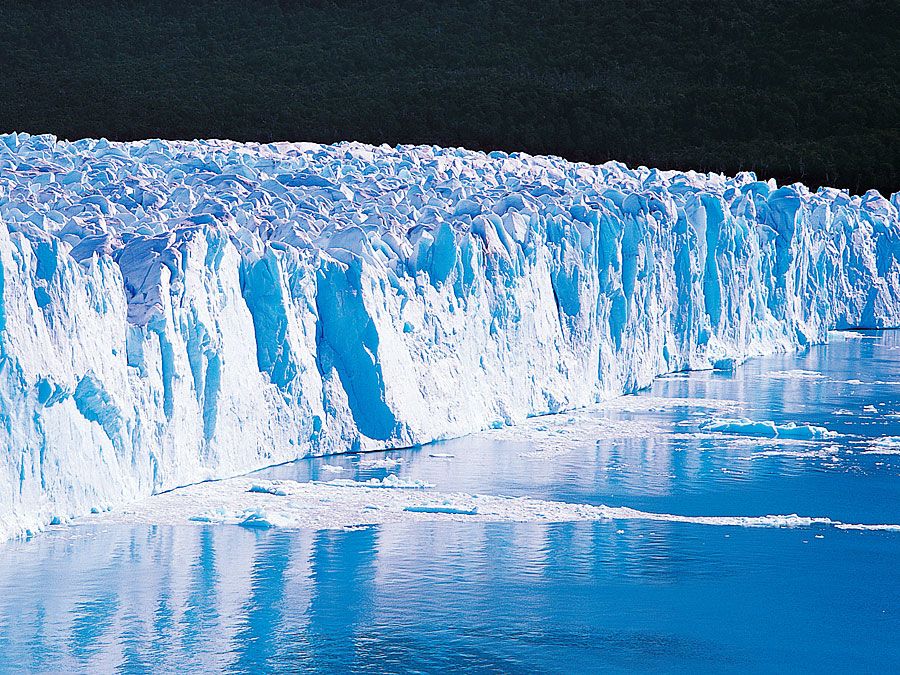
Moraine
A moraine is an accumulation of unsorted rock debris, known as till, deposited by a glacier. These features are categorized based on their location and…
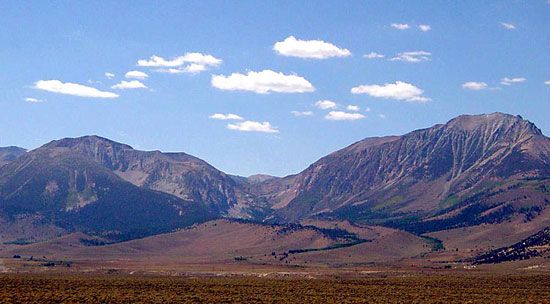
What are the different types of moraines, and how do they differ from each other?
A moraine is an accumulation of unsorted rock debris, known as till, deposited by a glacier. These features are categorized based on their location and formation process:
- Ground moraine: An irregular, thin blanket of till deposited beneath a glacier, often creating a hummocky landscape of mounds and depressions.12
- Terminal moraine: A ridgelike accumulation of debris pushed to the outermost edge of a glacier’s advance.13
- Lateral moraine: Ridges formed along the sides of a glacier, consisting of debris derived from valley walls through erosion and avalanches.13
- Medial moraine: A long, narrow line of debris formed in the middle of a glacier where two ice streams merge and their lateral moraines join.1
- Recessional moraine: Secondary end moraines deposited during temporary standstills as a glacier retreats.13
While terminal and recessional moraines mark specific positions of the ice margin, ground moraines cover broader areas, and lateral and medial moraines are defined by their position relative to the glacier’s flow.12
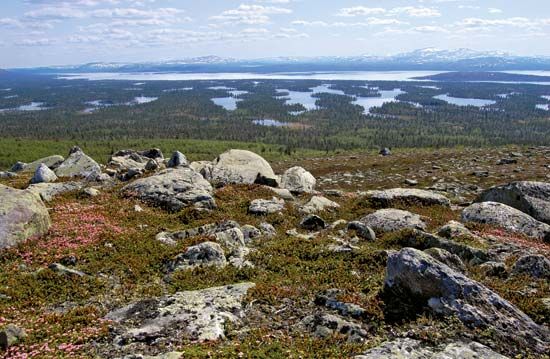
What role do moraines play in the formation of glacial lakes?
Moraines play a significant role in the formation of glacial lakes by acting as natural dams that confine postglacial waters. These heterogeneous sedimentary deposits, left behind at the margins of retreating glaciers, can block existing valleys or depressions, preventing water from draining and thereby creating lake basins.1
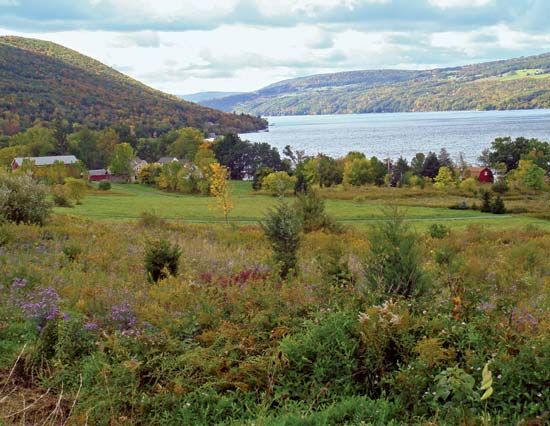
The Finger Lakes in New York State serve as a prominent example of this process; these lakes were formed through the glacial scouring of valleys that were subsequently blocked at both their northern and southern ends by end moraines. Additionally, morainic material can contribute to the creation of various other basin types, including those that host kettle lakes. These form when till or outwash is deposited around stagnant blocks of ice; once the ice melts, the resulting depressions are often filled with water. In areas covered by ground moraine, the characteristic hummocky topography—consisting of alternating mounds and depressions—frequently results in the formation of small lakes or swamps within the low-lying areas.145
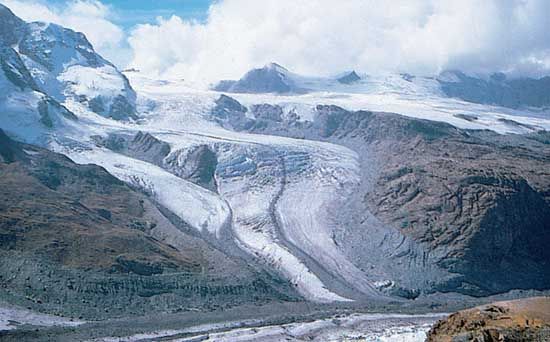
How do lateral moraines differ from medial moraines?
Lateral and medial moraines are distinguished primarily by their location on a glacier and their specific formation process:
- Lateral moraine: These form along the edges of a glacier. They consist of rock debris that accumulates on the ice surface due to erosion and avalanches from the adjacent valley walls. When the glacier eventually recedes, this material is left behind as an elongate ridge along the side of the valley.18
- Medial moraine: These appear as a long, narrow line or zone of debris situated in the middle of a glacier. They are created when two separate ice streams merge; at the point of intersection, the lateral moraines of the two glaciers join together to form a single, central ridge that runs parallel to the direction of ice movement.19
In essence, while lateral moraines are fed by the valley sides, medial moraines are the result of the coalescence of two glaciers, which brings internal lateral debris into the center of the combined ice flow.1
How do moraines influence soil composition and vegetation in formerly glaciated areas?
Moraines significantly influence the physical and chemical characteristics of the landscape in formerly glaciated areas, which in turn dictates the development of soil and vegetation.
Impact on Soil Composition
Moraines are composed of till, an unstratified mixture of rock debris ranging from large boulders to fine sand and clay. Because this material is derived from the mechanical weathering and grinding of various bedrock types, it creates a heterogeneous soil parent material.10
- Texture and Drainage: Ground moraines, which form an irregular blanket of till, are often rich in clay and sand. This composition influences soil moisture retention and drainage patterns, which are critical factors for plant growth.10
- Topography: The hummocky, irregular terrain of moraine belts—characterized by knobs and kettles—creates a mosaic of micro-environments. These variations in slope and elevation lead to localized differences in soil development, as water and nutrients accumulate differently in depressions compared to ridges.101
Influence on Vegetation
The physical legacy of moraines provides a foundation for ecological succession. By altering drainage and creating diverse landforms, moraines support varied plant communities that adapt to the specific moisture and nutrient profiles of the glacial deposits. Furthermore, the age of these deposits can be determined by studying the growth of trees and other vegetation, which helps researchers establish a chronology of glacial retreat.110
Sources
- moraine — Encyclopædia Britannica
- glacial landform - Moraines — Encyclopædia Britannica
- glacial landform - Depositional landforms of continental glaciers — Encyclopædia Britannica
- lake - Basins formed by glaciation — Encyclopædia Britannica
- glacial landform - Glaciofluvial deposits — Encyclopædia Britannica
- Pleistocene Epoch - Fluvial environments — Encyclopædia Britannica
- ice jam — Encyclopædia Britannica
- medial moraine — Merriam-Webster
- lateral moraine — Merriam-Webster
- Quaternary - Landforms — Encyclopædia Britannica
Published on · 4 min read