Fairy Shrimp
Fairy shrimp are small, translucent freshwater crustaceans belonging to the order Anostraca. They are named for their graceful, delicate movements and often…
What is fairy shrimp?
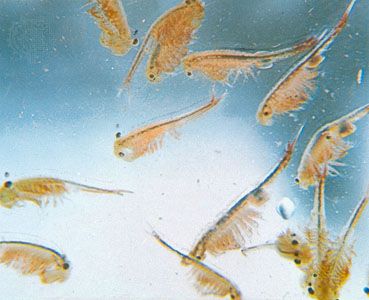
Fairy shrimp are small, translucent freshwater crustaceans belonging to the order Anostraca. They are named for their graceful, delicate movements and often pastel coloration.12
While they superficially resemble true shrimp, they are not closely related to the decapod crustaceans (such as crabs, lobsters, or true shrimp) and belong to a distinct order. These organisms typically grow to 2.5 cm (about 1 inch) or more in length and are found in freshwater ponds across Europe, Central Asia, western North America, Australia, and drier regions of Africa.21
In terms of development, fairy shrimp exhibit one of the most primitive life cycles among crustaceans. They hatch as nauplius larvae and gradually add new body segments and appendages through a long series of molts as they mature into adults. They also possess a brood pouch, often formed by the carapace, to carry their eggs.3
How do fairy shrimp survive in temporary ponds that dry up?
Fairy shrimp survive in temporary ponds by producing specialized, dormant eggs that are highly resistant to harsh environmental conditions, including drought and freezing temperatures.2
These resting eggs are capable of remaining dry for extended periods—sometimes lasting for several years—until favorable conditions return. Because fairy shrimp are primarily confined to temporary pools, they must synchronize their life cycles with the brief periods when water is available. When the environment becomes suitable again, these dormant eggs hatch, allowing the population to re-emerge and complete their life cycle before the next dry period occurs. This reproductive strategy is a common adaptation among members of the class Branchiopoda, ensuring the survival of the species despite the ephemeral nature of their habitats.25
What do fairy shrimp eat in their freshwater habitats?
The provided search results do not contain specific information regarding the diet of fairy shrimp. While the articles confirm that fairy shrimp belong to the order Anostraca and are distinct from true shrimp, they do not detail the feeding habits of these specific crustaceans.
How are fairy shrimp different from the shrimp we eat?
Fairy shrimp and the shrimp commonly consumed as food are distinct organisms belonging to different biological groups.
- Classification: Fairy shrimp belong to the order Anostraca, whereas the shrimp we eat are members of the suborder Natantia, which falls under the order Decapoda. Decapods are closely related to crabs, crayfish, and lobsters.23
- Physical Characteristics: Fairy shrimp are named for their graceful, delicate appearance and pastel colors, typically growing to about 2.5 cm (1 inch) in length. In contrast, edible shrimp generally range from 4 to 8 cm (1.5 to 3 inches), with some species reaching up to 20 cm (8 inches). Edible shrimp possess a semitransparent body, a flexible abdomen with a fanlike tail, and long, whiplike antennae.23
- Habitat and Use: While both can be found in freshwater, edible shrimp are widely distributed across all oceans and are commercially significant as a food source. Fairy shrimp are primarily found in temporary freshwater ponds.23
Sources
- fairy shrimp — Merriam-Webster
- fairy shrimp — Encyclopædia Britannica
- shrimp — Encyclopædia Britannica
- crustacean - Reproduction and life cycles — Encyclopædia Britannica
- branchiopod - Reproduction and life cycles — Encyclopædia Britannica
- branchiopod — Encyclopædia Britannica
Published on · 2 min read