Crayfish
Crayfish are crustaceans found globally, with over half of the more than 500 known species inhabiting North America. While they are primarily freshwater…
Where are crayfish commonly found in nature, and what types of habitats do they prefer?
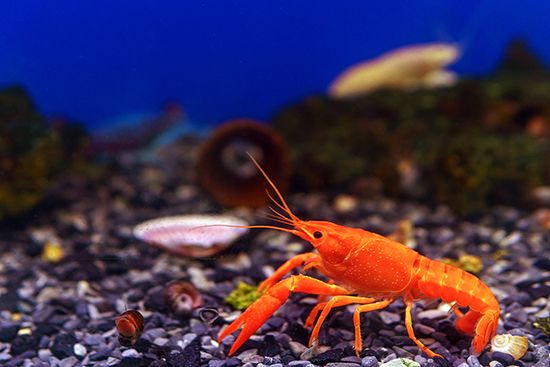
Crayfish are crustaceans found globally, with over half of the more than 500 known species inhabiting North America. While they are primarily freshwater animals, a small number of species can be found in brackish or salt water1.1
Regarding their preferred habitats, crayfish are commonly found in streams and lakes, where they often seek shelter by concealing themselves under rocks or logs. Some species, specifically referred to as river crawfish, live primarily in rivers. Because they are most active at night, these environments provide the necessary cover for them to hunt for food, such as snails, insect larvae, worms, and tadpoles, or to forage for vegetation.12

How do crayfish differ from other crustaceans like lobsters and crabs?
Crayfish, lobsters, and crabs are all members of the order Decapoda, meaning they share the defining characteristic of having five pairs of thoracic legs. Despite this common classification, they exhibit distinct anatomical and behavioral differences:3
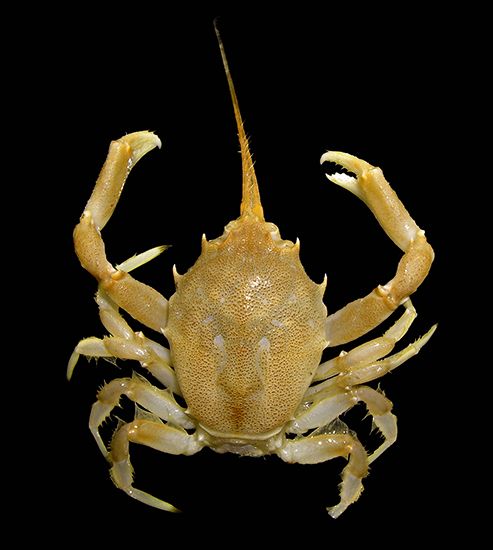
- Body Shape and Abdomen: The most notable difference lies in their body structure. Crabs (infraorder Brachyura) are characterized by their “short-tailed” form, where the abdomen is curled tightly underneath the thorax. In contrast, crayfish and lobsters (infraorder Astacidea) possess elongated bodies with well-developed, muscular abdomens and fan-shaped tails used for swimming and backward propulsion.4356
- Habitat: While all three groups are decapods, their primary environments differ significantly. Most lobsters and crabs are marine, inhabiting oceans worldwide. Crayfish, however, are primarily freshwater animals, with the vast majority of their species living in streams and lakes.546
- Appendages: While all three have pincers (chelae), the configuration varies. In crabs, the first pair of legs is modified into pincers, and they typically move with a characteristic sidelong gait. True lobsters possess large, powerful claws on their first three pairs of legs, with the first pair being the largest. Crayfish also feature large, powerful pincers on their first pair of legs, which they use for feeding and defense.456
What are some of the most common species of crayfish?
There are over 500 known species of crayfish distributed across the globe. While individual species vary, they are categorized into several prominent genera based on their geographic region.
Common Genera by Region
- North America: This region is home to more than half of all known species. The most common genera include Procambarus, Orconectes, Faxonella, Cambarus, Cambarellus, and Pacifastacus.1
- Europe: The genus Austropotamobius is the most common in Europe and is the only one native to Great Britain. The genus Astacus is also found throughout the continent, including species such as the stone crayfish (Astacus torrentium) found in central Europe.19
- East Asia: The genus Cambaroides is the primary representative in this region.1
Notable Species Variations
Crayfish exhibit a wide range of sizes. For instance, the Cambarellus diminutus of the southeastern United States is among the smallest, measuring about 2.5 cm in length. Conversely, the Astacopsis gouldi of Tasmania is one of the largest, capable of reaching 40 cm in length and weighing up to 3.5 kg.1
What do crayfish eat in their natural environment?
Crayfish are primarily nocturnal creatures that emerge at night to forage for food in their natural habitats, such as streams and lakes. They are opportunistic feeders with a varied diet that includes:1
- Invertebrates: They frequently consume snails, insect larvae, and worms.1
- Vertebrates: Their diet often includes amphibian tadpoles.1
- Vegetation: Many species also feed on various types of aquatic vegetation.1
While they play a role in aquatic food webs, their feeding habits can sometimes lead to conflict with human agricultural interests; for instance, crayfish may cause damage to crops such as cotton and tomatoes.10
Sources
- crayfish — Encyclopædia Britannica
- river crawfish — Merriam-Webster
- decapod — Encyclopædia Britannica
- crustacean - Appendages — Encyclopædia Britannica
- lobster — Encyclopædia Britannica
- crustacean - Size range and diversity of structure — Encyclopædia Britannica
- crab — Encyclopædia Britannica
- List of crustaceans — Encyclopædia Britannica
- stone crayfish — Merriam-Webster
- crustacean - Importance to humans — Encyclopædia Britannica
Published on · 3 min read