Fanwort
Fanwort refers to any of approximately seven species of aquatic flowering plants belonging to the genus Cabomba within the family Cabombaceae. These plants…
What is fanwort and where is it typically found?
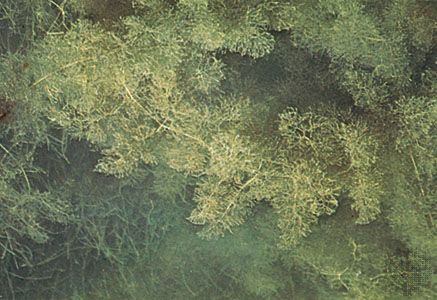
Fanwort refers to any of approximately seven species of aquatic flowering plants belonging to the genus Cabomba within the family Cabombaceae. These plants are characterized by their finely divided, fan-shaped submerged leaves and small, pale-yellow or white flowers.1
Regarding their distribution, fanwort species are native to the tropics and subtropics of the New World. One particular species, Cabomba caroliniana—also known as Washington grass or fish grass—is the most common variety found in North America. Beyond its natural habitat, fanwort is frequently cultivated for use as an aquarium plant.1
How does fanwort reproduce and spread in aquatic environments?
Sorry, the Britannica knowledge base does not contain information regarding the specific reproductive methods or the mechanisms by which fanwort spreads in aquatic environments.
How is fanwort used in aquariums and water gardens?
Fanwort, particularly the species Cabomba caroliniana, is frequently cultivated for use as an aquarium plant due to its aesthetic appeal and submerged growth habit.1
In these settings, its finely divided, fan-shaped leaves provide a lush, decorative appearance that is popular among hobbyists. While the provided information confirms its common use in aquariums, it does not detail specific maintenance practices for water gardens or the technical requirements for its cultivation in those environments.1
What are the key identifying characteristics of fanwort?
Fanwort refers to approximately seven species of aquatic plants within the genus Cabomba, belonging to the family Cabombaceae. These plants are primarily native to the tropics and subtropics of the New World.1
Key identifying characteristics include:
- Leaves: The plant features two distinct types of leaves. The submerged leaves are finely divided, fan-shaped, and measure between 2 and 5 cm (about 0.75 to 2 inches) wide. In contrast, the narrow, floating leaves appear during flowering and are approximately 5 to 20 mm (0.2 to 0.75 inches) long.1
- Stems and Roots: A slimy leafstalk attaches the center of the floating leaf blade to the stem. The roots are typically anchored in mud.1
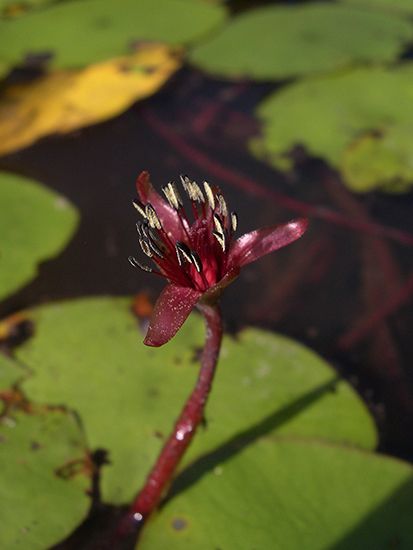
- Flowers: The flowers are relatively small, ranging from 5.5 mm to 1 cm (0.2 to 0.4 inches) in length, and are typically pale-yellow or white.1
The most common species in North America is Cabomba caroliniana, which is widely recognized for its use in aquariums.1
Sources
- fanwort — Encyclopædia Britannica
- Cabombaceae — Merriam-Webster
- water shield — Encyclopædia Britannica
Published on · 2 min read