Morinda Citrifolia
Morinda citrifolia is a small evergreen tree belonging to the coffee family (Rubiaceae). Native to Australasia and Southeast Asia, it is widely naturalized…
What is Morinda citrifolia?
Morinda citrifolia is a small evergreen tree belonging to the coffee family (Rubiaceae). Native to Australasia and Southeast Asia, it is widely naturalized across the tropics and the Pacific region. Commonly known as noni, great morinda, or Indian mulberry, the plant is recognized as a pioneer species capable of thriving in harsh environments, such as areas covered by lava flows.12
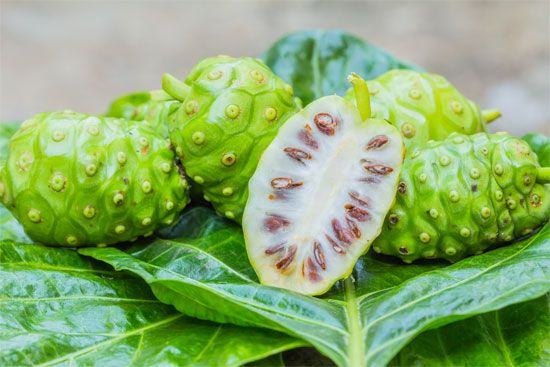
The tree produces a fruit often described as having a pungent odor and a bitter, acidic flavor, leading to names like cheese fruit or vomit fruit. While it has a long history of use in traditional medicine and as a dye, scientific evidence for its medicinal claims remains uncertain, and excessive consumption of its juice has been linked to liver toxicity. Culturally, the plant holds significant value in Pacific traditions, where it was historically carried by Polynesian explorers and integrated into local mythology.1
What are pioneer species and why are they important to ecosystems?
Pioneer species are the first organisms to colonize barren or recently disturbed environments, initiating the process of ecological succession. These species, which include lichens, mosses, fungi, and various microorganisms, are essential because they transform inhospitable landscapes into environments capable of supporting more complex life.34
Their importance to ecosystems lies in their role as “ecosystem engineers”:
- Soil Formation: Pioneer species break down bare rock through the release of acids. As they die and decompose, their organic matter mixes with mineral sediment to create the first layers of soil.34
- Fertility Enhancement: Many pioneers improve soil quality by fixing nitrogen and adding carbon, providing the necessary nutrients for future plant growth.3
- Community Foundation: By establishing a simple biological community, they pave the way for intermediate species, such as grasses and shrubs, eventually leading to a stable climax community.34
How did Polynesian explorers transport plants across the Pacific Ocean?
Polynesian explorers were highly skilled mariners and horticulturists who successfully transported a variety of tropical crops across the Pacific Ocean to establish new settlements. They achieved this by utilizing large, double-hulled canoes that were capable of withstanding long-distance travel across the open sea.67
These voyagers intentionally carried essential food plants—such as taro, breadfruit, bananas, yams, sugarcane, and coconuts—to ensure their survival in new environments. While the specific methods of transport are not detailed in the provided records, the successful introduction of these cultigens across the Pacific highlights the deliberate nature of their migration and their reliance on these plants for food, materials, and cultural practices. In some instances, such as with the settlement of Easter Island, legends suggest that settlers brought germinating coconuts, though environmental factors sometimes prevented these plants from thriving in their new locations.68
What other plants belong to the Rubiaceae or coffee family?
The Rubiaceae family, commonly known as the madder family, is a diverse group of flowering plants that includes over 13,150 species. While the genus Coffea is its most famous member, the family encompasses a wide variety of plants valued for their medicinal properties, dyes, and ornamental beauty.10
Economically Important Plants
Beyond coffee, several members of the Rubiaceae family are significant for their chemical properties:
- Cinchona: The bark of these trees is the source of quinine.
- Carapichea ipecacuanha: The roots of this plant provide ipecac.
- Kratom (Mitragyna speciosa): Used in traditional medicine and as a stimulant.
- Common madder (Rubia tinctorum): Historically cultivated for the red dye alizarin obtained from its roots.
- Uncaria gambir: A source of gambier, a substance used in tanning.10
Ornamental and Native Species
Many Rubiaceae species are grown for their aesthetic appeal or are common in temperate regions:
- Ornamentals: Popular garden plants include Gardenia, Bouvardia, Ixora, Nertera, Crucianella, bluets, and buttonbush.10
- Temperate Herbs: Familiar examples include Galium (bedstraw) and Mitchella (partridgeberry).10
Sources
- Morinda citrifolia: Top Questions — Encyclopædia Britannica
- Morinda citrifolia — Encyclopædia Britannica
- pioneer species — Encyclopædia Britannica
- secondary succession — Encyclopædia Britannica
- primary succession — Encyclopædia Britannica
- Polynesian culture - Gardening of Polynesian culture — Encyclopædia Britannica
- Polynesian culture - Material culture — Encyclopædia Britannica
- Pacific Islands - Origins of Oceanian peoples — Encyclopædia Britannica
- Polynesian culture - Contemporary Polynesia — Encyclopædia Britannica
- Rubiaceae — Encyclopædia Britannica
- Rubiaceae — Merriam-Webster
- Coffea — Encyclopædia Britannica
Published on · 3 min read