Plant
Plants have evolved a wide array of structural and physiological adaptations to thrive in diverse environments, a process driven by natural selection acting…
How have plants adapted to different environments and climates?
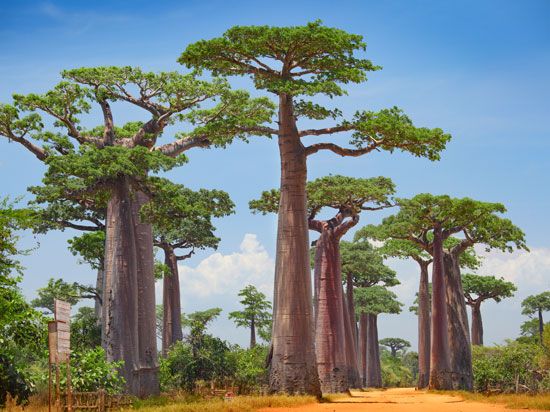
Plants have evolved a wide array of structural and physiological adaptations to thrive in diverse environments, a process driven by natural selection acting on heritable variations over generations.1
Water Management
Plants in dry or physiologically dry habitats, known as xerophytes, have developed mechanisms to prevent water loss or store water. Adaptations include:
- Succulence: Thick, fleshy stems or leaves for water storage.2
- Leaf Modifications: Waxy coatings, dense hair coverings, or the ability to fold leaves to reduce sunlight absorption and desiccation.23
- Root Systems: Extensive root systems, such as those in sagebrush, allow plants to efficiently collect water in arid regions.4
Seasonal and Environmental Responses
Plants often synchronize their growth with seasonal changes. In temperate zones, many deciduous trees enter dormancy before winter, forming resting buds and shedding leaves to protect against drying and frost. This process is often regulated by photoperiodic signals and hormones like abscisic acid.5
Evolutionary Milestones
The transition to land required significant innovations, such as the development of a waxy cuticle to prevent desiccation and vascular tissues to transport water and nutrients.67
What are the basic parts of a plant and their functions?
The basic parts of a seed plant include roots, stems, leaves, and reproductive organs (flowers). Each of these structures performs specialized functions essential for the plant’s survival and growth.9
Roots
Roots are typically underground organs that serve three primary functions:
- Anchorage: They secure the plant in the soil, helping it maintain an upright position.109
- Absorption: They take up water and dissolved minerals from the soil, often aided by root hairs.109
- Storage: Many plants use their roots as sites to store reserve foods, such as starch.109
Stems
The stem acts as the structural link between the roots and the leaves. Its main functions include:
- Support: It supports the leaves, flowers, and fruits.9
- Conduction: It contains xylem and phloem, which transport water, minerals, and food throughout the plant.9
Leaves
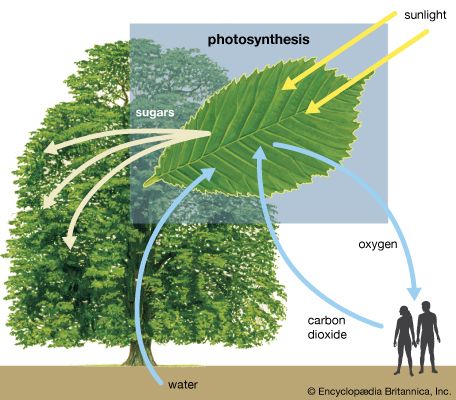
Leaves are the primary organs for photosynthesis, the process by which plants produce food. They are typically broad and flat to maximize light capture and contain veins that transport nutrients and water.119
Reproductive Organs
In flowering plants, the flower contains the reproductive structures:
- Anthers: Produce pollen for reproduction.9
- Ovules: Produce eggs.9
- Ovary: After fertilization, the ovary develops into a fruit containing seeds.129
What are the key characteristics that distinguish plants from other living organisms?
Plants (kingdom Plantae) are multicellular, eukaryotic organisms that exhibit several distinct characteristics that separate them from other life forms, such as animals and fungi. While no single definition perfectly encompasses every plant, they are generally defined by the following key features:1516
- Photosynthetic Nutrition: Most plants are autotrophic, using chlorophyll pigments to convert sunlight, water, and carbon dioxide into chemical energy. They store excess food as starch.1516
- Cell Wall Composition: Plant cells are encased in a rigid cell wall primarily composed of cellulose, which provides structural support.151617
- Growth Patterns: Plants exhibit essentially unlimited growth at localized regions known as meristems.1516
- Alternation of Generations: Their life cycles involve an alternation of generations, cycling between a diploid sporophyte phase and a haploid gametophyte phase.181516
- Stationary Existence: Plants lack organs of locomotion and a nervous system, leading to a generally stationary life.16
Unlike fungi, which are heterotrophic and lack chlorophyll, plants are chemically and nutritionally distinct. While some animals may appear plantlike, they lack these fundamental biological traits.15
What are some unique adaptations of plants, such as carnivorous plants or epiphytes?
Plants have evolved a remarkable array of adaptations to survive in diverse and challenging environments. These specialized traits allow them to thrive in nutrient-poor soils, arid climates, or even in the canopy of tropical forests.
Carnivorous Plants
Carnivorous plants, such as the Venus flytrap and pitcher plants, have evolved to capture and digest insects and other small animals. Contrary to popular belief, they do not “eat” prey for energy; they remain photosynthetic. Instead, they use these captures to obtain essential nitrogen and other nutrients that are scarce in the bogs and wetlands where they grow.1
Epiphytes
Epiphytes are plants that grow on other objects or plants for physical support rather than nutrition. By living high in the tree canopy, they gain better access to sunlight. They obtain water from rain and humidity, often using specialized leaves or roots to absorb moisture and nutrients from organic debris.20
Xerophytes and CAM Photosynthesis
Xerophytes are adapted to dry habitats through mechanisms like thick, fleshy stems for water storage or waxy leaf coatings to prevent water loss. Many of these plants utilize crassulacean acid metabolism (CAM), a photosynthetic pathway that allows them to open their stomata at night to fix carbon dioxide, significantly reducing water loss during the heat of the day.2122
Sources
- Xerophyte — Encyclopædia Britannica
- Cold desert — Encyclopædia Britannica
- Plant development - Seasonal adaptations — Encyclopædia Britannica
- Tree - Leaf adaptations — Encyclopædia Britannica
- adaptation — Encyclopædia Britannica
- biogeographic region - Species adaptations to ecological habitats — Encyclopædia Britannica
- phylogeny - Evolution of land plants — Encyclopædia Britannica
- Plant - Evolution of land plants from the Ordovician Period through the middle Devonian — Encyclopædia Britannica
- Plant - Leaves and roots — Encyclopædia Britannica
- Angiosperm - General features — Encyclopædia Britannica
- Root — Encyclopædia Britannica
- Plant - Stems — Encyclopædia Britannica
- Morphology - Anatomy — Encyclopædia Britannica
- conifer - Leaves — Encyclopædia Britannica
- Alternation of generations — Encyclopædia Britannica
- Plant - Definition of the kingdom — Encyclopædia Britannica
- Plant — Encyclopædia Britannica
- Cell wall - Cellulose — Encyclopædia Britannica
- Photosynthesis: Top Questions — Encyclopædia Britannica
- Do Carnivorous Plants Eat Their Prey? — Encyclopædia Britannica
- Parasitic plant — Encyclopædia Britannica
- Epiphyte — Encyclopædia Britannica
- Playing with Wildfire: 5 Amazing Adaptations of Pyrophytic Plants — Encyclopædia Britannica
- Photosynthesis - Carbon fixation via crassulacean acid metabolism (CAM) — Encyclopædia Britannica
Published on · 4 min read