Crustacean Louse
A "crustacean louse" is not a single species but a collective term for various small aquatic invertebrates within the subphylum Crustacea that live as…
What is crustacean louse?
A “crustacean louse” is not a single species but a collective term for various small aquatic invertebrates within the subphylum Crustacea that live as parasites on fish.1
These parasites are diverse and include several distinct groups:
- Branchiura: Commonly known as fish lice, these are effective swimmers that attach to a host’s skin using suckers to feed on blood or mucus.21
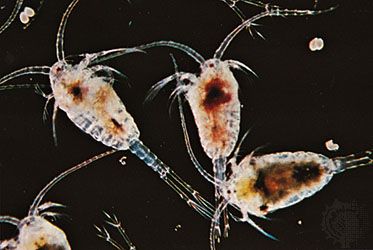
- Copepoda: Certain species within this subclass are specialized fish parasites.1
- Malacostraca: This class includes parasitic amphipods and isopods. Notably, the family Cymothoidae features powerful thoracic claws for secure attachment, allowing them to infest various parts of a fish, including the skin, gill chambers, mouth, and even the abdominal cavity.1
These organisms have evolved specialized adaptations, such as suckers or claws, to maintain their hold on hosts in marine and freshwater environments. While many are external parasites, their specific habitats vary significantly depending on the species.21
How do parasitic crustaceans differ from common land lice?
Parasitic crustaceans and common land lice are distinct organisms that belong to different biological groups and inhabit vastly different environments.
Biological Classification
- Crustacean lice are aquatic invertebrates within the subphylum Crustacea, which includes groups such as fish lice (Branchiura), copepods, and certain isopods and amphipods.2
- Common land lice are insects (class Insecta) that typically infest birds and mammals. They are categorized into chewing lice and sucking lice (Anoplura).14
Habitat and Adaptations
- Environment: Crustacean lice are exclusively aquatic, living on fish in marine or freshwater environments. In contrast, land lice are terrestrial, living within the plumage or pelage of birds and mammals, where they rely on body heat and darkness for survival.254
- Attachment: To survive in water, crustacean lice have evolved specialized structures like powerful thoracic claws or suckers to maintain their grip on a host. Land lice have evolved adaptations to cling to hair or feathers, often showing high host specificity, meaning they are restricted to one or a few closely related host species.254
- Feeding: Crustacean lice feed on fish blood or mucusan lice feed on fish blood or mucus. Land lice have varied diets; sucking lice feed exclusively on blood, while chewing lice may consume skin debris, secretions, feathers, or tissue fluids.14
What are some other examples of parasitic relationships in the ocean?
The ocean hosts a wide variety of parasitic relationships beyond crustacean lice. These interactions are diverse, ranging from specialized crustaceans to complex flatworms and even unique reproductive strategies.
Parasitic Crustaceans
Beyond the common fish lice, other crustaceans have evolved highly specialized parasitic lifestyles:
- Rhizocephalan Barnacles: Unlike typical barnacles that cement themselves to rocks, species like Sacculina are internal parasites of crabs. They lack a gut and appendages, instead extending rootlike processes throughout the host’s body to absorb nutrients, often causing the host to become sterile.2
- Copepods: While many copepods are free-living, some are parasitic. For example, Pennella can grow to significant sizes while burying its body into the blubber or skin of whales and fish.89
- Amphipods: Whale lice (Cyamidae) are specialized amphipods that live on the skin of whales, feeding on sloughed tissue.9
Parasitic Flatworms
Many flatworms have evolved to rely entirely on hosts for nourishment. Their life cycles can be remarkably complex, sometimes requiring multiple hosts—such as a crustacean, a fish, and a mammal—to complete their development.10
Sexual Parasitism
Some deep-sea organisms exhibit a unique form of parasitism related to reproduction. In certain deep-sea anglerfish, the tiny male attaches himself to a much larger female. Their tissues and circulatory systems eventually fuse, rendering the male entirely dependent on the female for nutrients while he serves as a permanent source of sperm.11
How do fish protect themselves from external parasites?
Fish employ both physical barriers and behavioral strategies to protect themselves from external parasites.
Physical Defenses
The skin of a fish serves as the primary line of defense. It is covered in numerous mucous glands that secrete a protective layer of mucus, which helps maintain water balance and provides a barrier against bacteria and other pathogens. Additionally, many fish possess scales that provide physical protection against abrasion and external threats. These range from the toothlike placoid scales found on sharks to the overlapping cycloid and ctenoid scales characteristic of many modern bony fishes.1415
Behavioral Strategies
Fish also engage in interspecific relationships to manage parasite loads:
- Cleaning Stations: Many larger fish visit “cleaning stations” maintained by cleaner fish, such as the wrasse genus Labroides. These small fish remove parasites and dead tissue from the skin, mouths, and gill chambers of larger, often predatory fish. The larger fish recognize the cleaner fish by their distinct coloration and behavior, allowing them to operate safely without being eaten.161718
Sources
- fish louse — Encyclopædia Britannica
- crustacean louse — Encyclopædia Britannica
- crustacean - Ecology — Encyclopædia Britannica
- crustacean - Distribution and abundance — Encyclopædia Britannica
- louse - General features — Encyclopædia Britannica
- arthropod - Annotated classification — Encyclopædia Britannica
- louse - Ecology — Encyclopædia Britannica
- copepod — Encyclopædia Britannica
- barnacle — Encyclopædia Britannica
- cetacean - Diseases and parasitism — Encyclopædia Britannica
- parasitism — Encyclopædia Britannica
- flatworm - Ecology — Encyclopædia Britannica
- malacostracan - Reproduction and life cycles — Encyclopædia Britannica
- cleaner fish — Merriam-Webster
- fish - The skin — Encyclopædia Britannica
- perciform - Interspecific relationships — Encyclopædia Britannica
- fish - Behaviour — Encyclopædia Britannica
- Integument - Fishes — Encyclopædia Britannica
Published on · 4 min read