Freshwater Crocodile
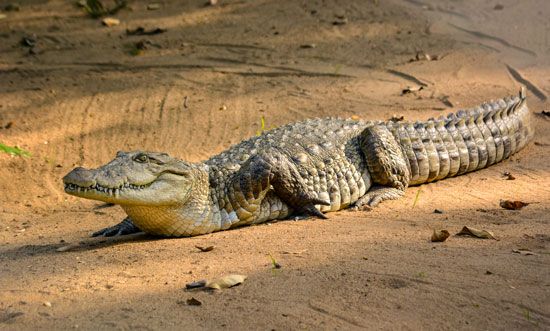
The freshwater crocodile (Crocodylus johnsoni) is a moderately large species of crocodile native to the tropical inland rivers, swamps, and environments of…
What is a freshwater crocodile?
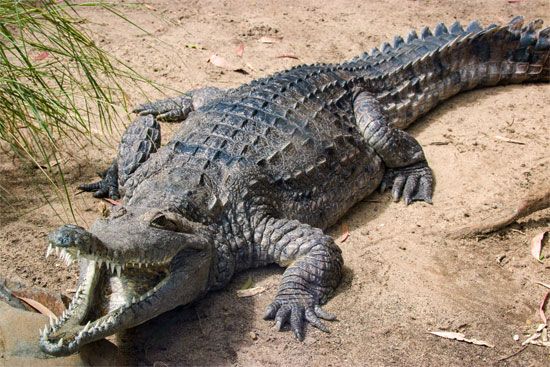
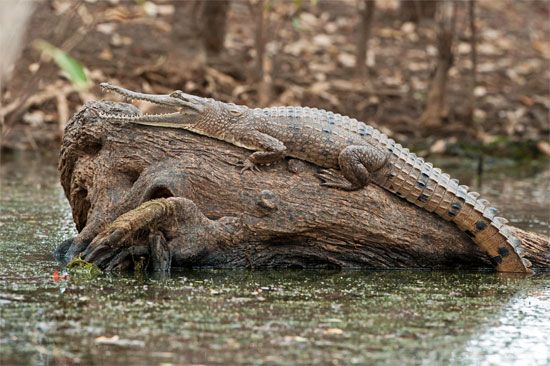
The freshwater crocodile (Crocodylus johnsoni) is a moderately large species of crocodile native to the tropical inland rivers, swamps, and environments of northern Australia. It is easily identified by its narrow, V-shaped snout and gray-to-brown [coloration].1
Unlike the larger and more aggressive estuarine, or saltwater, crocodile, the freshwater crocodile is relatively shy and typically avoids human contact. However, if threatened, it will defend itself with a powerful bite after issuing warnings such as growling, displaying its teeth, and creating ripples in the water. These nocturnal hunters primarily feed on fish, invertebrates, birds, and small mammals.1
Currently, the species is classified as of least concern by the IUCN, as it maintains a large population and a vast geographic range. While they face some challenges from invasive species like cane toads and potential habitat loss, the species remains stable.1
Where do freshwater crocodiles live?
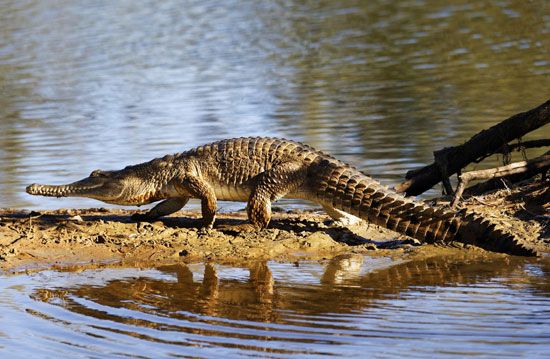
The freshwater crocodile (Crocodylus johnsoni) is endemic to Australia. Its natural habitat is restricted to the northern regions of the country, specifically within:
- Queensland
- Western Australia
- The Northern Territory1
Within these areas, they inhabit various tropical freshwater environments, including inland rivers and swamps. During the dry season, when water sources may recede or disappear, these crocodiles are known to seek shelter in burrows they dig into sandy riverbanks, where they enter a state of dormancy until conditions improve.1
How are freshwater crocodiles different from saltwater crocodiles?
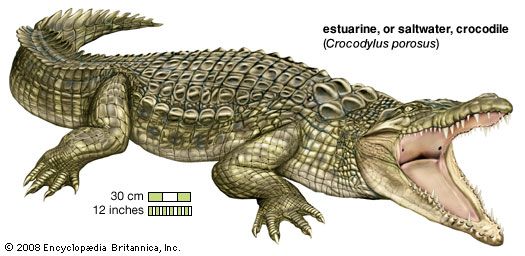
Freshwater crocodiles (Crocodylus johnsoni) and estuarine, or saltwater, crocodiles (Crocodylus porosus) are distinct species with significant differences in size, behavior, and habitat preference.3
Key Differences
Feature
Freshwater Crocodile
Estuarine (Saltwater) Crocodile
Size
Moderately large; typically 2.1–3 meters (6.9–9.8 feet).
The world’s largest reptile; can reach 7 meters (23 feet).
Behavior
Relatively shy; avoids human contact.
Known for being highly aggressive; frequently attacks people and livestock.
Habitat
Tropical inland rivers and swamps.
Brackish waters, wetlands, and marine environments.
Snout
Narrow, V-shaped.
Narrow, V-shaped (common to crocodiles).
Nesting
Deposits eggs in riverbank burrows; does not guard the nest.
Lays eggs in mounds of rotting vegetation; the mother actively defends the nest.
While both species are native to northern Australia, the estuarine crocodile is much larger and more dangerous to humans. Freshwater crocodiles are primarily nocturnal hunters that feed on fish, invertebrates, and small mammals, whereas the larger estuarine crocodile is an apex predator capable of consuming animals as large as water buffalo. Additionally, while the freshwater crocodile is restricted to freshwater environments, the estuarine crocodile possesses specialized glands in its tongue that allow it to excrete excess salt, enabling it to thrive in marine and brackish waters.431
What do freshwater crocodiles eat?
Freshwater crocodiles (Crocodylus johnsoni) are nocturnal hunters that primarily use ambush tactics to capture their prey in the water, though larger adults have also been observed hunting on land.1
Their diverse diet includes:
- Fish and invertebrates (including insects)1
- Birds and amphibians1
- Small mammals, such as wallabies1
- Other freshwater crocodile hatchlings (a form of cannibalism)1
While they are effective predators, they can also be negatively impacted by their own diet; they are known to suffer from poisoning after ingesting invasive cane toads (Rhinella marina).1
Sources
- freshwater crocodile — Encyclopædia Britannica
- 7 Crocodilian Species That Are Dangerous to Humans — Encyclopædia Britannica
- estuarine crocodile — Encyclopædia Britannica
- crocodile - Form and function — Encyclopædia Britannica
- What’s the Difference Between Alligators and Crocodiles? — Encyclopædia Britannica
- crocodile - Size range and diversity of structure — Encyclopædia Britannica
- crocodile - Ecology — Encyclopædia Britannica
Published on · 3 min read