Flashlight Fish
A flashlight fish is any of three species of fishes belonging to the family Anomalopidae. They are notable for having bioluminescent organs located just…
What is flashlight fish?
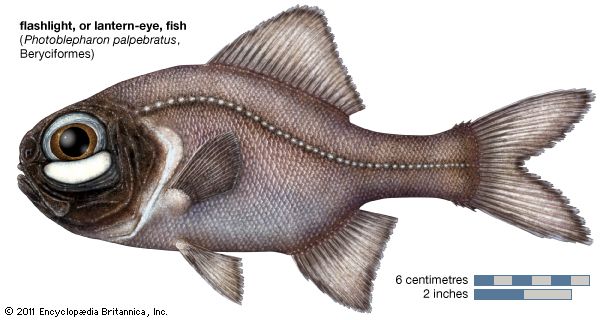
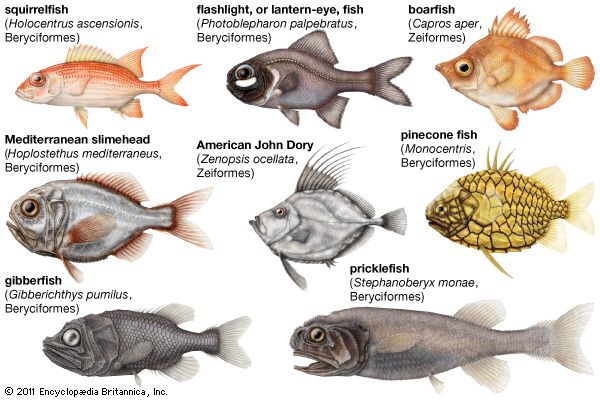
A flashlight fish is any of three species of fishes belonging to the family Anomalopidae. They are notable for having bioluminescent organs located just below their eyes, a feature rarely found in non-deep-sea species.1
These organs contain bacteria that produce light continuously. To manage this, the fish have evolved mechanisms to decrease or hide the glow; some species create a blinking effect by covering and uncovering these organs while swimming. These small fish, which reach a maximum length of about 30 cm (1 foot), are found in tropical marine environments, with two species inhabiting the Indo-Pacific region and one in the Caribbean. They are sometimes referred to as lantern-eye fishes, particularly the species Anomalops katoptron and Photoblepharon palpebratum.1
How do bacteria help the fish produce light?
Flashlight fish produce light through a symbiotic relationship with bioluminescent bacteria that reside within specialized light organs located beneath their eyes.2
The process functions as follows:
- Symbiosis: Each fish species typically hosts a specific type of luminous bacteria. The fish provides a rich blood supply to these organs, which nourishes and maintains the bacterial population.2
- Continuous Glow: Because the bacteria produce light continuously, the light organs are always glowing.2
- Light Control: Since the bacteria cannot “turn off,” the fish controls the light output mechanically. This is achieved by using a fold of black skin or melanophores (pigment granules) that can be drawn over the organ. When the pigment expands, it blocks the light; when it contracts, the light is revealed, allowing the fish to create a blinking or flashing effect.2
This bacterial light production differs from many other deep-sea fish, which generate light internally through their own biochemical reactions involving luciferin and luciferase.32
What are some other animals that use bioluminescence?
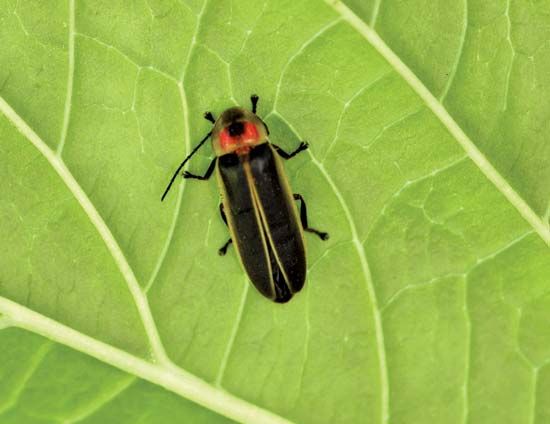
Bioluminescence is a widespread phenomenon used by diverse organisms for survival, communication, and hunting. While many deep-sea creatures rely on this ability, it is also found in terrestrial species like fireflies, which use light signals to attract mates.67
In the ocean, bioluminescence is exhibited by a variety of organisms, including:
- Microorganisms: Blooming phytoplankton, such as the dinoflagellate Noctiluca scintillans, are responsible for the glowing wakes often seen in the sea.2
- Crustaceans: Small crustaceans like Cypridina hilgendorfii emit light when disturbed.2
- Squids: Many squids use bioluminescence defensively, secreting luminous clouds to confuse predators and facilitate escape.23
- Deep-Sea Fish:
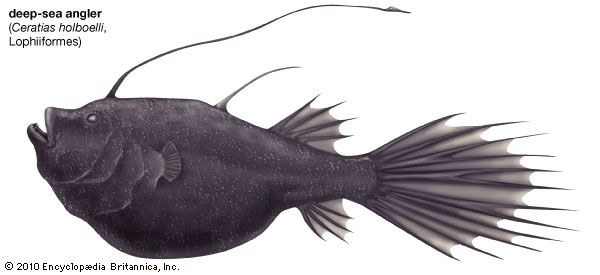
- Anglerfish use a glowing lure attached to a dorsal spine to attract prey.23
- Lantern fishes and hatchetfishes possess photophores that help them recognize mates, communicate, or camouflage themselves by matching the intensity of sunlight from above.37
Why do some sea creatures use light to hide from predators?
Some sea creatures use bioluminescence as a sophisticated form of camouflage to hide from predators, a technique often referred to as counter-illumination.
Many deep-sea fishes, such as lantern fishes and hatchetfishes, possess light-producing organs called photophores located on their ventral (bottom) and lateral surfaces. By emitting light downward that matches the intensity and color of the faint sunlight penetrating from the surface, these creatures effectively erase their own silhouettes. This prevents them from casting a shadow that would otherwise reveal their presence to predators lurking below them in the dark ocean depths.72
Beyond this camouflage, other organisms use light defensively to survive encounters with predators:
- Confusion: Some squids secrete luminous clouds when threatened, which can startle or confuse an enemy, providing the squid an opportunity to escape.67
- Startle Response: Certain species use sudden flashes of light to frighten away potential attackers or to make themselves appear larger than they are.2
Sources
- flashlight fish — Encyclopædia Britannica
- Bioluminescence - The role of bioluminescence in behavior — Encyclopædia Britannica
- luciferase — Encyclopædia Britannica
- Everything’s Illuminated: 6 Bioluminescent Organisms — Encyclopædia Britannica
- Bioluminescence - The range and variety of bioluminescent organisms — Encyclopædia Britannica
- Bioluminescence: Top Questions — Encyclopædia Britannica
- Marine bioluminescence — Encyclopædia Britannica
Published on · 3 min read