Flat Grain Beetle
A flat grain beetle is any member of the insect family Silvanidae (order Coleoptera). These beetles are typically small, measuring less than 3 millimeters…
What is flat grain beetle?
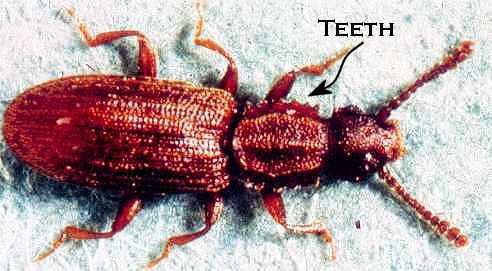
A flat grain beetle is any member of the insect family Silvanidae (order Coleoptera). These beetles are typically small, measuring less than 3 millimeters (0.1 inch) in length. While many species in this family are found living under the bark of trees, some have become significant pests in environments where grain is stored.1
In the context of agriculture and commerce, the flat grain beetle (specifically Cryptolestes pusillus) is classified as a secondary pest of stored cereals. These insects thrive in stored grain stocks, particularly when conditions such as high moisture content or poor ventilation create a favorable environment for their development. Because they can cause substantial damage to stored food supplies, effective management—including regular cleaning, disinfection, and proper storage practices—is essential for their control.2
The family Silvanidae is closely related to the flat bark beetle family (Cucujidae), and they are sometimes grouped together in classification systems.13
What other insects are common pests in stored grain?
Stored grain is susceptible to a wide variety of insect pests, which are often categorized by their feeding habits and the extent of the damage they cause.
Primary Pests (Endosperm Borers)
These insects are capable of boring into the endosperm of the grain, often causing significant damage:
- Grain weevil (Sitophilus granarius)
- Rice and maize weevils (S. oryzae)
- Lesser grain borer (Rhyzopertha dominica)
- Angoumois grain moth (Sitotroga cerealella)
Grain Germ Eaters
These pests specifically target the germ of the grain:
- Rust-red grain beetle (Cryptolestes ferrugineus)
- Saw-toothed grain beetle (Oryzaephilus surinamensis)
- Khapra beetle (Trogoderma granarium)
- Warehouse moth (Ephestia elutella)
Secondary Pests
These insects typically infest grain that has already been damaged or is in poor condition:
- Mediterranean flour moth (Anagasta kuehniella)
- Confused flour beetle (Tribolium confusum)
- Rust-red flour beetle (T. castaneum)
- Broad-horned flour beetle (Gnathocerus cornutus)
- Cadelle beetle (Tenebroides mauritanicus)
- Yellow mealworm (Tenebrio molitor)
- Australian spider beetle
- Biscuit beetle
- Indian-meal moth (Plodia interpunctella)
Additionally, mites such as the flour mite (Acarus siro) frequently invade mills and storehouses.24
How do moisture and temperature affect grain storage?
Moisture and temperature are critical factors in maintaining the quality of stored cereal crops. Proper management of these variables is essential to prevent spoilage and protect against pest infestations.2
The Role of Moisture and Respiration
Grain undergoes natural respiration, which generates heat. When the moisture content is kept low—ideally between 10 and 12 percent—this process remains stable and temperature spikes are unlikely. However, if moisture levels exceed 16 percent, the rate of respiration increases significantly. In large storage bulks, this heat cannot dissipate, leading to a dangerous rise in temperature that further accelerates respiration and creates a cycle of spoilage.2
Temperature and Pest Proliferation
Elevated temperatures create a favorable environment for various insects and molds, which can lead to substantial losses in weight, milling quality, and nutritional value. To mitigate these risks, stored stocks are regularly turned over to ventilate the grain and maintain lower temperatures. Inefficient storage, particularly in large silos, leaves grain highly vulnerable to these threats.2
What are the main differences between primary and secondary grain pests?
The primary distinction between primary and secondary grain pests lies in their ability to penetrate and consume intact, healthy kernels.
Primary Pests
Primary pests are characterized as endosperm borers or germ eaters. They possess the biological capability to bore into and feed upon sound, undamaged grain. Because they can penetrate the protective outer layer of the kernel, they are responsible for the initial damage that compromises the grain’s integrity. Examples include:
- Endosperm borers: Grain weevil, rice and maize weevils, the lesser grain borer, and the angoumois grain moth.
- Germ eaters: The rust-red grain beetle, saw-toothed grain beetle, khapra beetle, and warehouse moth.2
Secondary Pests
Secondary pests are generally unable to attack sound, whole grain. Instead, they infest grain that has already been damaged by primary pests, mechanical handling, or poor storage conditions. They thrive in broken kernels, grain dust, or processed products like flour. Common secondary pests include the Mediterranean flour moth, various flour beetles, the cadelle beetle, and the yellow mealworm.2
Sources
- flat grain beetle — Encyclopædia Britannica
- Cereal farming - Storage — Encyclopædia Britannica
- Coleoptera - Annotated classification — Encyclopædia Britannica
- Agricultural technology - Mechanical and cultural controls — Encyclopædia Britannica
- Agricultural technology - Biological controls — Encyclopædia Britannica
- Grain weevil — Encyclopædia Britannica
Published on · 3 min read