Flea
Fleas are small, wingless insects belonging to the order Siphonaptera, distinguished by several unique anatomical and physiological adaptations.
What are the main characteristics of fleas that distinguish them from other insects?
Fleas are small, wingless insects belonging to the order Siphonaptera, distinguished by several unique anatomical and physiological adaptations.12
Key Characteristics
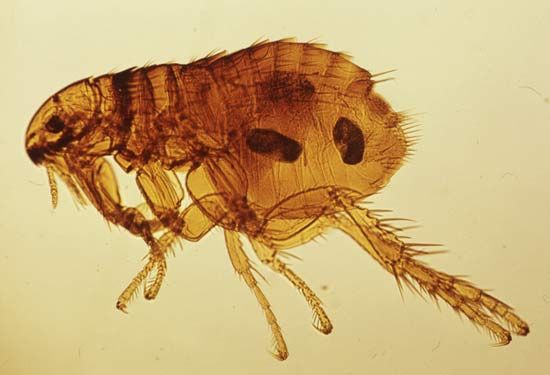
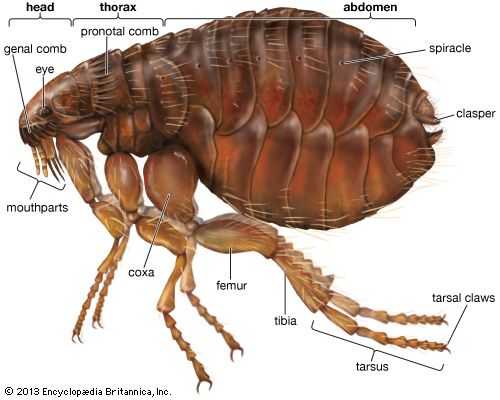
- Body Structure: Fleas possess a tough, compressed body covered in bristles and backward-projecting spines or combs (ctenidia). This shape allows them to move swiftly through the hair, fur, or feathers of their hosts, while the spines serve to anchor them in place.13
- Specialized Mouthparts: Their mouthparts are modified for blood-feeding, featuring barbed stylets that facilitate skin penetration and secure attachment to the host.3
- Jumping Mechanism: Despite being wingless, fleas are renowned for their highly developed jumping legs. They utilize a rubbery protein called resilin located in a hinge on the thorax. By compressing these resilin pads and releasing them via a muscle-controlled catch mechanism, fleas can achieve remarkable acceleration, effectively “flying” with their legs.3
- Host Dependency: Fleas are obligate parasites that feed exclusively on the blood of mammals and birds. Their life cycles are often intricately linked to the biology of their hosts, sometimes even responding to the host’s hormonal changes.14
What are some common species of fleas and their preferred hosts?
Fleas are ectoparasites that feed exclusively on the blood of warm-blooded vertebrates, primarily mammals and birds. Below are some common species and their preferred hosts:67
Common Name
Scientific Name
Preferred Host(s)
Cat flea
Ctenocephalides felis
Cats, dogs, and occasionally humans or livestock
Dog flea
Ctenocephalides canis
Dogs and other mammals
Human flea
Pulex irritans
Humans, livestock, and occasionally other mammals
Oriental rat flea
Xenopsylla cheopis
Rats (primary carrier of plague)
Sticktight flea
Echidnophaga gallinacea
Poultry and other birds
Jigger (chigoe) flea
Tunga penetrans
Humans and various mammals
European chicken flea
Ceratophyllus gallinae
Poultry
Western chicken flea
Ceratophyllus niger
Poultry
In addition to these, many flea species are specialized to parasitize specific groups, such as rodents or bats. While they often have preferred hosts, many species will opportunistically bite humans or other animals if their primary host is unavailable.68
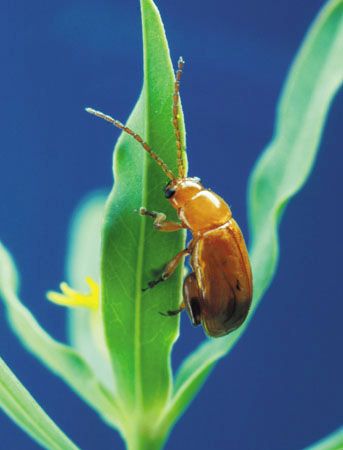
It is important to note that “flea beetles” are often confused with true fleas due to their jumping ability; however, they are a completely different group of insects that feed on plants rather than blood.1
How do fleas impact human and animal health?
Fleas significantly impact human and animal health by acting as both irritating pests and dangerous vectors for disease.
Direct Health Effects
Infestations often cause severe skin inflammation and intense itching. While many animals develop partial immunity over time, humans and some animals can become sensitized, leading to allergies. In cases of heavy infestation, animals may suffer from significant blood loss, which can be fatal. Additionally, the female jigger (chigoe) flea burrows into the skin, forming a cyst that can lead to serious secondary infections.6
Disease Transmission
Fleas are notorious for transmitting serious illnesses, often by moving from dying rodent hosts to humans.69
- Plague: Fleas are the primary vectors for bubonic plague, famously causing the Black Death. They transmit the bacteria Yersinia pestis when they bite, often after their digestive tracts become blocked by the bacilli.1069
- Other Infections: Fleas carry murine typhus, tularemia, and encephalitis. They also serve as intermediate hosts for common tapeworms that affect dogs, cats, and occasionally children.6
What methods are used to control and prevent flea infestations?
Effective flea control requires a comprehensive approach that targets both the infested host and the surrounding environment, as larval and pupal stages typically develop away from the animal’s body.
Integrated Control Strategies
- Treating the Host: Infested animals should be treated with commercial products such as dusts, sprays, dips, or aerosols. These products often contain an insecticide or a growth regulator to disrupt the flea life cycle.
- Treating the Environment: Because fleas breed in bedding and nesting areas, these sites must be treated simultaneously with the host. Insecticides or growth regulators should be applied to the pens and haunts where affected animals spend time.
- Addressing Resistance: In certain regions, flea populations have developed resistance to traditional insecticides, necessitating the use of newer, alternative materials to maintain effectiveness.
- Prevention: The use of repellents can be an effective strategy for preventing initial attacks by fleas.
Sources
- flea - General features — Encyclopædia Britannica
- flea - Form and function — Encyclopædia Britannica
- flea - Evolution, paleontology, and classification — Encyclopædia Britannica
- flea - Life cycle — Encyclopædia Britannica
- Locomotion - Saltation — Encyclopædia Britannica
- flea - Importance — Encyclopædia Britannica
- Flea beetle — Encyclopædia Britannica
- flea - Annotated classification — Encyclopædia Britannica
- flea — Encyclopædia Britannica
- plague - Nature of the disease — Encyclopædia Britannica
- flea - Control — Encyclopædia Britannica
Published on · 3 min read