Flat Bark Beetle
A flat bark beetle is any of approximately 500 species of insects belonging to the family Cucujidae within the order Coleoptera. These beetles are typically…
What is flat bark beetle?
A flat bark beetle is any of approximately 500 species of insects belonging to the family Cucujidae within the order Coleoptera. These beetles are typically red, yellow, or brown and are easily identified by their narrow, flattened bodies.1
Most species measure less than 13 mm (0.5 inch) in length and are generally found beneath the bark of freshly felled hardwood trees. While many are predacious, feeding on mites and small insects, some species in the genus Catogenus are parasitic toward the larvae of long-horned beetles and certain parasitic wasps.1
Some members of the related family Silvanidae, such as the saw-toothed grain beetle and the rusty grain beetle, are sometimes associated with flat bark beetles and are known to be significant pests of stored grain.12
How do flat bark beetles survive under tree bark?
Flat bark beetles (family Cucujidae) are well-adapted to life under the bark of freshly felled hardwood trees due to their narrow, flattened body shape, which allows them to easily navigate and reside within the tight spaces between the bark and the wood.5
Unlike some other beetles that bore into wood to create tunnels, flat bark beetles are primarily predacious. They survive in these sub-cortical environments by hunting and feeding on mites and small insects that also inhabit those spaces. Additionally, some species within the genus Catogenus have evolved a parasitic lifestyle, feeding on the larvae of long-horned beetles and certain parasitic wasps that are found under the bark.5
It is important to distinguish these from true bark beetles (subfamily Scolytinae), which are cylindrical and actively bore into trees to create complex tunnel systems for egg-laying and feeding.16
What role do beetles play in the forest ecosystem?
Beetles play diverse and essential roles in the forest ecosystem, acting as predators, scavengers, decomposers, and pollinators. Their activities are fundamental to the health and nutrient cycling of forest environments.710
Nutrient Cycling and Decomposition
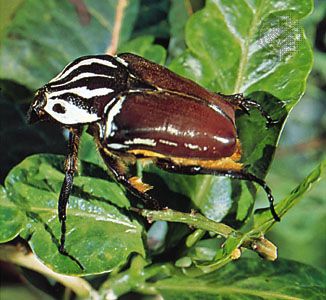
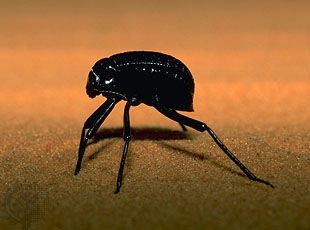
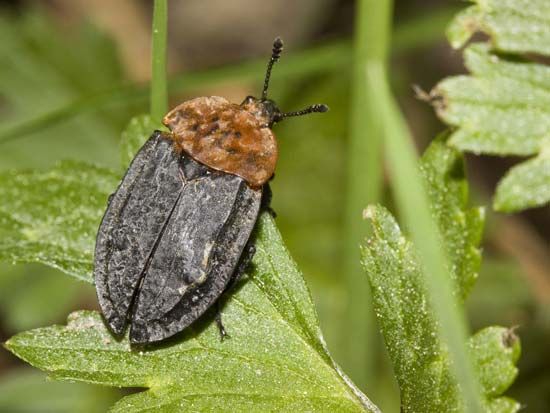
Many beetles are vital for the breakdown of organic matter. Species such as darkling beetles, scarab beetles, and carrion beetles function as scavengers, consuming dead plant and animal material, excrement, and decaying logs. Wood-boring beetles, including bark beetles, aid in wood decomposition and nutrient release by burrowing into trees and logs. Some of these beetles have specialized structures that carry fungal spores, which they inoculate into the wood, further accelerating the decay process.71110
Predation and Population Control
Predatory beetles serve as natural regulators of insect populations. For example, ground beetles and soldier beetles hunt various small insects and larvae, helping to keep pest numbers in check. This natural control is crucial for maintaining the balance of the forest ecosystem, as these predators often cycle in response to the population levels of their prey.712
Pollination
Beetles were among the earliest insect pollinators, and they continue to play a role in the reproduction of many plants. In the Mesozoic Era, primitive beetles were the primary pollinators for early flowering plants, and today, many species still visit flowers to feed on pollen or plant juices, facilitating fertilization in the process.13
Ecological Impact
While many beetles are beneficial, some species can cause significant damage. When environmental conditions are favorable, certain wood-boring beetles can reach epidemic proportions, potentially killing large numbers of trees. However, in a healthy forest, these outbreaks are typically limited by natural enemies, such as parasitic wasps and predatory insects, or by the tree’s own defensive mechanisms.1210
How do scientists distinguish between different beetle families?
Scientists distinguish between different beetle families by examining a variety of morphological and behavioral characteristics. Because the order Coleoptera is the largest in the animal kingdom, taxonomists rely on a combination of structural features to classify them into suborders, superfamilies, and families.1718
Key criteria used for identification include:
- Wing Structure: The appearance, texture, and length of the elytra—the hardened front wings—are primary indicators. Scientists also examine the pattern of veins in the hind wings.17
- Body and Leg Anatomy: The structure of the antennae and legs is critical. Specifically, the size and shape of the coxae (the segments attaching the legs to the body) and how they interact with the abdominal segments help define different groups.17
- Abdominal Features: The number of visible abdominal segments and the structure of the first abdominal segment are used to separate major suborders.17
- Developmental and Internal Traits: Taxonomists look at larval structure, head structure (including mandibles), and internal anatomy.17
- Behavior and Habitat: Ecological factors, such as preferred habitats, feeding behaviors, and unique habits (like sound production or light emission), often provide additional context for classification.1718
Sources
- flat bark beetle — Encyclopædia Britannica
- Coleoptera - Pupae — Encyclopædia Britannica
- flat grain beetle — Encyclopædia Britannica
- Coleoptera - General features — Encyclopædia Britannica
- bark beetle — Encyclopædia Britannica
- Coleoptera - Size range and diversity of structure — Encyclopædia Britannica
- Coleoptera - Feeding habits and habitats — Encyclopædia Britannica
- Coleoptera - As plant feeders — Encyclopædia Britannica
- bess beetle — Encyclopædia Britannica
- forestry - Insect and disease control — Encyclopædia Britannica
- pollination - Evolution of insect pollination — Encyclopædia Britannica
- Taiga - Insects — Encyclopædia Britannica
- insect - Ecological factors — Encyclopædia Britannica
- Coleoptera - Special ecological relationships — Encyclopædia Britannica
- Coleoptera - Distribution and abundance — Encyclopædia Britannica
- Coleoptera - As scavengers — Encyclopædia Britannica
- Coleoptera - Distinguishing taxonomic features — Encyclopædia Britannica
- Coleoptera — Encyclopædia Britannica
- Coleoptera - Annotated classification — Encyclopædia Britannica
Published on · 3 min read