Fluke
Flukes, which belong to the class Trematoda, are parasitic flatworms characterized by an undivided, leaflike body and well-developed adhesive organs, such as…
What are the defining characteristics of flukes, and how do they differ from other flatworms?
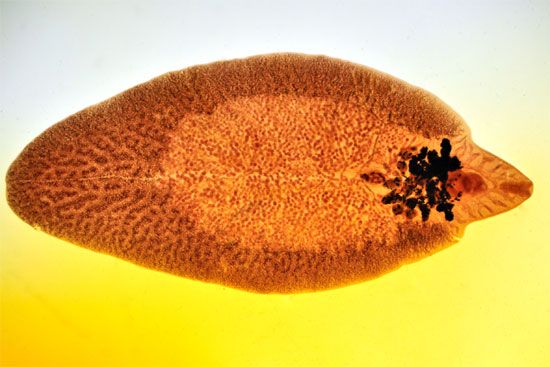
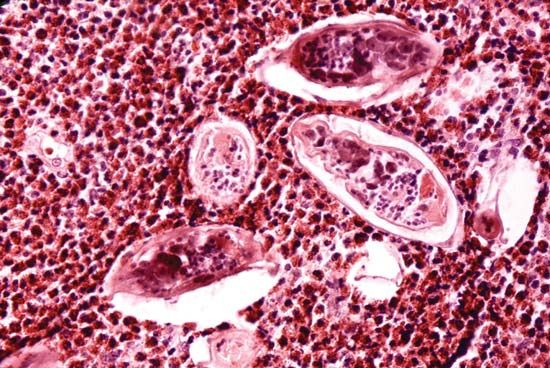
Flukes, which belong to the class Trematoda, are parasitic flatworms characterized by an undivided, leaflike body and well-developed adhesive organs, such as suckers, used to attach to hosts. Unlike free-living flatworms, flukes lack a ciliated epidermis; instead, they possess a metabolically active, syncytial tegument that lacks the rhabdoids found in turbellarians.12
Flukes differ from other flatworms in several key ways:
- Digestive System: Unlike tapeworms, which lack a digestive tract and absorb nutrients through their body wall, flukes possess a blind-ending intestine (a simple sac or two-branched gut) where they digest food and expel residue through the mouth.31
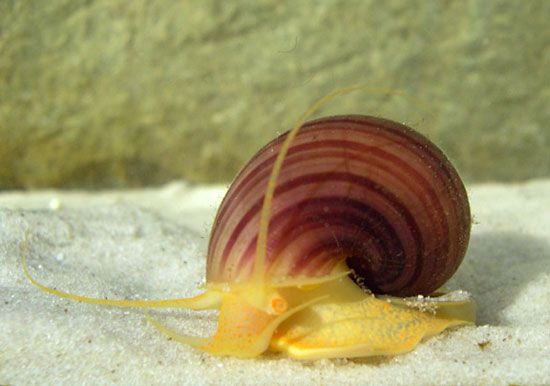
- Life Cycle: Most flukes (subclass Digenea) have complex life cycles requiring two or more hosts, typically involving a mollusk as an intermediate host and a vertebrate as the final host. This contrasts with the simpler life cycles of free-living forms and the direct, host-to-host transmission often seen in many tapeworms.41
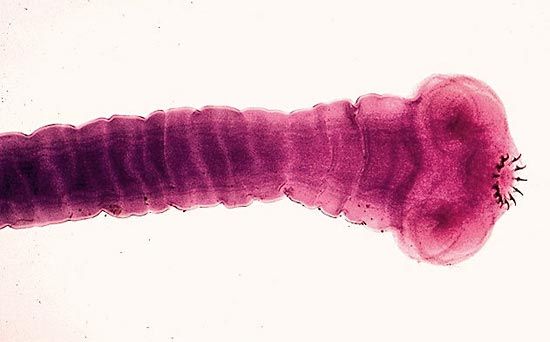
- Morphology: While tapeworms are typically segmented into proglottids, flukes remain unsegmented.12
What methods are used to diagnose and treat fluke infections?
Diagnosing and treating fluke infections requires a combination of clinical assessment and targeted pharmacological intervention.
Diagnosis
Diagnostic methods vary depending on the specific type of fluke and the organs affected:
- Microscopic Examination: A common method involves analyzing stool or urine samples to detect the presence of fluke eggs.678
- Imaging: For infections like clonorchiasis, abdominal ultrasound or other imaging techniques can help detect heavy infestations or associated organ damage.6
- Clinical History and Symptoms: Diagnosis often incorporates a patient’s travel history to endemic regions and the observation of specific symptoms, such as blood in the stool or urine, jaundice, or liver tenderness.68
- Blood Analysis: In some cases, the presence of the parasite can be identified through blood smears, or by observing an increase in specific white blood cells known as eosinophils.78
Treatment
Treatment primarily involves the use of anthelmintic drugs, which are chemical agents designed to eliminate parasitic worms.9
- Praziquantel: This is the drug of choice for most fluke infections, including schistosomiasis and intestinal, liver, and lung flukes. It works by causing spastic paralysis in the worms and damaging their membranes, which helps the host’s immune system clear the infection.98
- Other Agents: Triclabendazole is generally the preferred treatment for fascioliasis, while albendazole is also used for certain liver fluke infections.76
What are some of the most common species of flukes that affect humans?
Several species of flukes are known to infect humans, often causing significant health issues through their complex life cycles. These parasites are generally categorized by the organs they inhabit:
Blood Flukes
Three primary species of blood flukes cause schistosomiasis:
- Schistosoma haematobium: Lives in the veins of the urinary bladder and is prevalent in Africa, the Middle East, and southern Europe.10
- Schistosoma mansoni: Resides in the veins surrounding the intestines and is found primarily in Africa and northern South America.10
- Schistosoma japonicum: Known as the Oriental blood fluke, it inhabits the small intestine and can infect various domestic animals in addition to humans.10
Liver Flukes
- Fasciola hepatica: The giant liver fluke causes fascioliasis, often contracted by eating contaminated watercress.1011
- Clonorchis sinensis: Also known as the Chinese or Oriental liver fluke, it is acquired through the consumption of infected fish.10
- Opisthorchis felineus: The cat liver fluke can also infect humans who consume infected freshwater fish.10
Lung Flukes
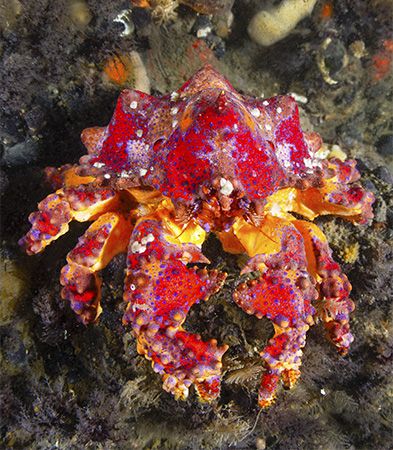
- Paragonimus westermani: This lung fluke causes paragonimiasis. Humans typically acquire this infection by eating undercooked crabs or crayfish.8
What are some unique adaptations that allow flukes to survive inside their hosts?
Flukes have evolved a variety of specialized adaptations that allow them to thrive within the challenging environments of their hosts. These adaptations span physical, physiological, and biochemical mechanisms:
Attachment Mechanisms
To maintain their position within a host, flukes utilize specialized structures that prevent them from being expelled. These include:
- Suckers: Muscular organs located on the ventral surface that provide a strong grip on host tissues.13
- Spines: Many flukes possess spines on their body surface, which assist in anchoring and maintaining contact with the host.1413
Protective Integument
The body covering, or tegument, of a fluke is a highly specialized, metabolically active syncytium (a layer of cells not separated by walls) that serves as a critical interface between the parasite and the host. Key features include:14
- Immune Evasion: The outer surface contains secretory bodies that are continuously released to renew the apical membrane. This process is believed to be a protective device that helps the parasite defend against the host’s immune reactions.3
- Structural Complexity: The integument often features ridges, pits, and sensory papillae, which help the parasite interact with its immediate microenvironment.3
Physiological and Developmental Adaptations
Flukes are finely tuned to the internal conditions of their hosts, often using host-specific cues to trigger developmental milestones:
- Host Cues: Parasites frequently utilize the biochemical and physiological properties of a host—such as body temperature or specific chemical environments—to signal when to transition to the next developmental stage.5
- Complex Life Cycles: Many flukes have evolved to use intermediate hosts (such as snails) to facilitate their survival and dissemination. In some cases, they even modify the behavior or appearance of an intermediate host to increase the likelihood of being consumed by the final, definitive host.515
Sources
- flatworm — Encyclopædia Britannica
- flatworm - Digestive and excretory systems — Encyclopædia Britannica
- flatworm - Development — Encyclopædia Britannica
- flatworm - Annotated classification — Encyclopædia Britannica
- flatworm - External features — Encyclopædia Britannica
- anthelmintic — Encyclopædia Britannica
- clonorchiasis — Encyclopædia Britannica
- fascioliasis — Encyclopædia Britannica
- schistosomiasis — Encyclopædia Britannica
- fluke — Encyclopædia Britannica
- Schistosoma — Encyclopædia Britannica
- paragonimiasis — Encyclopædia Britannica
- flatworm - Ecology — Encyclopædia Britannica
- parasitic disease - Major disease-causing parasites — Encyclopædia Britannica
- fungus: Top Questions — Encyclopædia Britannica
- Integument - Flukes and roundworms — Encyclopædia Britannica
Published on · 4 min read