Fontéchevade
Fontéchevade is a cave site located in southwestern France, significant for the 1947 discovery of ancient human remains and tools estimated to date between…
What is Fontéchevade?
Fontéchevade is a cave site located in southwestern France, significant for the 1947 discovery of ancient human remains and tools estimated to date between 200,000 and 120,000 years ago.1
The site yielded two skull fragments. Because the frontal fragment lacked a browridge, early researchers proposed the “pre-sapiens” theory, suggesting that the evolutionary line leading to modern Homo sapiens diverged before the emergence of Neanderthals.1
However, modern research has largely discredited this theory. It is now believed that one fossil may have originated from a later period than the surrounding deposits or belonged to an immature individual. Furthermore, the second fragment, while missing the browridge area, exhibits morphological characteristics consistent with those of Neanderthals.1
Who were the Neanderthals?
Neanderthals (Homo neanderthalensis or Homo sapiens neanderthalensis) were a group of archaic humans who inhabited Eurasia from at least 200,000 years ago until approximately 35,000 to 24,000 years ago. They are the best-known archaic human group, largely due to the preservation of their remains in limestone caves and a long history of archaeological research.2
Physical Characteristics and Culture
Neanderthals possessed a unique set of craniofacial features, including a low-vaulted cranium, prominent arched brow ridges, and a robust lower jaw with a receding chin. Despite their robust build, their cranial capacity was similar to or larger than that of modern humans.3
They developed a sophisticated culture characterized by:
- Technology: The Mousterian industry and later the Châtelperronian industry involved complex stone tool production.4
- Symbolism: Evidence of burial practices, the use of ornaments, pigments, and potential cave art suggests symbolic and ritualistic behavior.4
- Adaptation: They successfully survived in harsh environments during the Pleistocene Epoch, utilizing fire and a broad diet that included meat, plants, and aquatic resources.24
Relationship with Modern Humans
While once considered a distinct species, genetic evidence shows that modern Eurasians carry approximately 2 percent Neanderthal nuclear DNA, indicating that the two groups interbred. Their eventual disappearance coincided with intense climate fluctuations and the expansion of early modern human populations.56
How do scientists date ancient fossils?
Scientists use a variety of methods to date ancient fossils and archaeological remains, broadly categorized into relative and absolute dating techniques.
Relative Dating
Relative dating establishes the chronological order of objects without providing a specific age.
- Stratigraphy: Based on the law of superposition, this principle holds that in undisturbed deposits, older layers are found at the lowest levels, while younger layers accumulate above them.78
- Biostratigraphy: This involves identifying fossils within sedimentary rock strata to determine the relative geologic age of the surrounding rock.9
- Cross Dating: Archaeologists date undated sites by finding objects from a known culture (such as pottery with a distinct style) within them, allowing them to infer that the materials are contemporary.7
Absolute Dating
Absolute dating provides a specific numerical age for a sample.
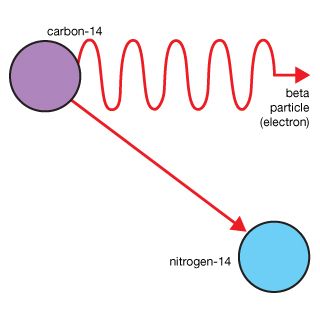
- Radiocarbon dating: Used for organic remains, this measures the decay of carbon-14. Because the isotope has a known half-life of 5,730 years, scientists can calculate how long ago an organism died.710
- Potassium-argon dating: This method measures the ratio of radioactive potassium-40 to argon-40 in rocks, making it effective for dating volcanic materials that are millions of years old.117
- Dendrochronology: This technique determines the age of wood by analyzing annual tree growth rings.710
What is the pre-sapiens theory?
The “pre-sapiens” theory is not a standard term in modern paleoanthropology; however, the concept of human emergence is defined by a significant debate regarding how and when Homo sapiens evolved.
Historically, some researchers proposed that Homo sapiens evolved over a very long period, with roots extending back nearly 2 million years to species like Homo habilis. This view, often associated with the “multiregional” or “regional continuity” model, suggested that modern human populations evolved locally in different parts of the world from archaic ancestors such as Homo erectus or Neanderthals.1213
In contrast, the widely accepted “single-origin” or “out-of-Africa” theory posits that Homo sapiens emerged as a distinct, anatomically modern species in Africa relatively recently, approximately 315,000 years ago. Proponents of this view argue that modern humans later migrated out of Africa, replacing indigenous archaic populations in Eurasia with little to no interbreeding.121413
Current scientific consensus, supported by genetic data, recognizes that while there was limited interbreeding between Homo sapiens and archaic groups like Neanderthals, modern humans originated as a distinct species in Africa before spreading globally.1213
Sources
- Fontéchevade — Encyclopædia Britannica
- Neanderthal — Encyclopædia Britannica
- Neanderthal - Neanderthal culture — Encyclopædia Britannica
- Neanderthal - Craniofacial features — Encyclopædia Britannica
- Neanderthal - Neanderthal classification — Encyclopædia Britannica
- Neanderthal - First discoveries — Encyclopædia Britannica
- potassium-argon dating — Encyclopædia Britannica
- Archaeology - Dating — Encyclopædia Britannica
- biostratigraphy — Merriam-Webster
- stratigraphy — Encyclopædia Britannica
- How does carbon dating work? — Encyclopædia Britannica
- Homo sapiens - Bodily structure — Encyclopædia Britannica
- human evolution - The emergence of Homo sapiens — Encyclopædia Britannica
- human evolution — Encyclopædia Britannica
- Homo erectus - The question of ancestry — Encyclopædia Britannica
- Homo sapiens — Encyclopædia Britannica
Published on · 3 min read