Foxtail
Foxtails are a group of weedy grasses belonging to the family Poaceae, specifically within the genera Alopecurus and Setaria. They are primarily…
What are the distinguishing features of foxtail plants?
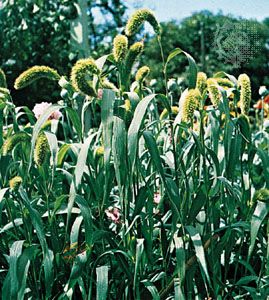
Foxtails are a group of weedy grasses belonging to the family Poaceae, specifically within the genera Alopecurus and Setaria. They are primarily distinguished by their spikelet clusters of bristled seeds, which resemble the bushy tail of a fox.1
Key features include:
- Seed Dispersal: The seed units often feature pointed tips and backward-pointing barbs, which can become dangerously lodged in the ears and nostrils of animals.1
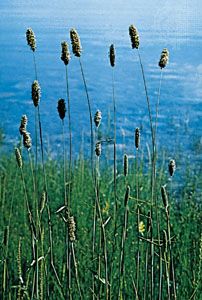
- Alopecurus: These are mostly perennials native to the north temperate zone, characterized by dense, cylindrical, brushlike flower clusters.1
- Setaria: Also known as bristlegrass, these species are generally taller than Alopecurus and possess bristly flower clusters and flat, thin leaf blades. While many are considered weeds, foxtail millet is an economically valuable crop.1
Some species, such as bristly foxtail, have barbs that cause the flower clusters to stick to clothing and animals, sometimes forming dense tangles.1
Where are foxtail plants commonly found, and in what climates do they thrive?
Foxtail plants are widely distributed across the globe, though their specific habitats depend on the genus.
- Alopecurus: These species are primarily found throughout the north temperate zone. They are generally adapted to cooler, temperate climates, with species like meadow foxtail serving as forage grass in northern North America.1
- Setaria: These grasses, also known as bristlegrass, are native to the tropical regions of Africa but have spread to warm areas on every continent. They are frequently found in disturbed environments, such as cornfields, and are well-established in various parts of the United States, particularly in the eastern and southern regions.13
Because they are often considered weeds, many Setaria species thrive in areas where the soil has been disrupted by human activity or agriculture.1
How did foxtail plants get their name?
Foxtail plants derive their name from the appearance of their flower clusters. These plants produce spikelet clusters of bristled seeds that are dispersed as a unit and bear a physical resemblance to the bushy tail of a fox.4
The term is applied to various grasses within the family Poaceae, particularly those in the genera Alopecurus and Setaria, which feature dense, brushlike spikes.14
What are the different species of foxtail plants?
Foxtail plants are categorized into two primary genera within the Poaceae family: Alopecurus and Setaria.
Genus Alopecurus
This genus consists of approximately 25 species of mostly perennial grasses found in the north temperate zone. A notable example is:
- Meadow foxtail (A. pratensis): Native to Eurasia, it is commonly used as forage grass in northern North America.1
Genus Setaria
Also known as bristlegrass, this genus includes nearly 125 species of annual and perennial grasses. Key species include:
- Foxtail millet (S. italica): The only species with significant economic value.1
- Yellow foxtail (S. pumila) and green foxtail (S. viridis): Named for their bristle colors, these are common in agricultural and disturbed areas.1
- Bristly foxtail (S. verticillata): Known for barbed bristles that adhere to clothing and animals.1
- Plains foxtail (S. macrostachya): A type of forage grass.1
- Giant foxtail: A name applied to the weedy annuals S. faberi and S. magna.1
Sources
- foxtail — Encyclopædia Britannica
- green foxtail — Merriam-Webster
- giant foxtail — Merriam-Webster
- foxtail — Merriam-Webster
Published on · 2 min read