Grass
Grasses (family Poaceae) reproduce and spread through a combination of sexual and asexual methods, as well as specialized dispersal adaptations.
How do grasses reproduce and spread?
Grasses (family Poaceae) reproduce and spread through a combination of sexual and asexual methods, as well as specialized dispersal adaptations.
Sexual and Asexual Reproduction
- Sexual Reproduction: Most grasses reproduce via cross-pollination, where lightweight pollen is carried by the wind to the feathery stigmas of other plants. Some species also utilize self-fertilization, which helps preserve successful genotypes in specific environments.12
- Apomixis: Certain grasses reproduce through apomixis, a process where seeds are produced without fertilization. This results in offspring that are genetically identical to the parent, effectively acting as a form of clonal reproduction.1
- Vegetative Spread: Many grasses spread clonally using rhizomes (horizontal underground stems) and stolons (horizontal aboveground stems), allowing them to rapidly colonize and dominate habitats.13
Dispersal Adaptations
Grasses have evolved various mechanisms to ensure their seeds reach new locations:
- Animal Transport: Many spikelets feature awns, barbs, or spines that cling to the fur of passing animals. Seeds may also be dispersed after being consumed by animals and passing through their digestive tract.12
- Wind and Self-Sowing: Some seeds are equipped with hair-like structures that act as parachutes for wind dispersal. Additionally, some species possess awns that twist in response to humidity changes, effectively drilling the seed into the soil.12
What are some of the most common types of grass found around the world?
True grasses belong to the family Poaceae, which comprises approximately 10,000 species distributed globally in nearly every habitat. While many species are endemic to specific regions, others have become widespread due to human activity and natural dispersal.61
Common types of grasses include:
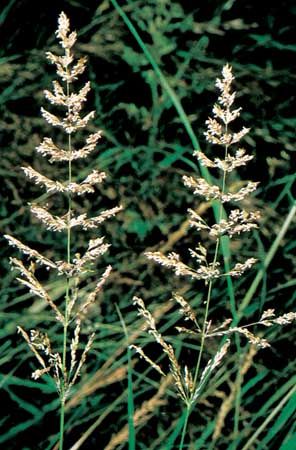
- Bluegrass (Poa): The largest genus in the grass family, containing over 500 species found in temperate and tropical climates. Well-known examples include Kentucky bluegrass (P. pratensis), a popular lawn and pasture grass, and annual bluegrass (P. annua), which has spread widely as a common weed.76
- Bentgrass (Agrostis): A genus of 150–200 species distributed in cool and temperate regions. Species like creeping bent (A. stolonifera) are frequently used for golf course putting greens and fine-textured lawns.8
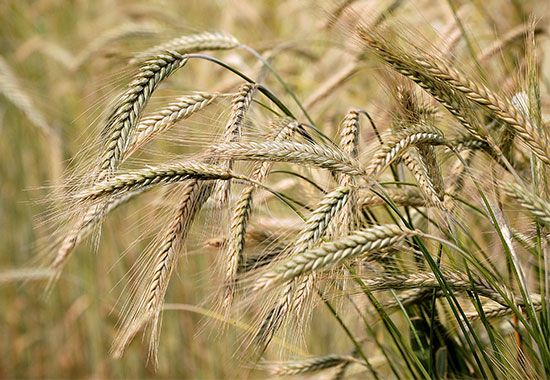
- Cereal Grasses: These are among the most economically significant grasses, including wheat, barley, rye, oats, rice, and corn.69
- Bamboos: Members of the subfamily Bambusoideae, these are often woody and prevalent in tropical forests, playing essential roles in construction and fiber production.69
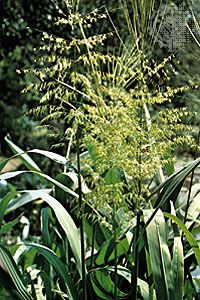
- Giant Reed Grass (Phragmites australis): A highly versatile, cosmopolitan species with one of the widest geographic ranges of any flowering plant.6
What is the difference between annual and perennial grasses?
The primary difference between annual and perennial grasses lies in their life cycle and energy allocation.
Annual Grasses
Annual grasses complete their entire life cycle—from germination to seed production and death—within a single growing season. Because they do not need to survive the winter or maintain long-term root structures, they are able to divert a significant portion of their energy into the rapid production of seeds. An example is witchgrass, a common weed that thrives in disturbed areas.101112
Perennial Grasses
Perennial grasses persist for more than two years, regrowing from the same root system each season. To survive from year to year, especially in cold climates, they utilize specialized structures like rhizomes or stolons to store energy10.101211
- Energy Allocation: Unlike annuals, perennials must balance their energy between seed development and maintaining their extensive root systems.12
- Environmental Benefits: Their deep, persistent root systems help prevent soil erosion, improve soil health, and allow them to better withstand drought compared to annuals.12
- Examples: Switchgrass and perennial ryegrass are notable examples used for forage, erosion control, and pasture.1113
What role do grasses play in various ecosystems?
Grasses play a vital role in ecosystems worldwide, serving as foundational components that support both biological diversity and environmental stability. Their primary ecological functions include:
- Soil Conservation: Grasses possess extensively branching fibrous root systems that bind soil particles together. This structure is essential for controlling erosion, as it minimizes the loss of topsoil to wind and water, particularly when compared to row crops that require frequent cultivation.814
- Habitat and Forage: Grasslands provide critical shelter for wildlife and forage for grazing animals. Many herbivores, such as ruminants, have evolved specialized digestive systems to process the carbohydrates and silica found in grasses, which are otherwise difficult for many animals to consume.815
- Nutrient Cycling: Grasses contribute to the health of the biosphere by participating in the carbon and nitrogen cycles. Through photosynthesis, they capture atmospheric carbon dioxide and convert it into biomass, which eventually returns to the soil as organic matter.1617
- Ecosystem Maintenance: In natural grasslands, grasses are adapted to disturbances like fire and drought. These forces help recycle nutrients and prevent the encroachment of woody species, ensuring the persistence of open grassland habitats.18
Sources
- Poaceae - Distribution and abundance — Encyclopædia Britannica
- horticulture - Vegetative structures — Encyclopædia Britannica
- Plant - Asexual reproduction — Encyclopædia Britannica
- Poaceae - Characteristic morphological features — Encyclopædia Britannica
- Angiosperm - General features — Encyclopædia Britannica
- Bluegrass — Encyclopædia Britannica
- Poales — Encyclopædia Britannica
- grass — Encyclopædia Britannica
- Bentgrass — Encyclopædia Britannica
- Perennial — Encyclopædia Britannica
- panicum — Encyclopædia Britannica
- perennial ryegrass — Merriam-Webster
- Perennial agriculture — Encyclopædia Britannica
- Agricultural technology - Crop rotation — Encyclopædia Britannica
- artiodactyl - Food habits — Encyclopædia Britannica
- Poaceae - Economic and ecological importance — Encyclopædia Britannica
- soil - Soils and global warming — Encyclopædia Britannica
- soil - Carbon and nitrogen cycles — Encyclopædia Britannica
Published on · 4 min read