Flower
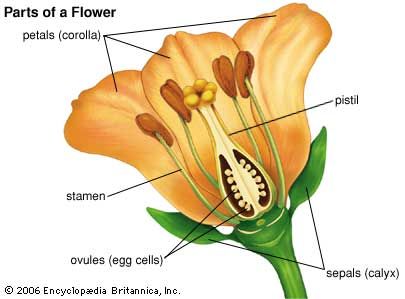
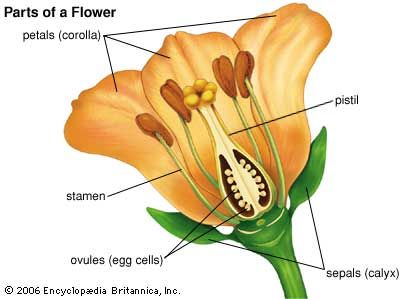
A complete flower is composed of four primary organs attached to a receptacle:
What are the main parts of a flower and their functions?
A complete flower is composed of four primary organs attached to a receptacle:
- Sepals: The outermost layer, collectively called the calyx. They primarily protect the flower bud before it opens.123
- Petals: Located internal to the sepals, these collectively form the corolla. They are often brightly colored to attract pollinators and help protect reproductive structures. Together, sepals and petals compose the perianth.132
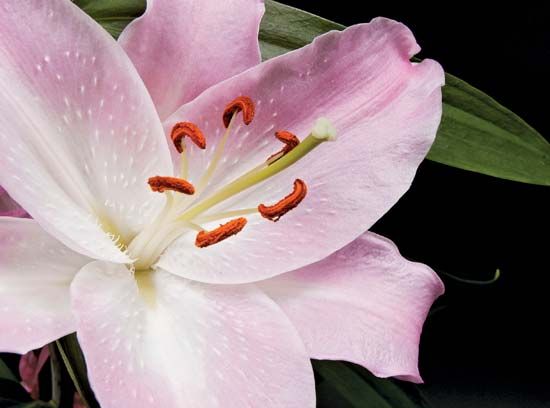
- Stamens: The male reproductive organs, collectively known as the androecium. Each consists of a filament supporting an anther, which produces pollen.134
- Carpels: The female reproductive organs, collectively called the gynoecium. A pistil typically consists of a stigma (to receive pollen), a style, and an ovary containing ovules. After fertilization, the ovules develop into seeds and the ovary matures into fruit.13
How have humans manipulated flower anatomy through selective breeding and genetic engineering?
Humans have profoundly altered flower anatomy and plant characteristics through selective breeding and genetic engineering, often creating varieties that differ strikingly from their wild progenitors.67
Selective Breeding
For millennia, humans have practiced artificial selection by saving seeds from plants with desirable traits. By exploiting the natural mutation pool within populations, breeders have broken down stabilized wild systems to develop new varieties. Techniques include:67
- Controlled Pollination: Breeders manually transfer pollen between specific parents, often removing anthers from female flowers to prevent self-pollination.8
- Chromosome Manipulation: The use of colchicine to induce chromosome doubling has resulted in numerous new varieties of flowers, fruits, and vegetables.9
- Vegetative Propagation: Methods like budding and grafting are used to maintain specific, desirable gene combinations.9
Genetic Engineering
Modern biotechnology allows for more precise modifications by inserting or altering specific genes.910
- Trait Enhancement: Scientists engineer plants to express traits not naturally present, such as resistance to herbicides or pests, and improved nutritional profiles.1011
- Transgenic Techniques: Using recombinant DNA, researchers can introduce genes from other organisms to improve growth, yield, or stress tolerance.910
While these advancements increase productivity and sustainability, they remain subjects of ethical debate regarding environmental impact, corporate control, and the potential for unintended consequences.1213
What are some examples of modified flower structures in carnivorous plants?
Carnivorous plants have evolved highly specialized leaf modifications to capture and digest prey, allowing them to thrive in nutrient-poor environments. These trapping mechanisms are categorized by their movement and structure:151617
- Pitfall Traps: Found in pitcher plants, these consist of hollow, lidded leaves that function as passive containers filled with digestive fluids to drown and break down prey. Some bromeliads also form urnlike traps using tightly packed leaf bases.16
- Snap Traps: The Venus flytrap and waterwheel plant utilize leaves hinged along the midline. When sensitive hairs are triggered, the lobes snap shut in a rapid movement to enclose the prey.1816
- Flypaper Traps: Sundews and butterworts use sticky mucilage on their leaf surfaces or gland-tipped hairs to ensnare insects.16
- Bladder Traps: Unique to bladderworts, these traps use a partial vacuum to actively suck in small aquatic organisms.16
- Lobster-pot Traps: Employed by corkscrew plants, these use downward-pointing hairs to force prey deeper into the trap structure.16
What role do hormones play in flower development and blooming?
Plant hormones, or growth regulators, are essential for coordinating the complex processes of flower development and blooming. Because these hormones are synthesized in specific sites and must be transported to their target tissues, they act as critical signaling molecules that integrate environmental cues with internal growth programs.20
The Role of Florigen
The transition from a vegetative state to a flowering shoot is often triggered by environmental stimuli, such as day length. The leaves act as the primary receptors for these signals, which then trigger the production of a mobile chemical substance known as florigen. This flowering hormone travels to the shoot apex, where it induces the transformation of the vegetative growing point into a flowering shoot.202122
Hormonal Interactions
While florigen is the primary agent of floral induction, other hormones influence the broader development of the plant:
- Auxins: Formed in young, growing organs like opening buds, auxins stimulate cell elongation and division, playing a role in the structural development of floral parts.2023
- Gibberellins: These hormones are involved in the elongation of stems and are particularly important for the “bolting” process in certain plants, where the stem elongates rapidly prior to flowering.24
- Cytokinins: Synthesized in the roots, cytokinins move upward to support normal growth and cell differentiation within developing tissues.2526
Sources
- Angiosperm - General features — Encyclopædia Britannica
- Sepal — Encyclopædia Britannica
- 5 Fast Facts About Flower Anatomy — Encyclopædia Britannica
- Do Plants Have Sexes? — Encyclopædia Britannica
- Stamen — Encyclopædia Britannica
- Plant breeding - History — Encyclopædia Britannica
- Plant breeding - Mating systems — Encyclopædia Britannica
- genetics - Agriculture and animal husbandry — Encyclopædia Britannica
- genetic engineering - Applications — Encyclopædia Britannica
- Domestication - Biological and genetic changes — Encyclopædia Britannica
- genetic engineering: Top Questions — Encyclopædia Britannica
- Malformation - Alteration of floral parts — Encyclopædia Britannica
- Corn - Genetically modified corn — Encyclopædia Britannica
- genetic engineering - Controversy and ethical issues — Encyclopædia Britannica
- Do Carnivorous Plants Eat Their Prey? — Encyclopædia Britannica
- Venus flytrap — Encyclopædia Britannica
- Carnivorous plant — Encyclopædia Britannica
- Angiosperm - Leaf modifications — Encyclopædia Britannica
- list of carnivorous plants — Encyclopædia Britannica
- Angiosperm - Transport and plant growth — Encyclopædia Britannica
- Hormone - Growth inhibitors — Encyclopædia Britannica
- flowering hormone — Merriam-Webster
- Hormone - The hormones of plants — Encyclopædia Britannica
- florigen — Merriam-Webster
- Hormone - Gibberellins — Encyclopædia Britannica
- Hormone - Auxins — Encyclopædia Britannica
- Cytokinin — Encyclopædia Britannica
- Hormone - Cytokinins — Encyclopædia Britannica
Published on · 4 min read